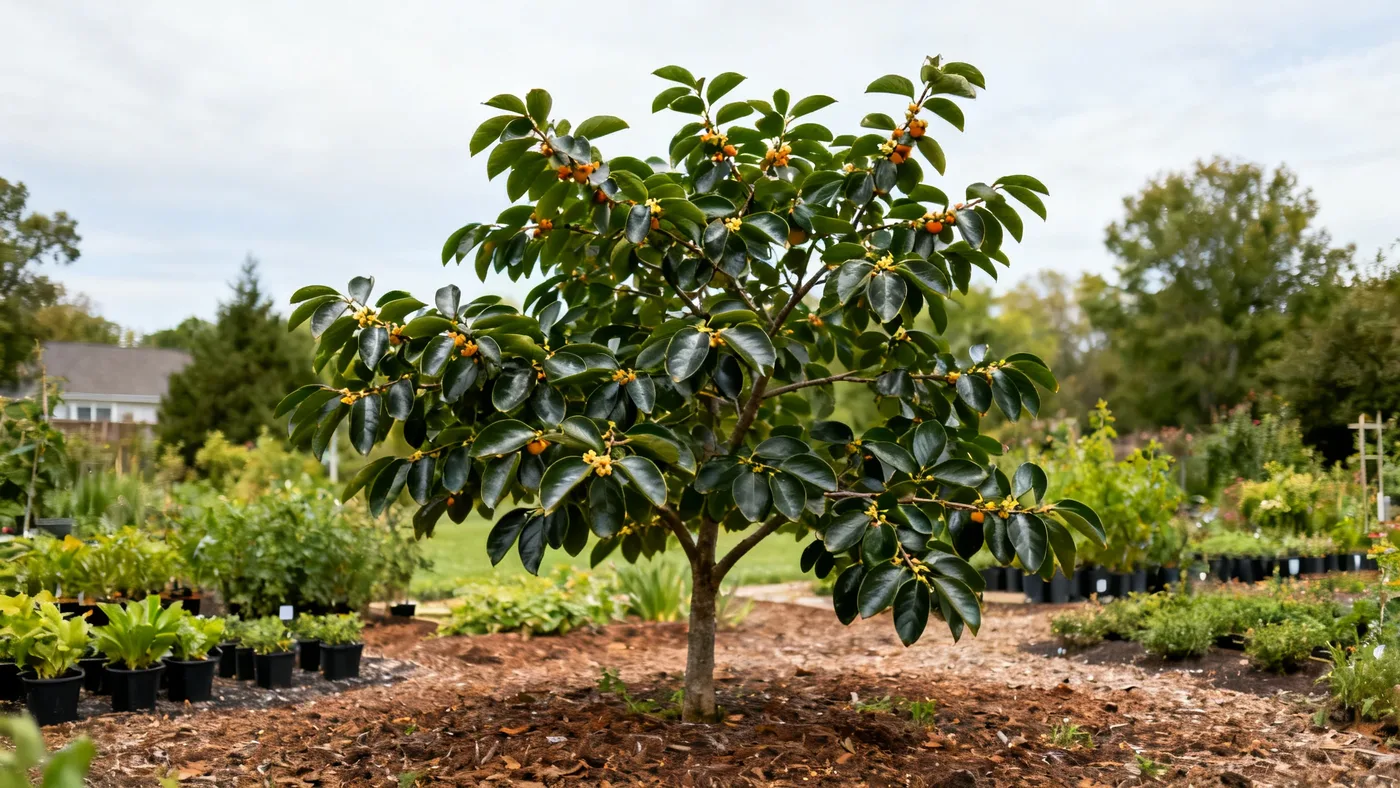
Best Soil for American Persimmon: Drainage, pH and Amendments
American Persimmon trees are remarkably adaptable to a wide range of soil types, but drainage and pH balance determine whether your tree merely survives or thrives. If you are planting your first persimmon or amending an existing planting bed, understanding what this native tree actually needs will save you from the most common planting mistakes.
Understanding American Persimmon Soil Requirements
American Persimmon tolerates clay, loam, and sandy soils, and can even establish in poor or compacted soil. This flexibility is one reason the tree thrives across its native range from Connecticut south to Florida and west to Kansas and Texas. The species' deep taproot helps it access moisture and nutrients that shallow-rooted trees cannot reach.
However, tolerance is not preference. For consistent growth and reliable fruiting, your persimmon soil should be well-drained, maintain a pH between 5.5 and 7.5, and contain organic matter to support the slow-to-moderate growth rate of roughly 12 to 18 inches per year once the tree is established.
When the soil drains poorly or the pH strays far outside the ideal range, you will see stunted growth, delayed fruiting, and increased susceptibility to root disease. The good news: you can build or amend the perfect home for your persimmon with materials you likely have access to.
Soil Drainage: The Essential First Step
Drainage is the non-negotiable foundation. A persimmon will not tolerate standing water, and even seasonally wet soil can cause root rot and twig dieback over time.
Test your site before planting: dig a hole 12 inches deep and 12 inches wide, fill it with water, and observe how long it takes to drain. Ideal drainage means the water level drops by at least 1 inch per hour. If water still sits after 24 hours, or if your site floods in heavy rain, choose a different location or plan to build a raised bed or berm.
Clay-heavy sites are the most common culprit. Clay holds water and compacts easily, strangling roots. If your soil is predominantly clay, you have two options: amend it heavily with coarse materials (described below), or plant your persimmon in a 12-to-18-inch-tall raised bed filled with amended soil. Raised beds solve drainage in wet climates and seasonally soggy yards.
Sandy soils, by contrast, drain too quickly and may not hold enough moisture or nutrients. Sandy sites benefit from adding organic matter like compost to improve water-holding capacity without sacrificing drainage.
Soil pH and Nutrient Balance
American Persimmon thrives in soil with a pH of 5.5 to 7.5. This range spans slightly acidic to neutral conditions, giving you room to work with existing soil.
Test your soil pH using an inexpensive kit from any garden center or send a sample to your local extension service for a full nutrient report. If your pH is below 5.5 (acidic), add agricultural lime according to product directions to raise it gradually. If your pH exceeds 7.5 (alkaline), add sulfur to lower it, though this process is slower and may take a full growing season.
American Persimmon is a light feeder. You will not need heavy fertilization. The tree actually fruits better when nitrogen is moderate (excess nitrogen delays fruiting and promotes weak growth). A balanced fertilizer applied in early spring is usually sufficient. Avoid applying fertilizer in late summer or fall, which can stimulate tender new growth that frost will damage.
Preparing Your Planting Site: Step-by-Step
Follow these steps to build the ideal soil environment for your persimmon:
- Test your drainage and pH. Confirm water drains within 1 hour and that your pH falls between 5.5 and 7.5. Adjust pH if needed a month or two before planting, so the soil can stabilize.
- Mark your planting hole. Space trees 20 to 35 feet apart if you are planting multiple persimmons, accounting for the mature width of 20 to 35 feet. Dig a hole roughly 1.5 times the width and depth of the root ball of your container-grown tree.
- Improve the native soil. If you are planting in existing garden soil or clay, do not simply backfill with native soil. Remove one-third of the dug soil and replace it with compost or aged bark mulch. Mix this amended soil thoroughly into the remaining two-thirds of native soil so the transition between the planting hole and surrounding soil is gradual, not abrupt.
- Loosen the root ball gently. If roots are circling the container, tease them apart with your fingers. This helps them establish in the surrounding soil instead of girdling the trunk.
- Place the tree at the correct depth. Set the tree so the soil line on the trunk matches the soil level of your planting hole. Planting too deep is one of the most common mistakes and invites trunk rot.
- Backfill and firm gently. Fill the hole with your amended soil mix, firming it gently as you go so no large air pockets remain. Water thoroughly after planting to settle the soil.
- Apply mulch, but not against the trunk. Spread 2 to 3 inches of wood chips or shredded bark around the base of the tree, staying 6 inches away from the trunk. Mulch insulates the soil, moderates moisture, and suppresses weeds. Do not pile mulch against the trunk, which can trap moisture and cause rot.
Amending Existing Soil for Established Trees
If you have a persimmon already in the ground and want to improve soil conditions without disturbing the root system, surface amendments are your approach.
In early spring, apply a 2-to-3-inch layer of compost around the base of the tree, avoiding the trunk. This adds organic matter, improves drainage and water retention, and slowly releases nutrients as it decomposes. Over time, this organic layer will be worked into the soil by earthworms and microbes, steadily improving soil structure and fertility.
If your soil is acidic (below 5.5), you can apply agricultural lime in fall or early winter according to package directions. If your soil is alkaline (above 7.5), apply sulfur, understanding that change is gradual and may require reapplication over multiple seasons.
Do not over-amend. American Persimmon prefers moderate fertility. Excess nitrogen will reduce fruiting and promote disease susceptibility.
Common Mistakes to Avoid
Planting too deep: Burying the root collar (where roots meet the trunk) invites rot and girdling. The soil line on the trunk should match the surrounding soil level.
Ignoring drainage: No amendment strategy can fix standing water. If your site is wet, build a raised bed or choose a different location.
Over-fertilizing: Heavy nitrogen delays fruiting and weakens the tree. A single spring application of balanced fertilizer is enough.
Piling mulch against the trunk: This traps moisture and creates a highway for pests and rodents. Keep mulch 6 inches away from the trunk.
Amending only the planting hole: If you backfill with amended soil surrounded by poor native soil, roots may stop at the boundary and circle the hole. Mix amendments into the native soil for a gradual transition.
What to Expect After Amending Your Soil
Once your persimmon has ideal soil conditions, you may see improvement in growth and leaf color within weeks, and in fruiting consistency within one to two seasons. Trees may show steadier annual growth and more uniform fruit production when soil pH and drainage are optimal.
Keep in mind that American Persimmon is a slow-to-moderate grower by nature, reaching roughly 12 to 18 inches per year once established. Do not expect rapid growth, but do expect steady, reliable growth when soil conditions support it. For more guidance on ongoing care after planting, see our American Persimmon care guide.
If you are planting in a cooler climate, also check our guide on hardiness zones for American Persimmon to confirm your location is suitable for this species.
Soil Preparation Quick Reference
| Soil Factor | Ideal Range | How to Test | How to Adjust |
|---|---|---|---|
| Drainage | Water drops 1 inch per hour | Dig 12x12 in. hole, fill with water, time drainage | Add compost and coarse materials; build raised bed if poor |
| pH | 5.5 to 7.5 | Use soil test kit or extension service sample | Add lime to raise pH; add sulfur to lower pH |
| Organic matter | 3 to 5 percent of soil volume | Visual inspection for dark color and crumbly texture | Mix compost into native soil at planting; apply 2 to 3 inches annually as mulch |
| Soil type | Clay, loam, or sandy (mixed) | Visual inspection and texture test | Amend clay with bark and compost; amend sand with compost |
| Fertilizer need | Low to moderate nitrogen | Extension service soil test | Apply balanced fertilizer once in early spring; skip if soil test shows adequate nitrogen |
| Mulch depth | 2 to 3 inches, 6 inches from trunk | Measure with ruler | Apply wood chips or shredded bark; refresh annually |