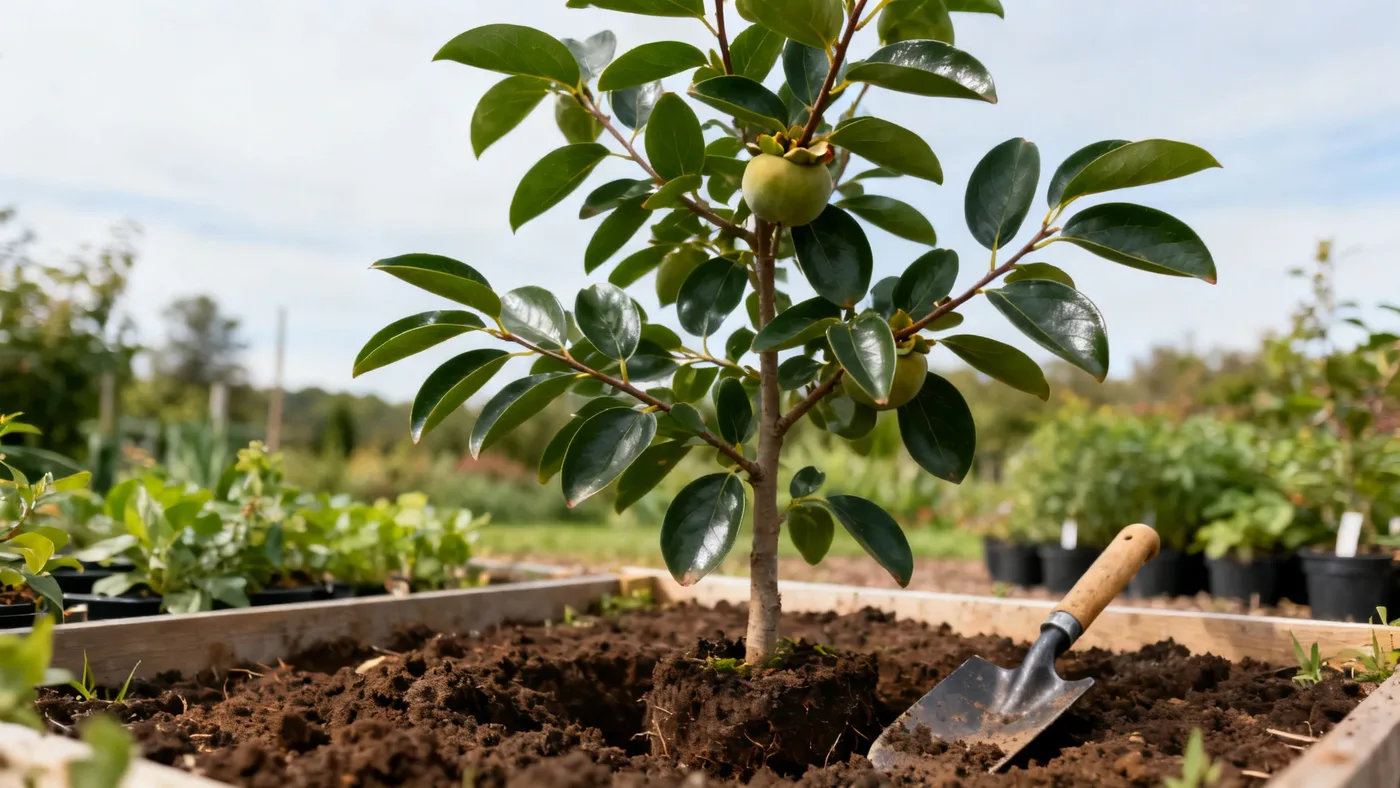
How to Plant an American Persimmon Tree the Right Way
American persimmon (Diospyros virginiana) is a native deciduous tree that rewards patient growers with sweet, honey-like fruit and striking fall color. Whether you are planting a single specimen for your yard or establishing an orchard, getting the fundamentals right at planting time sets your tree up for decades of healthy growth. This guide walks you through exactly when, where, and how to plant an American persimmon tree so it establishes a strong root system and reaches its full potential.
When to Plant Persimmon Trees
Timing matters for persimmon establishment. The best window for planting American persimmon trees is early spring or fall, while the tree is fully dormant. Bare-root trees must go in the ground during dormancy, typically between late fall and early spring, depending on your location.
If you have a container-grown persimmon (sold in a #3 container or larger), you have more flexibility. Container-grown trees can be planted from spring through fall, though spring and fall are still preferable because the tree faces less transplant stress when temperatures are mild and rainfall is reliable. Avoid planting during summer heat or during active growth.
Check your USDA hardiness zone first. American persimmon thrives in zones 4 through 9. If you live at the edge of zone 4, spring planting gives your tree the whole growing season to settle before winter arrives.
Choosing Your Planting Site
American persimmon wants full sun for best fruiting, though it tolerates part shade. In northern zones (4 and 5), full sun is especially important because it extends the growing season and helps fruit ripen fully. In hotter climates, a site that gets afternoon shade can reduce sun stress in peak summer.
Space trees 20 to 35 feet apart, depending on your mature spread and landscape layout. A mature American persimmon reaches 35 to 60 feet tall and 20 to 35 feet wide, so that spacing allows room for the canopy to develop without crowding neighbors. If you are planting multiple trees, measure this distance carefully on the ground before digging.
Avoid areas where water pools after rain, as persimmons need well-drained soil. The tree is adaptable to clay, loam, and sandy soils, and even tolerates poor and compacted soils, but waterlogged roots invite root rot and fungal disease. If your yard slopes, use that to your advantage and plant on high ground.
Check for underground utilities before digging. Call your local utility locating service, especially if you are planting a large tree that will eventually have an extensive root system.
What You Need Before Planting
- American persimmon tree (bare-root or container-grown, 1 to 2 years old preferred)
- Shovel or spade
- Pruning saw or sharp pruners
- Soil amendments (optional: compost or aged manure if soil is very poor)
- Water source and garden hose
- Mulch (2 to 3 inches of wood chips or bark)
- Staking materials if planting a bare-root or taller tree in a windy site (wooden stake and soft tie)
- Soil pH test kit (optional, but helpful)
Prepare these materials before you dig. Having everything on hand prevents delays and keeps roots exposed to air for as little time as possible.
Prepare Your Soil
Test your soil pH if possible. American persimmon accepts a wide pH range, from 5.5 to 7.5, so it fits most home yards without amendment. If your soil is very acidic (below 5.5), you can add lime; if it is alkaline (above 7.5), add sulfur. Most soils need neither adjustment.
Dig a hole roughly two to three times the width of the tree's root ball. The depth should match the root ball depth, not deeper. A common mistake is planting too deep, which can bury the crown and cause rot. The top of the root ball should sit level with or slightly above the surrounding soil.
If your native soil is very compacted or mostly clay, work a 2-inch layer of compost or aged manure into the bottom of the hole and the surrounding soil. Do not use fresh manure, as it can burn roots. Persimmons are light feeders and tolerate poor soil, so this step is optional unless you have extremely depleted earth.
Step-by-Step Planting Instructions
Step 1: Prepare the root system. If you have a bare-root tree, soak the roots in water for 1 to 2 hours before planting to rehydrate them after shipping or storage. If the roots are kinked or dried, trim them back lightly with sharp pruners. For container-grown trees, gently score the root ball with a knife in three or four places to encourage roots to spread into surrounding soil.
Step 2: Position the tree. Set the tree in the hole and backfill with native soil mixed with any amendments you prepared. Add soil gradually and firm it gently with your hands or foot as you go. Avoid compacting hard, which restricts air circulation and water movement. The goal is firm enough that the tree stands upright, not packed like concrete.
Step 3: Water thoroughly. Once the hole is half-filled, water deeply to settle soil and eliminate air pockets. Finish backfilling, then water again until water pools slightly at the surface and drains away. This two-step watering method ensures good soil-to-root contact.
Step 4: Mulch around the base. Apply 2 to 3 inches of wood chips or bark mulch in a ring around the tree, keeping it 4 to 6 inches away from the trunk. Mulch keeps soil moisture consistent, regulates temperature, and suppresses weeds. Do not pile mulch against the bark, as this traps moisture and invites rodent damage.
Step 5: Stake if needed. For bare-root trees or trees taller than 6 feet, consider a single stake driven 1 to 2 feet into the ground on the windward side. Tie the tree loosely to the stake with soft material like tree tape. Remove the stake after one growing season once the tree establishes a strong root system.
After-Planting Care
Water your newly planted persimmon regularly during the first growing season. Aim for 1 inch of water per week, whether from rain or hand-watering. Once established (typically after the second year), persimmons develop a deep taproot that reaches groundwater, making them highly drought tolerant. Still, water young trees during dry spells.
Do not fertilize at planting time. Wait until early spring of the following year to apply a balanced fertilizer. American persimmons are light feeders, so a single application of a balanced formula (10-10-10 or similar) in early spring is usually sufficient. Avoid excess nitrogen, which promotes leafy growth at the expense of fruit production.
In late winter of the first year, prune your young tree to establish a strong central leader. Remove any competing upright stems, crossing branches, and damaged wood. This framework pruning encourages sturdy branching and better structure as the tree matures. Once the tree is mature, minimal pruning is needed since persimmons fruit on new growth.
Planting Tips and Common Mistakes
Avoid planting too deep. The top of the root ball should sit level with the soil surface, not buried. If the crown sits below soil level, the tree may suffer from collar rot.
Don't amend soil excessively. While a little compost helps, over-amended soil encourages soft, weak growth and makes the tree dependent on rich conditions. Let the persimmon adapt to your native soil.
Plan for mature size now. Plant with 20 to 35 feet of spacing in mind, even if your tree is tiny. Moving a persimmon years later is stressful.
Consider pollination if fruiting is your goal. American persimmons are dioecious, meaning most trees are either male or female. Male trees produce flowers but no fruit; female trees produce fruit if pollinated. Some cultivars like 'Meader' are self-fertile and produce fruit without a pollinator. If you want reliable fruit, select a grafted cultivar or plant both male and female trees. Seedling trees take 6 to 10 years to first fruit and may not produce reliably, so grafted cultivars are usually the better choice for home gardeners.
Watch for dropped fruit litter. Ripe persimmons fall and can create a mess on paved areas and attract wildlife. Keep this in mind when positioning your tree near a deck or driveway.
Expected Results and Timeline
A bare-root persimmon planted in early spring should produce active new growth by late spring and establish a strong foundation root system by the end of the first growing season. Container-grown trees often establish faster because the root system is less disturbed.
Expect your grafted cultivar to flower and fruit within 3 to 5 years of planting. Seedling trees take considerably longer, typically 6 to 10 years, and fruit production may be unreliable. Growth continues at a slow to moderate pace of roughly 12 to 18 inches per year once the tree is established, so patience is required.
Once established, your American persimmon will grow steadily and live for many decades, commonly 75 years or longer with proper care. For more information on long-term care, see our American persimmon care guide.
Quick Reference Planting Checklist
| Step | Timing | Key Details |
|---|---|---|
| Select location | Before planting | Full sun to part shade; 20-35 ft spacing; well-drained soil |
| Test soil pH | Before planting | Target 5.5-7.5; no amendment needed in most cases |
| Dig hole | Planting day | 2-3x root ball width; depth equal to root ball height |
| Plant tree | Early spring or fall | Crown level with soil; firm soil; water twice |
| Apply mulch | Same day | 2-3 inches around base, 4-6 inches from trunk |
| Water regularly | First season | 1 inch per week during growth; more in drought |
| Prune for structure | Late winter, year 1 | Establish central leader; remove crossing branches |
| First fertilizer | Early spring, year 2 | Balanced formula; light application only |
| Expect fruiting | Year 3-5 (grafted) | Grafted cultivars fruit sooner than seedlings |