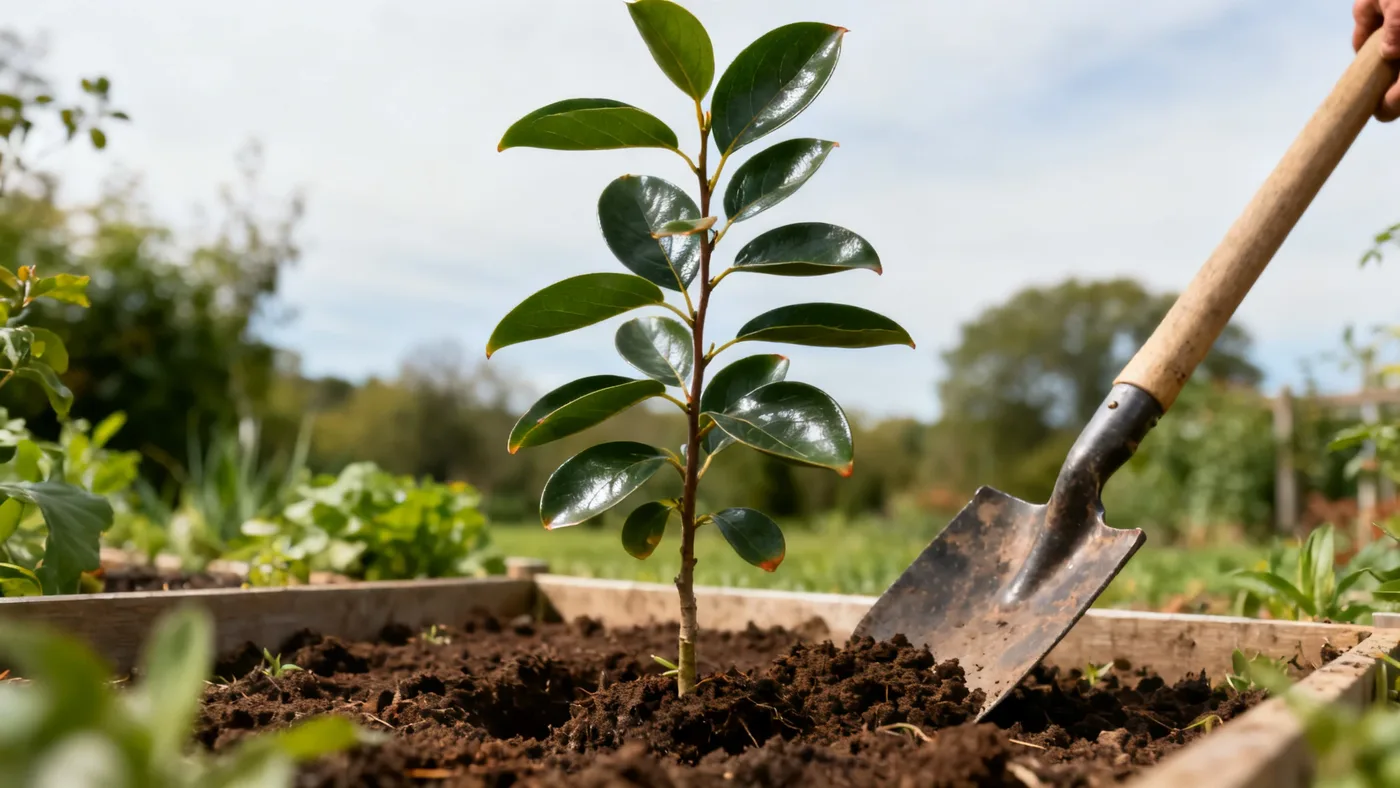
Transplanting American Persimmon Trees: Why the Taproot Matters
Moving an American persimmon tree requires more planning than most trees because of one critical root: the taproot. This deep vertical root can extend 6 feet or more into the soil, anchoring the tree and providing drought tolerance once established. When you dig up a persimmon to transplant it, a severed or damaged taproot can set back the tree for years or cause it to fail entirely. Understanding this root system is the key to successful transplanting, whether you are moving a young container tree or repositioning an established landscape specimen.
Why the Deep Taproot Changes Everything
The American persimmon's deep taproot is both an asset and a transplanting challenge. Once established, this vertical root anchor provides drought tolerance and stability, allowing mature trees in zones 4-9 to thrive with minimal supplemental watering. However, a cut or damaged taproot during digging forces the tree to redirect energy into growing replacement roots closer to the soil surface. This response takes years and makes the newly transplanted tree temporarily more dependent on consistent water.
A healthy persimmon taproot delivers three benefits:
- Draws water from deep soil layers, supporting drought tolerance
- Anchors the tree against wind stress
- Reduces competition from shallow roots that interfere with turf and hardscape
When the taproot is severed during transplanting, the tree must recover by growing a shallower, fibrous root system. For persimmons in northern zones, a poorly managed transplant can compromise survival through the first winter. The practical takeaway: transplant American persimmons while they are young (under 3 years old) and their taproots are still developing. Established trees are rarely worth moving.
Materials You Will Need
- Garden spade or shovel with a sharp blade
- Landscape fabric or burlap, large enough to wrap the root ball
- String or twine to secure the wrapping
- Bucket for water
- Mulch (wood chips or bark, 2-3 inches deep)
- Watering wand or soaker hose
- Work gloves and pruning saw (if branch trimming is needed)
When to Transplant
The best transplanting window is early spring or fall, while the tree is dormant. Dormant trees allocate energy to root recovery rather than leaf production. Container-grown nursery trees, which have a more compact root system, can be planted spring through fall, but spring and fall still offer cooler soil temperatures and natural rainfall that reduce transplant shock.
Avoid transplanting in summer heat or late winter when hard freezes remain possible in your zone.
Transplanting a Young or Container Persimmon
This is the scenario most home gardeners face: moving a container tree from the nursery to the garden or relocating a young landscape tree to a better location.
Step 1: Choose the new planting location. American persimmons fruit best in full sun (6+ hours daily) and tolerate zones 4-9. Select a site with well-drained soil. Persimmons adapt to clay, loam, and sandy soils, even poor or compacted soil, but waterlogged sites will kill the tree. Allow space for mature spread, which ranges from 20 to 35 feet. If planting multiple trees, space them 20-35 feet apart.
Step 2: Dig the planting hole. Make the hole as deep as the root ball and 1.5 times as wide. Dig the new hole before uprooting the tree to minimize the time roots are exposed to air.
Step 3: Water and prepare the tree. Water the root ball thoroughly several hours before digging. Moist soil clings to roots and protects them during the move. For a container tree, gently remove it from the pot and loosen the root ball by hand.
Step 4: Dig, wrap, and transport. Dig around the tree in a circle 12-18 inches from the trunk. Work inward to sever lateral roots cleanly with the spade. Once loose, lift carefully and place the root ball on landscape fabric or burlap. Gather the fabric around the root ball and tie it securely with twine to hold soil in place. Move the wrapped tree to the prepared hole without delay to minimize root exposure.
Step 5: Plant and backfill. Set the tree in the hole so the root collar (where trunk meets roots) is level with soil surface. Backfill with native soil, pressing gently to eliminate air pockets. Do not add heavy compost amendments; persimmons thrive in ordinary soil.
Step 6: Water and mulch. Water thoroughly to settle soil and hydrate the root ball. Apply 2-3 inches of mulch around the base, leaving 3-4 inches clear around the trunk.
Transplanting an Established Persimmon
Moving a mature persimmon tree (5+ years old) is labor-intensive and carries high risk because the fully developed taproot cannot be preserved intact. If you must relocate an established tree, prune one-third of the canopy a month before digging to reduce the crown's water demand. Dig a root ball 3-4 feet in diameter to capture as much of the taproot and surrounding roots as possible. This is physically demanding work; you may need equipment or professional help. After transplanting, expect slow growth or reduced fruit production for 1-2 seasons as the tree recovers.
Common Mistakes to Avoid
Mistake: Planting too deep. The root collar should rest at soil level, not buried. Burying the trunk invites rot and fungal disease.
Mistake: Severing the taproot without minimizing damage. When digging, make the root ball as large as practical to preserve as much taproot length as possible. Even a partial taproot helps the tree recover faster than one stripped entirely to fibrous roots.
Mistake: Amending soil heavily. Persimmons tolerate poor, compacted soil. Heavy compost amendments create a soft layer where roots stop growing and circle back. Use native soil to backfill unless your soil is completely inert, in which case mix one-third compost with two-thirds native soil.
Mistake: Transplanting a mature tree alone. A saturated root ball 3-4 feet in diameter weighs hundreds of pounds. Attempting to move it solo risks injury and root damage. Get help or use equipment.
Expected Recovery and Timeline
A young persimmon transplanted carefully may show little setback and resume normal growth within the first season. An established tree may display yellowing leaves, slower growth, or light fruit production for 1-2 seasons. This is normal and does not indicate failure.
Growth rates average 12-18 inches per year once the tree is established, though newly transplanted trees grow more slowly in their recovery year. Expect full recovery within 2-3 years for young trees and up to 5 years for mature specimens. Consistent watering during the first year supports this recovery; water weekly when the top inch of soil is dry, then reduce frequency as fall approaches.
Transplanting Quick Reference
| Task | Timing | Key Point |
|---|---|---|
| Choose location | Before digging | Full sun, zones 4-9, well-drained soil, 20-35 ft spacing |
| Prepare planting hole | Before uprooting tree | Depth = root ball depth; width = 1.5x root ball width |
| Water tree | Several hours before digging | Moist soil protects roots during move |
| Dig and wrap | Morning or overcast day | Minimize air exposure; wrap in burlap |
| Plant immediately | Same day as digging | Root collar level with soil surface |
| Water and mulch | Right after planting | 2-3 inches mulch; 3-4 inches clear around trunk |
| Monitor moisture | Spring through fall, first year | Water when top inch of soil is dry |
| Track recovery | Year 2-5 | Young trees: 2-3 years to full vigor; mature: 5 years |
Next Steps
After transplanting, your American persimmon will benefit from consistent care through its establishment phase. For guidance on sun, soil, water, and pruning basics specific to this species, see our comprehensive American persimmon care guide.