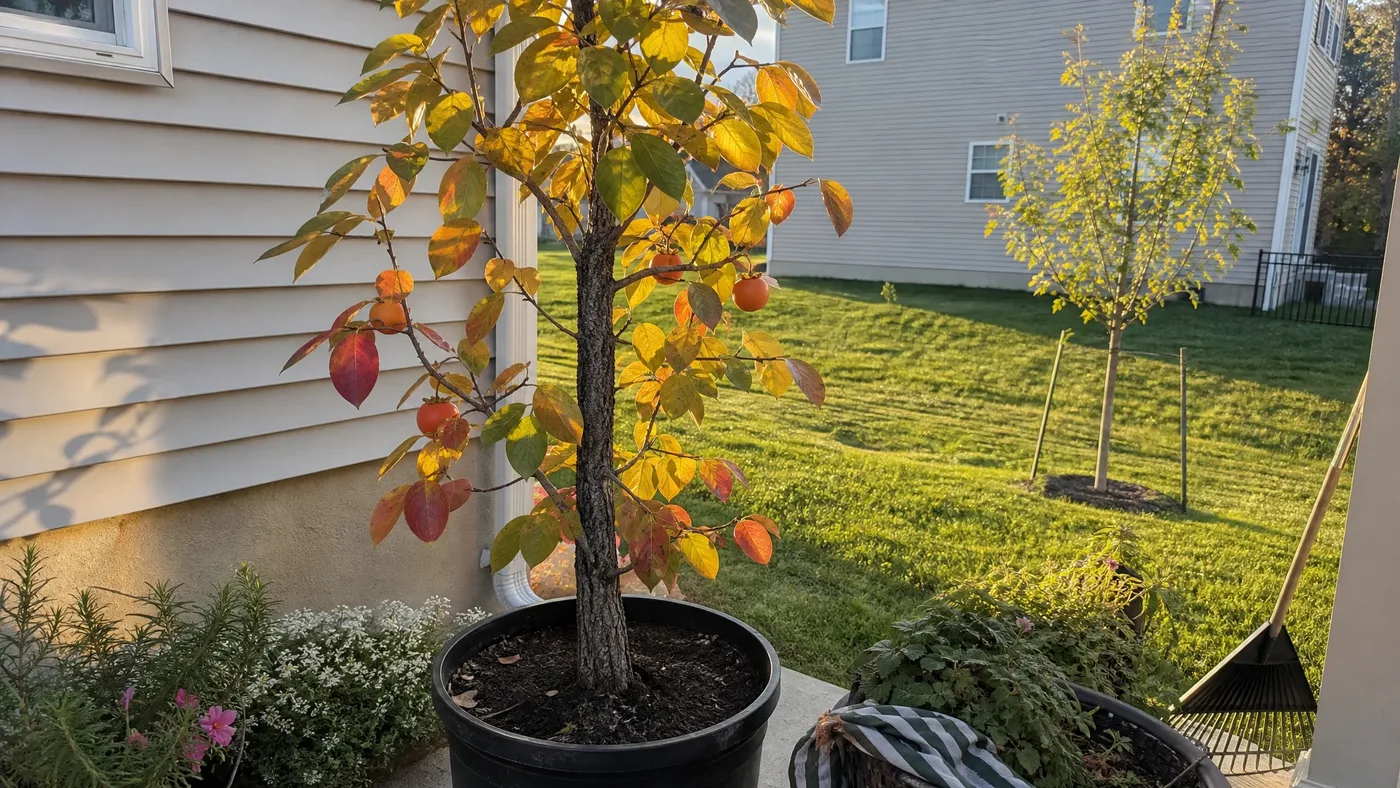
Growing American Persimmon Trees in Containers and Pots
Many people buy one American Persimmon, set it in a decorative pot on the patio and wait for fruit. The fruit never comes, and the tree sulks in a pot that was too small from the start. Two things usually go wrong. This tree needs a partner to set fruit, and its deep taproot does not like being moved from pot to pot.
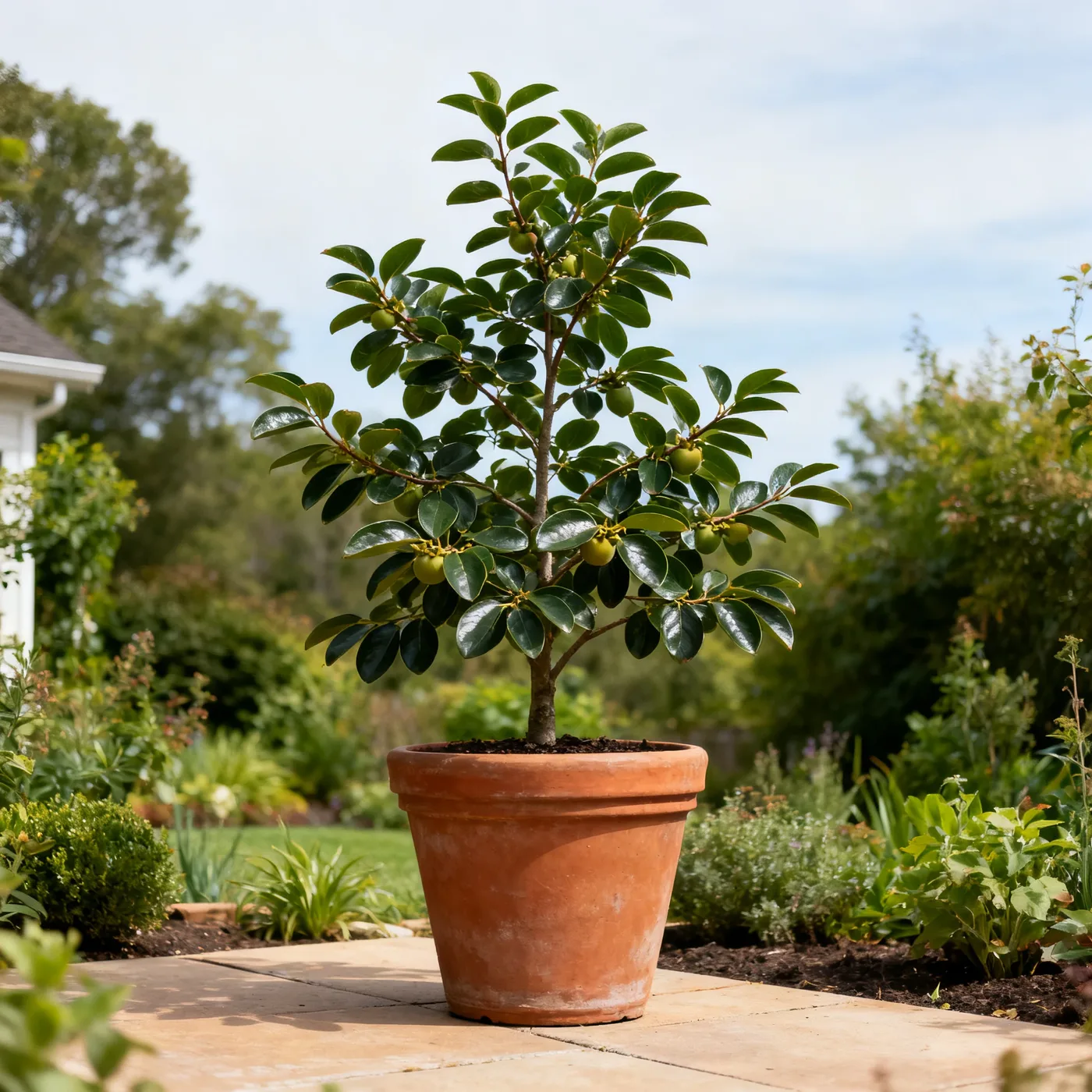
A container can work well for the long term if you set it up once and set it up right. The tree rewards you with strong fall color, and with a partner it rewards you with fruit.
This article talks about pot size, soil mix, watering, feeding, pollination and winter protection for a container-grown American Persimmon and answers the questions customers ask us most. Read on to learn how to build a pot setup you will not need to disturb for years, and how to bring the tree through winter.
Growing American Persimmon in a Pot: The Short Answer
American Persimmon can live in a container for many years. The catch is that it is a big native tree, so a pot slows it down but never turns it into a small plant.
What a Pot Can and Cannot Do
Here is the size you are working against. The University of Kentucky describes a tree growing 40 to 50 feet tall in an upright oval shape, and NC State gives a wider range of 30 to 80 feet in the ground.
A container limits the roots, and that limits the top. Expect a tree that stays far below those figures but still wants open space overhead. Our guide on how big an American Persimmon tree gets covers the in-ground numbers.
Dwarf American Persimmon: What to Expect
Customers usually ask us about a dwarf form first, and our answer is that none of the sources we rely on describe one. We treat every plant as a full-size tree.
The way to keep it manageable is the container itself, along with light pruning. We do not recommend buying a plant sold as a dwarf and trusting the label.
Choosing the Pot and Planting Your American Persimmon
The pot is the one decision you cannot easily undo. American Persimmon grows a deep taproot, and that shapes everything about container choice.
Pick the Final Pot Now
Common advice says to start small and step the tree up a size every year or two. We do not follow it for this plant. Because a deep taproot makes the tree difficult to transplant, each move risks that root.
What we tell customers is to choose the largest pot you can realistically handle, and to favor depth over width. Our buying guide on container size helps you match the pot to the tree you start with.
Pot Material and Weight
Pick a pot with several large drainage holes and a heavy wall that will not tip in wind. A tall tree on a light pot is a recipe for a fall in the first summer storm.
Thin dark plastic soaks up sun and cooks the roots on a south-facing patio. Thick resin, wood or glazed ceramic buffers that heat better. Clay breathes but dries quickly, so it asks for more watering.
Planting Steps
Plant in spring or early fall, while the tree has time to settle before weather extremes. Work through these steps in order.
- Set the pot in its permanent spot first. A full pot of wet mix is very heavy to move.
- Add a layer of mix in the bottom and set the tree on it so the top of the root ball sits just below the rim.
- Fill around the roots and firm gently with your hands. Do not bury the trunk deeper than it grew in the nursery pot.
- Water slowly until it runs from the drainage holes, then top up any settled mix.
Our trees are container grown, so they reach you with an intact root system. The University of Florida notes that persimmon should be planted from containers or balled and burlapped when young.
The Soil Mix That Works for American Persimmon in a Container
In the ground this tree takes almost any soil. In a pot, the mix has to do the work that the earth normally does, so drainage and structure matter more than fertility.
What to Put in the Pot
Start with a quality potting mix and open it up with coarse material such as pine bark fines or grit. The aim is a mix that holds moisture but drains freely, because common persimmon prefers moist, well-drained soil.
Skip heavy garden soil. It packs down in a pot, shuts out air and holds water around the roots long after the surface looks dry. Our soil guide for American Persimmon goes deeper on drainage and amendments.
Adjusting pH
You will almost never need to. NC State lists acid, neutral and alkaline soils as suitable, with neutral given as 6.0 to 8.0, and UF/IFAS lists both acidic and alkaline soils as tolerated.
That is a wide window, so most commercial potting mixes sit comfortably inside it. We skip lime and sulfur unless your local extension service tells you your water or mix is far out of range.
Standing Water Is Still a Risk
The species tolerates extended flooding in the wild, but we still never let a pot stand in a saucer of water. Roots in a container have nowhere to go when the mix stays soggy. Lift the pot on feet and empty any saucer after rain.
Watering and Feeding a Potted American Persimmon
Here is where container trees differ most from planted ones. In the ground, American Persimmon is drought and urban tolerant. In a pot, it is only as drought tolerant as the volume of mix allows.
Setting a Watering Routine
Do not water on a calendar. Push a finger into the mix and water when the top layer feels dry but the mix below is still slightly damp. Then water until it drains from the bottom.
In our rows, pots dry out far faster than ground-planted trees, and a windy, sun-baked patio makes it worse. In the hottest weather a pot can need water every day. In cool spells it may go several days.
A young tree in its first season needs the most attention. Our guide to watering young versus established trees covers the stages.
Feeding Without Overdoing It
This tree grows at a moderate pace and tolerates poor soils, so we feed lightly. Apply a slow-release fertilizer once as growth starts in spring, following the label rate for the pot size.
Heavy feeding pushes soft, fast growth that suffers in winter. Stop feeding by late summer so shoots can harden before cold arrives. Watering also flushes nutrients out of a pot, so pale, undersized leaves in midsummer are a cue to check your routine first.
See our guide to fertilizing American Persimmon for products and timing.
Sun, Pollination and Fruit for a Patio American Persimmon
If you want fruit rather than just a leafy tree, this section matters most. Placement and pollination decide whether a pot ever produces a persimmon.
Where to Put the Pot
It does best in full sun, meaning six or more hours of direct sunlight a day, and it also tolerates partial shade of two to six hours. For a pot, put it in the sunniest spot you have.
A tree in part shade will live, but it gives you less. The pot also heats up on a south-facing wall, so keep the root zone watered there. The reward for a good spot is fall color in yellow, red and purple.
You Need Both a Male and a Female Tree
This is the point most buyers miss. Persimmons are dioecious, which means separate male and female trees, and you need both to get fruit. The flowers appear from May to June, slightly fragrant and not easy to spot, on separate trees.
One potted tree alone will not fruit. Plan on two pots set close together, or a female in a pot with a male growing nearby.
When Fruit Comes, and the Mess
Grafted trees need 3 years to begin producing, seedlings 4 to 9 years, and full production can take as many as 10 years. Be patient with a pot.
Fruit drop can be messy, too. Do not put the pot over the seating area or a light-colored deck. When the fruit does come, our page on ripening, astringency and harvest tips will help you time picking.
Winter Protection for a Container American Persimmon
A tree that is hardy in the ground can still lose roots in a pot. Soil in the ground insulates roots, while a container exposes them to cold from every side.
Know Your Zone, Then Adjust
The in-ground tree is hardy in USDA zones 4a through 9b. Treat those zones as the outer limit for a pot, not a guarantee. In the colder half of that range, a potted tree needs real protection. In the warmest zones, it needs little.
Check minimum winter temperatures with your local extension service, since a pot sits more exposed than any zone map assumes.
How We Protect Potted Trees
After the leaves fall, take these steps before hard freezes arrive.
- Move the pot against a sheltered wall, or into an unheated garage or porch, where it stays cold but out of wind.
- Wrap the pot sides in burlap or bubble wrap, and cover the top of the mix with a layer of mulch.
- Raise the pot on feet or bricks so water drains and the base cannot freeze to the ground.
- Water lightly now and then if the mix dries out, because a dormant tree still needs some moisture.
Waking the Tree in Spring
Do not bring the tree into a heated room. It is a deciduous tree that needs to stay dormant, and indoor warmth wakes it too early.
In spring, unwrap gradually as the weather settles, and resume watering as buds swell. Then scrape off the top layer of mix and replace it with fresh mix before the first feeding.
Pruning, Repotting and Other Container Problems
Most trouble in a pot comes from the container, not from the tree. Here is how to keep the tree in check and how to catch mistakes early.
Pruning and Suckers
Persimmon needs little pruning, so a potted tree needs only dead wood removal and light shaping. Mature trees produce root suckers, and in a pot they crowd the main stem. Cut them off at the base as they appear.
In a container we keep every cut light, and we never prune hard to force the tree smaller.
Repotting, If You Must
Plan for as few moves as possible. If roots circle hard against the wall or the tree dries out within a day, slide it out carefully, keep the root ball intact and handle the taproot gently.
Quick Problem Finder
This table matches common signs to the usual cause and the fix.
| What you see | Likely cause | Fix |
|---|---|---|
| Leaves scorch and drop in summer | Pot dried out | Water deeply and check daily in heat |
| Yellowing, slow growth | Soggy mix or blocked drainage | Clear the holes and loosen the top mix |
| Flowers but no fruit | No partner tree nearby | Add a tree of the other sex |
| Dead twigs after winter | Roots or stems chilled | Wrap the pot and shelter it next year |
| Wilting branches on an older tree | Possible vascular wilt | Ask your extension service to look at it |
Keeping American Persimmon Happy in a Pot for Years
Pick one large, deep pot with good drainage, plant it once and leave the taproot alone. Use a free-draining potting mix, water by feel rather than by the calendar, and feed lightly in spring. Remember that you need two trees, a male and a female, for fruit. Wrap the pot and shelter it from winter wind, and expect a wait for fruit, since the 3-year figure is for grafted trees.
American Persimmon
Nursery-grown American Persimmon in sizes from 1 Gallon, shipped to your door.
From $54.95
Shop Now →Customers come back to us for American Persimmon trees with a sound root system that take to pot life and keep growing season after season. Our own farms raise top-quality trees for sale, and we grow each one knowing it may end up on a patio.