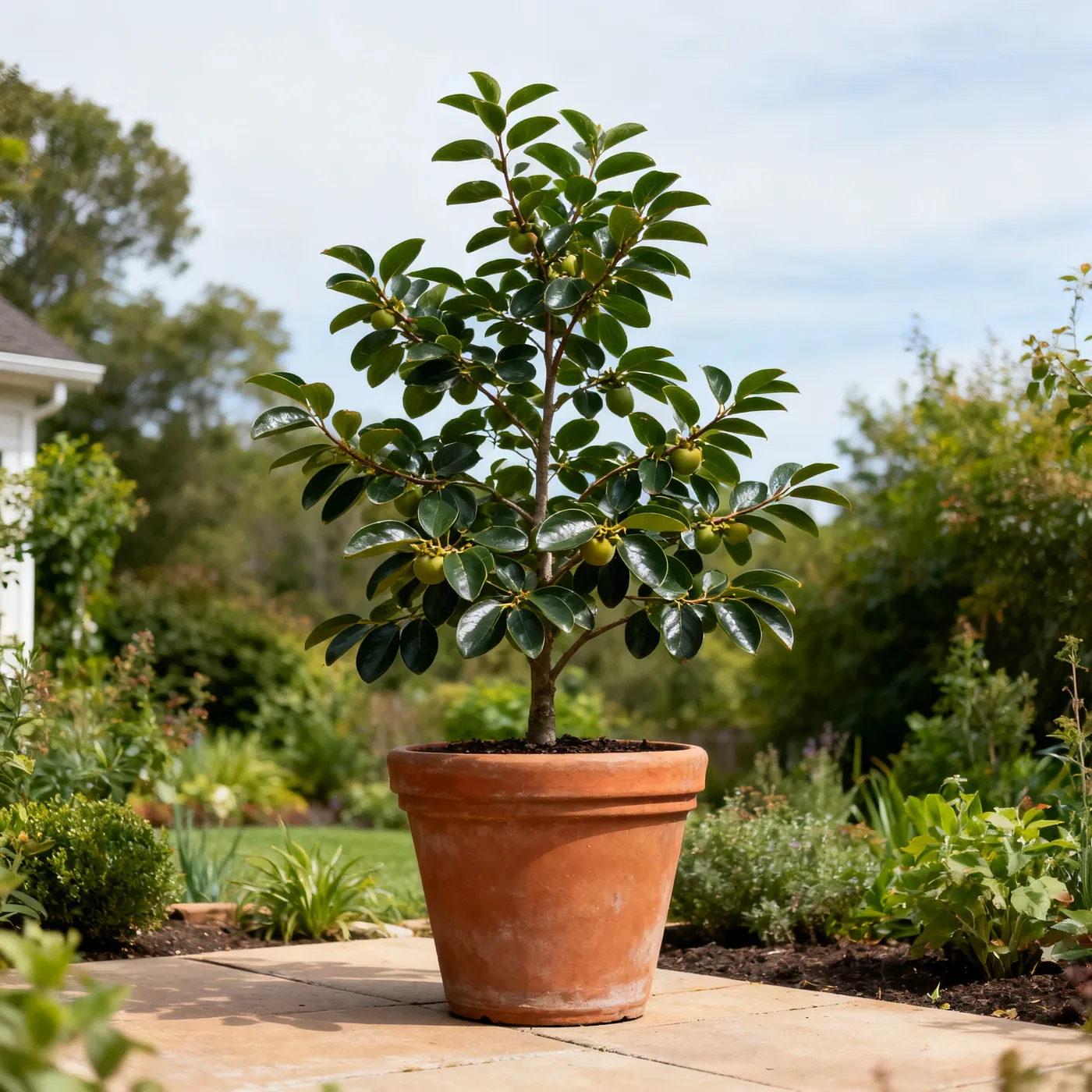
American Persimmon
Diospyros virginiana
Nursery-grown American Persimmon trees, ready to plant
This size is not in the online store yet. Ask about availability and we will reply with current stock.
- Grows 12-18 inches per year and matures to 35-60 feet, making it ideal for long-term shade
- Produces edible fruit that attracts wildlife; extremely drought-tolerant once established
- Adapts to poor, compacted soil and clay where other trees fail
About this plant
American Persimmon is a deciduous shade tree native to eastern North America, hardy from USDA zones 4-9. It produces edible fruit in late summer, attracts wildlife, and transforms landscapes with fall colors ranging from yellow to deep red. The long taproot makes it exceptionally drought-tolerant once established, and it adapts to poor, compacted soils where other trees struggle.
Each tree arrives in a nursery container (1 or 3 gallon size). Upon arrival, water thoroughly and place in a location matching the full-sun to part-shade requirements. Plant within a few weeks into well-drained soil at the same depth it was growing in the container. Water regularly the first season to establish the deep taproot system.
American Persimmon at a glance
| Botanical name | Diospyros virginiana |
|---|---|
| Plant type | deciduous tree |
| USDA zones | 4-9 |
| Mature height | 35-60 ft (some wild specimens to 80 ft) |
| Mature width | 20-35 ft |
| Sun | full sun to part shade; best fruiting in full sun |
| Water | average to moist, well-drained soil; drought tolerant once established via a deep taproot |
| Bloom time | late spring, typically May-June |
| Bloom color | creamy white to pale yellow-green, not showy |
| Growth rate | slow to moderate; roughly 12-18 in. per year once established |
| Deer resistance | low resistance (deer readily browse fallen fruit and can browse young foliage) |
| Best planting time | early spring or fall, while dormant; container-grown trees can be planted spring through fall |
Container sizes explained
| #1 / 1 Gallon | A trade one gallon pot (about 6.5 inches). One to two seasons older than a quart, with an established root system. |
|---|---|
| #2 / 2 Gallon | A trade two gallon pot. Common for peonies and perennials that need root room; usually blooms the first or second year. |
| #3 / 3 Gallon | A trade three gallon pot (about 10 inches). A well-developed shrub or small tree, often 2 to 4 feet tall on arrival. |
Questions before you buy
Which size should I choose, 1 gallon or 3 gallon?
Choose the 1 gallon for smaller spaces or budget-conscious planting; it will grow at the same rate once established. The 3 gallon offers a head start with more immediate presence and a larger root system to handle establishment stress.
When should I plant my persimmon after it arrives?
Plant within a few weeks of arrival. Water thoroughly when it arrives and keep the container moist if planting must be delayed. Choose a location with full sun to part shade and well-drained soil, setting it at the same depth it was growing in the container.
How large does American Persimmon grow?
Mature trees typically reach 35-60 feet tall with a spread of 20-35 feet, though some wild specimens reach 80 feet. Growth is slow to moderate at roughly 12-18 inches per year once established, so your tree will take many years to reach full size.
How much sun does American Persimmon need?
American Persimmon thrives in full sun to part shade, though full sun produces the best fruit set. Even trees in part shade will grow adequately, making this a flexible choice for varied landscape positions.
What zones can I grow American Persimmon in?
American Persimmon is hardy in USDA zones 4-9, covering most of North America except the coldest northern regions and the Deep South. Check your local zone and verify with your local nursery or extension office if you are near a zone boundary.
What special care does my persimmon need the first year?
Water regularly during the first season to help establish the deep taproot system. Mulch around the base to retain moisture and suppress weeds. Avoid heavy fertilizing; American Persimmon thrives in poor soils and excess nitrogen can delay fruiting.