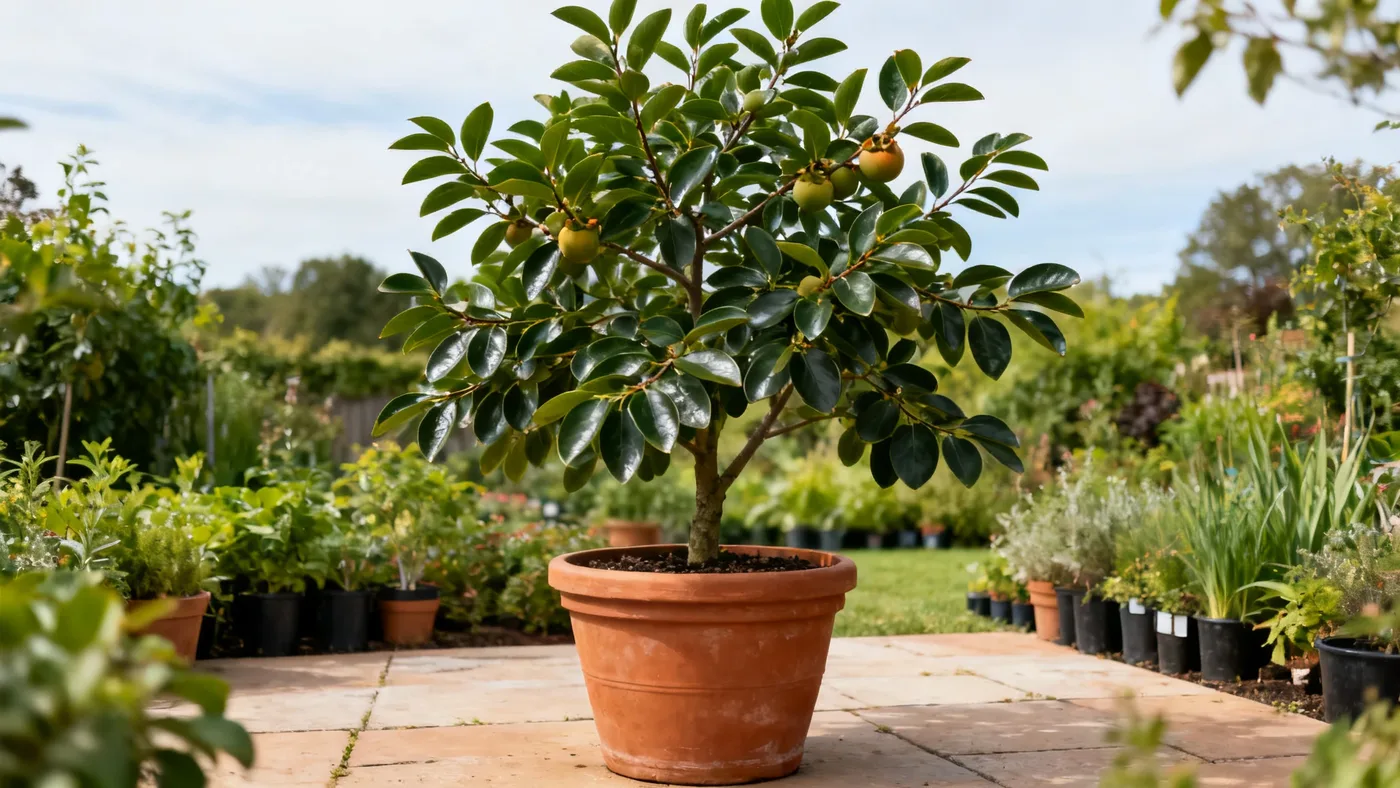
American Persimmon Buying Guide: What Container Size to Choose
Buying an American Persimmon tree is a genuine decision, not an impulse purchase. You are committing to a tree that will outlive the next decade and possibly outlive you. This guide walks you through what to look for, where to find quality trees, and how to choose the right size for your situation.
Understanding Container Sizes
American Persimmon trees sold at nurseries typically come in three standard sizes: quart containers, #1 containers, and #3 containers. Each serves a different need and comes with different costs and time horizons.
A quart-sized tree is a young sapling, usually 1 to 2 feet tall. It is affordable and easy to handle, but it will take longer to establish roots in your landscape. You are paying for a younger tree that will need more care in its first growing season.
A #1 container holds a more developed root system and often yields a tree 2 to 3 feet tall. This is a common sweet spot for homeowners: more established than a quart container, yet still reasonably priced. The tree will settle into your landscape faster.
A #3 container is the largest you will find in most retail nurseries. These trees are typically 3 to 5 feet tall and have a substantial root mass. They establish quickly and may fruit sooner than smaller specimens. The #3 size is suitable for American Persimmon when young, though the deep taproot means it should be planted in-ground within a few years rather than kept in a container permanently.
All container-grown American Persimmons can be planted spring through fall, which gives you flexibility outside the usual dormant-season window for bare-root trees.
What to Look For When Buying
A healthy American Persimmon tree will show these traits:
- Firm, unblemished bark free of large cracks, lesions, or oozing sap.
- Leaves that are glossy dark green and oval to elliptical in shape, 3 to 6 inches long. Avoid trees with yellowed, spotted, or wilted foliage.
- A moist soil ball that does not feel compacted or waterlogged. Gently tease the surface of the root ball; you should see roots that are white or light tan, not dark brown or mushy.
- Multiple branches arising from a clear central leader or trunk. Spindly, lopsided growth signals stress.
- No visible pest damage like webbing, scale, mealybugs, or borers in the bark.
- A pot that is not circled with roots breaking through drainage holes; this indicates the tree is root-bound and has spent too long waiting to be sold.
Ask the nursery staff how long the tree has been in its container and where it was grown. Trees grown regionally will acclimate to your climate faster than those shipped from across the country.
Cultivar Options and Growth Expectations
American Persimmon is a long-lived tree, commonly 75 or more years in the landscape. At maturity, expect a height of 35 to 60 feet and a width of 20 to 35 feet, though some wild specimens exceed 80 feet. The growth rate is slow to moderate, roughly 12 to 18 inches per year once established.
A seedling American Persimmon grown from seed typically requires 6 to 10 years before producing fruit. Grafted cultivars, which are propagated onto rootstock, can fruit within 3 to 5 years. If you are buying specifically to harvest fruit, a grafted cultivar is worth the extra investment.
Named cultivars you may encounter at nurseries include 'Meader' (self-fertile and reliable), 'Prok', 'Early Golden', 'Szukis', and 'Yates'. 'Meader' is particularly popular because it will produce fruit without requiring a separate male pollinator tree, though some female trees do produce fruit parthenocarpically. Ask the nursery whether the cultivar you are buying is self-fertile or requires a pollinator.
Comparing American Persimmons by Price Point
Budget-friendly option: Quart containers of seedling American Persimmons are typically the most affordable choice. You get the authentic native species and the satisfaction of growing from a young tree, but you accept a longer wait to first fruit and less certainty about the exact characteristics. This option works well if you are planting for wildlife or landscape presence rather than fruit production.
Mid-range option: A #1 container of a named cultivar is often the practical choice. You receive a tree that is closer to productive size, a known cultivar name, and often grafted rather than seedling genetics. The established root system means faster establishment and a reasonable path to fruiting within a few seasons.
Premium option: A #3 container of a grafted, named cultivar represents the highest initial investment. You get an immediate landscape presence, the fastest path to fruiting, and superior establishment rates. This is the choice if you want the tree to contribute to your landscape and harvests soon rather than years from now.
Do not assume that a higher price guarantees higher quality. Visit the nursery in person if possible to assess tree health directly using the checklist below.
Where to Buy American Persimmon Trees
Local native plant nurseries are your best starting point. They stock regionally appropriate material and can answer questions about local growing conditions, hardiness across USDA zones 4 through 9, and cultivar suitability for your area.
Specialty fruit nurseries often carry multiple cultivars and can provide detailed fruiting data specific to your region. They may also offer bare-root trees in dormant season, which can be more affordable than container-grown stock.
Online retailers and mail-order nurseries extend your options beyond local inventory. Verify that they ship to your state and that they guarantee tree arrival in good condition. Request photos before shipment if the option is available.
Avoid retailers that cannot name the cultivar they are selling or that provide vague descriptions like "American Persimmon assorted." A reputable seller will specify whether the tree is grafted or seedling, whether it is self-fertile, and what container size you are purchasing.
Red Flags and Common Mistakes
Buying a tree without verifying hardiness: Check the USDA zone rating for your location. American Persimmon tolerates zones 4 through 9. If your area falls outside this range, the tree will not survive winters or summers reliably.
Confusing American Persimmon with Asian Persimmon: Japanese Persimmon (Diospyros kaki) is a related but distinct species. Asian varieties produce larger, sweeter fruit, but they are not the same tree. Ask explicitly for Diospyros virginiana if American Persimmon is your target.
Ignoring pollination requirements: Unless you are buying a self-fertile cultivar like 'Meader', you may need both male and female trees for reliable fruiting on your property. This is a cost and space commitment worth understanding upfront. Ask the nursery whether the cultivar you are buying is self-fertile or parthenocarpic.
Assuming a container tree can live in a pot indefinitely: American Persimmon develops a deep taproot. A #3 container is acceptable for the first few years, but the tree should be planted in-ground within a few years. Plan for in-ground planting before you buy.
Buying from sellers who cannot provide a health guarantee: Reputable nurseries stand behind their trees. A typical guarantee covers dead-on-arrival or mortality within 30 days of planting. Understand the terms and what documentation you need to make a claim.
Soil, Sun, and Site Requirements
Before you buy, confirm that your site meets the tree's basic needs. American Persimmon adapts to a wide range of soils, including clay, loam, and sandy soils. It tolerates poor and compacted soil, which broadens planting options across many properties. Soil pH should be between 5.5 and 7.5, covering acidic to slightly alkaline conditions. Most home landscapes fall within this range.
The tree needs full sun to part shade, with best fruiting in full sun. If your site offers dappled shade, the tree will survive, but fruit yields may be lower.
Once established, American Persimmon is drought tolerant due to a deep taproot. It does not require constant moisture, though average to moist, well-drained soil promotes faster establishment and earlier fruiting. Avoid waterlogged sites.
For detailed information on ongoing care, consult our American Persimmon care guide, which covers sun, soil, water, and pruning basics for all life stages of the tree.
Buying Checklist for American Persimmon Trees
| Consideration | What to Check | Red Flag |
|---|---|---|
| Container size | Quart, #1, or #3 based on budget and timeline | Root ball circling pot or compacted soil |
| Bark and branches | Firm, unblemished, multiple branches from central leader | Cracks, oozing, or spindly lopsided growth |
| Foliage | Glossy dark green, oval leaves 3 to 6 inches long | Yellow, spotted, or wilted leaves |
| Root health | Light-tan or white roots; moist but not waterlogged soil | Dark brown, mushy, or circling roots |
| Cultivar name | Specific cultivar ('Meader', 'Early Golden', etc.) or seedling status | Vague descriptions like "assorted" or no name |
| Hardiness zone | USDA zones 4 through 9 for American Persimmon (Diospyros virginiana) | Zone rating outside 4-9 or species listed as Asian Persimmon |
| Pollination | Self-fertile cultivar or plan to buy both male and female trees | Seller cannot confirm if tree is self-fertile |
| Pests or disease | No visible damage, no webbing, scale, or cankers | Lesions, oozing, insect damage, or dead branches |
| Establishment plan | Site prepared for in-ground planting within a few years | Plan to keep in container long-term |
| Seller guarantee | Written guarantee covering dead-on-arrival or early mortality | No guarantee or vague return policy |