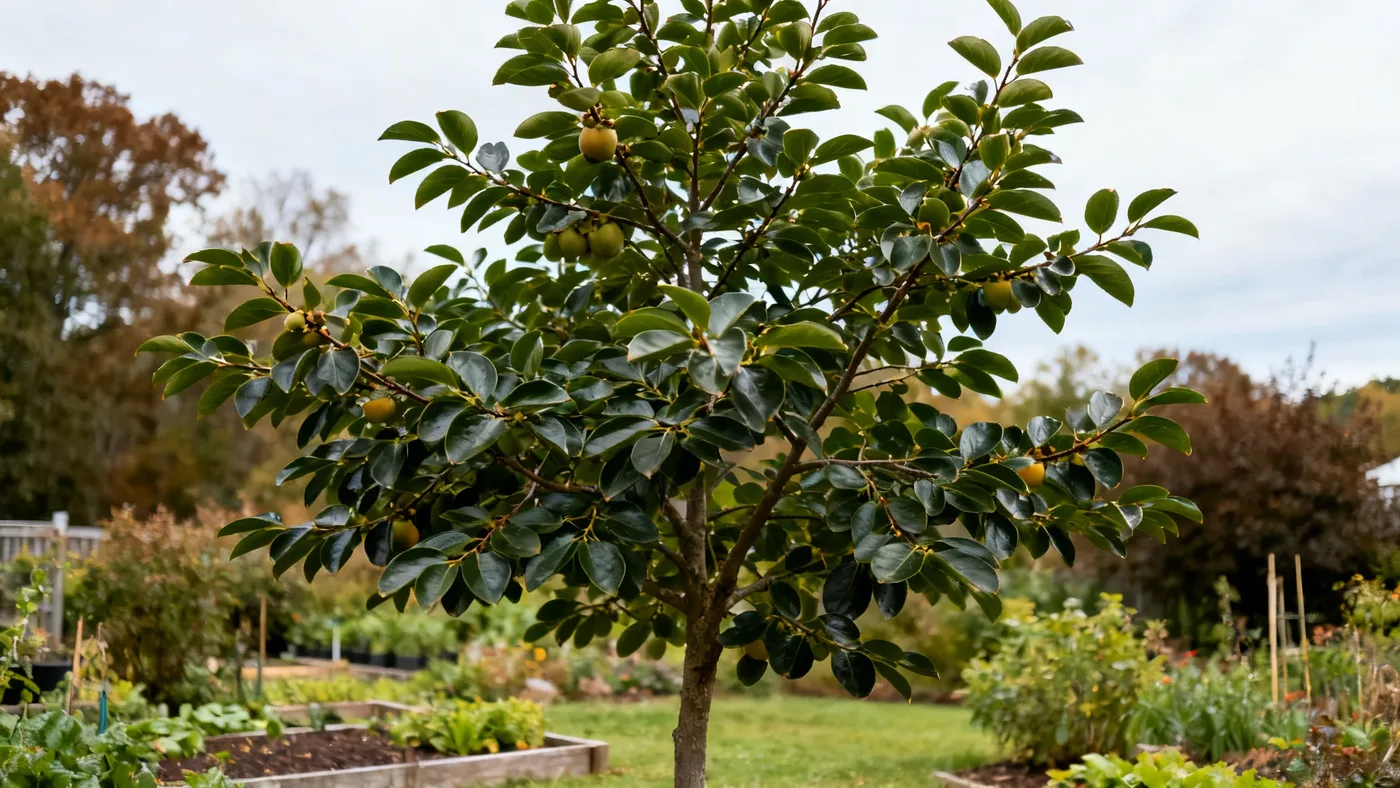
How Big Does an American Persimmon Tree Get?
A common mistake people make with American persimmon is planting it as if it were a patio tree. It looks modest in a 3-gallon pot, then spends the next few decades growing into a big shade tree that crowds the house, the driveway, and the power line. Put in the right spot, it pays you back with heavy crops of fruit. Put in the wrong one, it gets hacked back and bears poorly.
This article talks about mature height and spread, growth rate, spacing, pruning, container limits, and lifespan, and answers the questions customers ask us most. Read on to learn how big your tree will get, how long it takes, and where to set it so you never have to fight it.
American Persimmon Size at Maturity
Start with the numbers. What we tell customers is to plan for the full-grown tree, not the one in the pot.
What is the mature size of an American persimmon tree?
Plan for a tree that grows 30 to 80 feet tall and 20 to 35 feet wide. Most trees in yards land in the 40 to 60 foot range, and the University of Kentucky describes the habit as an upright oval shape. Wild trees on rich bottomland run toward the top of that range. Size your site for a 50-foot tree and you will rarely be wrong.
How wide does an American persimmon tree get?
Mature American persimmons spread 20 to 35 feet wide, creating a substantial canopy for shade. The exact spread depends on sunlight, pruning, and overall tree vigor in your growing conditions. Ensure you have at least 20 feet of clear space on all sides of where you plan to plant.
How does American persimmon size compare to other fruit trees?
American persimmons are larger than standard apple or pear trees but comparable to native hickory or black walnut trees in the same regions. Their mature height of 35 to 60 feet makes them a major canopy presence rather than a compact ornamental tree. If you need a smaller tree, research what dwarfing options are available through your nursery, though American persimmons have limited dwarf cultivars compared to other species.
Will an American persimmon tree outgrow my yard?
This depends entirely on your yard size and the tree's location. A mature American persimmon needs roughly 25 to 35 feet of open space to develop without competing with buildings, power lines, or other plants. If your property is smaller than 50 by 50 feet, carefully consider placement before planting or choose a location with ample clearance on all sides.
Growth Rate and Timeline
Size is only half the question. The other half is how long you wait, and what you see in the meantime.
How fast does an American persimmon tree grow?
American persimmon grows at a moderate rate. Young trees put their first years into a deep taproot, so the top looks slow. After that, growth picks up with good sun and steady moisture. In our rows, a young persimmon often looks like it is standing still for a season and then jumps. Growth speed varies with soil moisture, sun exposure, and climate.
How long does it take for an American persimmon to reach full size?
Expect a couple of decades or more to reach full height. That slow build gives the tree a strong frame and a drought-tolerant root system. That frame is made of famously hard, dense wood. If you want shade next summer, plant something faster. Plant a persimmon for the long run.
Why does my young persimmon seem to grow slowly?
Young American persimmons often prioritize developing a deep taproot system over visible above-ground growth during establishment. Poor soil, drought stress, or heavy shade can slow growth further, though mature trees are highly drought tolerant once established. Consistent water, full sun exposure, and avoiding transplant shock help maximize early growth rates.
When will my American persimmon start producing fruit?
Seedling American persimmons typically take 6 to 10 years to produce their first fruit, while grafted cultivars may bear fruit in 3 to 5 years. Once mature, reliable annual production follows if cross-pollination occurs or your cultivar is self-fertile. Patience is especially important with seed-grown trees.
Spacing and Siting Step by Step
Settle the spacing before you dig. Measure from where the trunk will stand, not from the edge of a bed, and mark out the full circle of the mature canopy.
How far apart should I plant American persimmons?
Space American persimmons 20 to 35 feet apart for orchard or landscape use, depending on their mature spread and your management plans. This spacing ensures each tree develops a full canopy without excessive competition for nutrients and light. Closer spacing creates overcrowding and reduces fruiting potential for each tree.
How much space does an American persimmon need?
Plan for a mature spread of 20 to 35 feet and a height of 35 to 60 feet when choosing a planting site. Allow roughly 20 feet or more from buildings and far more from overhead power lines to prevent future conflicts. Ensure adequate space above for light penetration and below for proper root development.
Plan for pollination at the same time. Male and female flowers grow on separate trees, so if you want fruit, set a male within reach of your females unless your cultivar is self-fertile. Most customers ask us about this only after the tree is in the ground, and it is much easier to settle before.
Can I plant multiple American persimmons in a small space?
Multiple persimmons in limited space creates crowding that reduces fruiting and overall tree health. If you must plant more than one, space them the full 20 to 35 feet apart to allow each to reach its potential. Consider planting just one persimmon with smaller companion plants if space is truly restricted.
What is the typical spacing for a commercial American persimmon orchard?
Commercial orchards typically space American persimmons 20 to 35 feet apart in rows, with row spacing of 25 to 30 feet to allow equipment access and harvesting. Exact spacing depends on terrain, mechanization needs, and cultivar vigor. Some intensive operations use closer spacing but manage trees through pruning to maintain productivity and light penetration.
Conditions That Change Final Size
Two trees of the same age can end up very different sizes. Climate, soil, and light make most of that difference.
Do American persimmons grow larger in certain USDA zones?
American persimmon is hardy in USDA zones 4B through 9B. Trees at the cold edge of that range usually grow more slowly and stay smaller, while longer seasons and steady rain build bigger trees. Our page on what hardiness zones American persimmon grows in covers the details.
Does soil type affect how big an American persimmon gets?
American persimmon adapts to clay, loam, and sandy soils, and it tolerates hot, dry conditions, poor soils, urban conditions, and wind. It also accepts acid, neutral, and alkaline pH. Trees in well-drained, fertile soil grow faster than those in poor or compacted ground, but even marginal sites work once the taproot reaches deeper layers.
Will an American persimmon in part shade grow as large?
American persimmons prefer full sun for best growth and fruiting but tolerate part shade. Trees grown in partial shade typically develop more slowly and reach a smaller ultimate size compared to those in full sun. For maximum height and canopy spread, provide at least 6 hours of direct daily sunlight.
Pruning, Containers and Keeping Size in Check
This is where most size problems start. Here is what to do, and what to skip.
Can I control the size of an American persimmon through pruning?
You can shape the tree and direct branch structure through pruning, especially when establishing a central leader in early years. Prune while dormant in late winter to remove crossing or damaged branches and improve form. Avoid heavy pruning to artificially dwarf the tree, as American persimmons fruit on new growth and excessive cutting reduces flowering and yield.
Common advice says to top the tree or cut it back hard to keep it small. We don't follow it. Topping triggers weak sprouts and removes the new growth that carries the crop. Choose a site sized for the full tree instead, and see our guide on how and when to prune an American persimmon tree for the cuts that do help.
Can I keep an American persimmon small in a container?
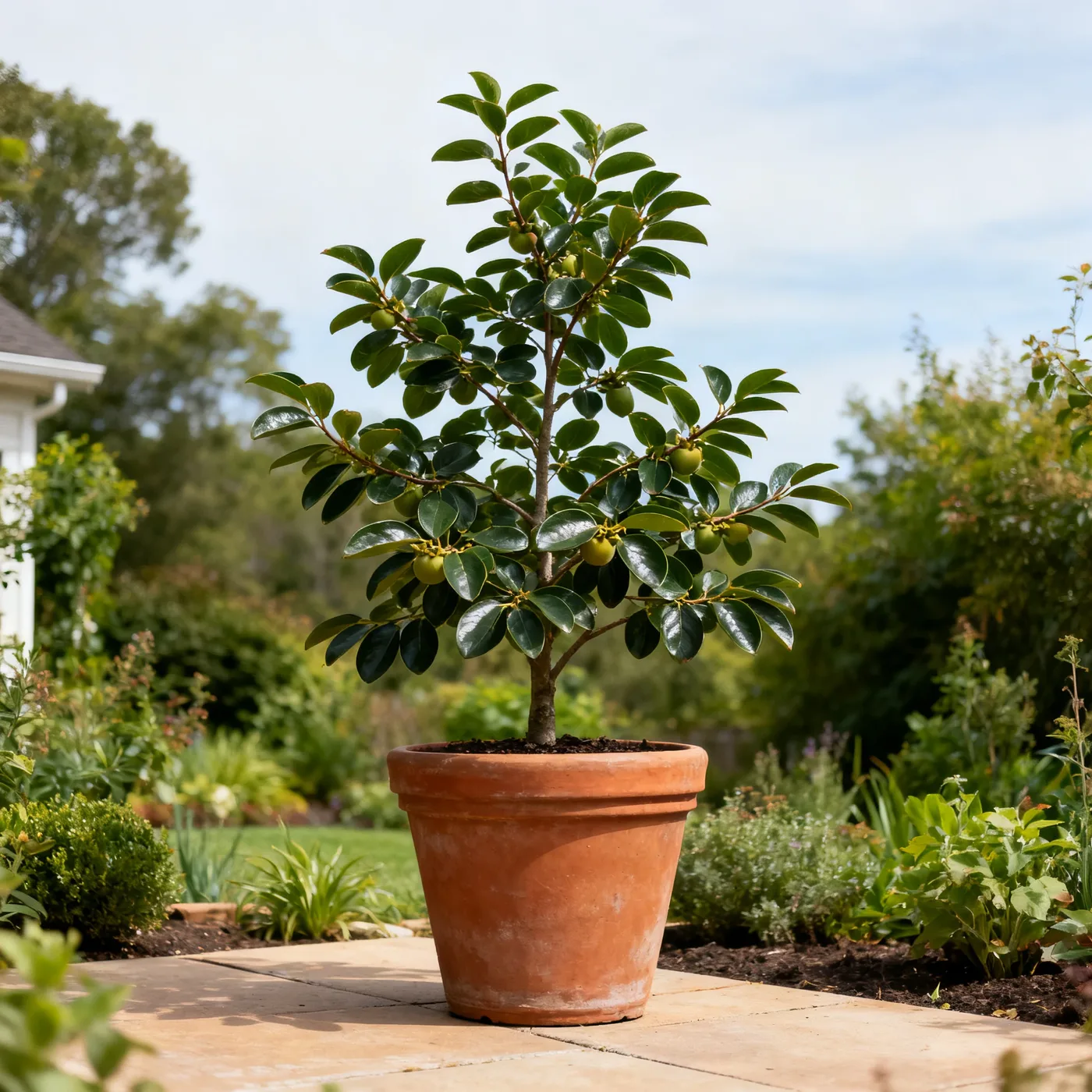
You can grow a young American persimmon in a large container such as a #3 size (roughly 3 gallons) for a few years while you plan its permanent location. The tree's long taproot makes permanent container culture unsuitable, as roots eventually become severely restricted. Plan to transplant any container-grown persimmon into the ground within a few years of purchase.
What is the maximum size for a container-grown American persimmon?
A container-grown persimmon may reach 6 to 8 feet tall before root confinement becomes limiting. Beyond this height, growth slows dramatically and branch dieback becomes common from root stress. Most gardeners transition container trees to in-ground planting before they reach this constraint.
When it is time to move the tree, do it early. Our notes on transplanting American persimmon trees and why the taproot matters explain why a young tree moves far better than an old one.
Lifespan and Very Old Trees
A persimmon you plant today may outlast you, so it helps to know how it behaves as it ages.
How long do American persimmon trees live?
American persimmons are long-lived trees, commonly reaching 75 years or more. Some documented specimens have lived over 100 years, making them a multi-generational investment in your landscape. Their longevity makes them ideal for permanent plantings that will benefit families for decades.
Do American persimmons get bigger as they age?
Yes, American persimmons continue growing throughout their lives, though the rate slows considerably after 20 to 30 years. A 50-year-old tree may still gain width or height compared to a 30-year-old specimen, but annual increments become modest. Very old trees eventually stabilize in size and focus energy on canopy maintenance and fruit production.
Are there very large, old American persimmon trees?
Historic American persimmons in favorable native range locations occasionally exceed 60 feet and approach or reach 80 feet in height. These exceptional specimens are most common in areas with optimal soil, moisture, and climate conditions. Visiting old specimens provides a sense of what your tree may eventually become.
Quick Reference Table
Use this table as a quick check before you choose a site.
| Characteristic | Typical Range |
|---|---|
| Mature height | 30-80 feet (most yard trees 40-60 feet) |
| Mature spread | 20-35 feet |
| Growth rate | Moderate (slow while the taproot develops) |
| Years to reach full size | About 20 years or more |
| Years to first fruit (seedling) | 6-10 years |
| Years to first fruit (grafted) | 3-5 years |
| Lifespan | 75+ years (some exceed 100) |
| Recommended planting distance | 20-35 feet apart |
| Hardiness zones | 4-9 |
| Container suitability | Temporary only (young trees) |
For detailed guidance on establishing and maintaining an American persimmon, including site preparation, sun and soil requirements, and ongoing care, see the American Persimmon care guide.
Give Your American Persimmon Room to Become the Big Tree
Plan for a 40 to 60 foot tree with a spread of 20 to 35 feet, give it full sun, and set it far enough from buildings and other trees that it never needs hard cutting. Be patient through the slow early years while the taproot builds. A well-sited persimmon grows for generations and bears more with each decade.
American Persimmon
Nursery-grown American Persimmon in sizes from 1 Gallon, shipped to your door.
From $54.95
Shop Now →Customers come back to us for American persimmon trees that arrive well rooted and true to the cultivar they ordered. We are growers with our own farms, and we grow and sell top-quality trees we are glad to stand behind.