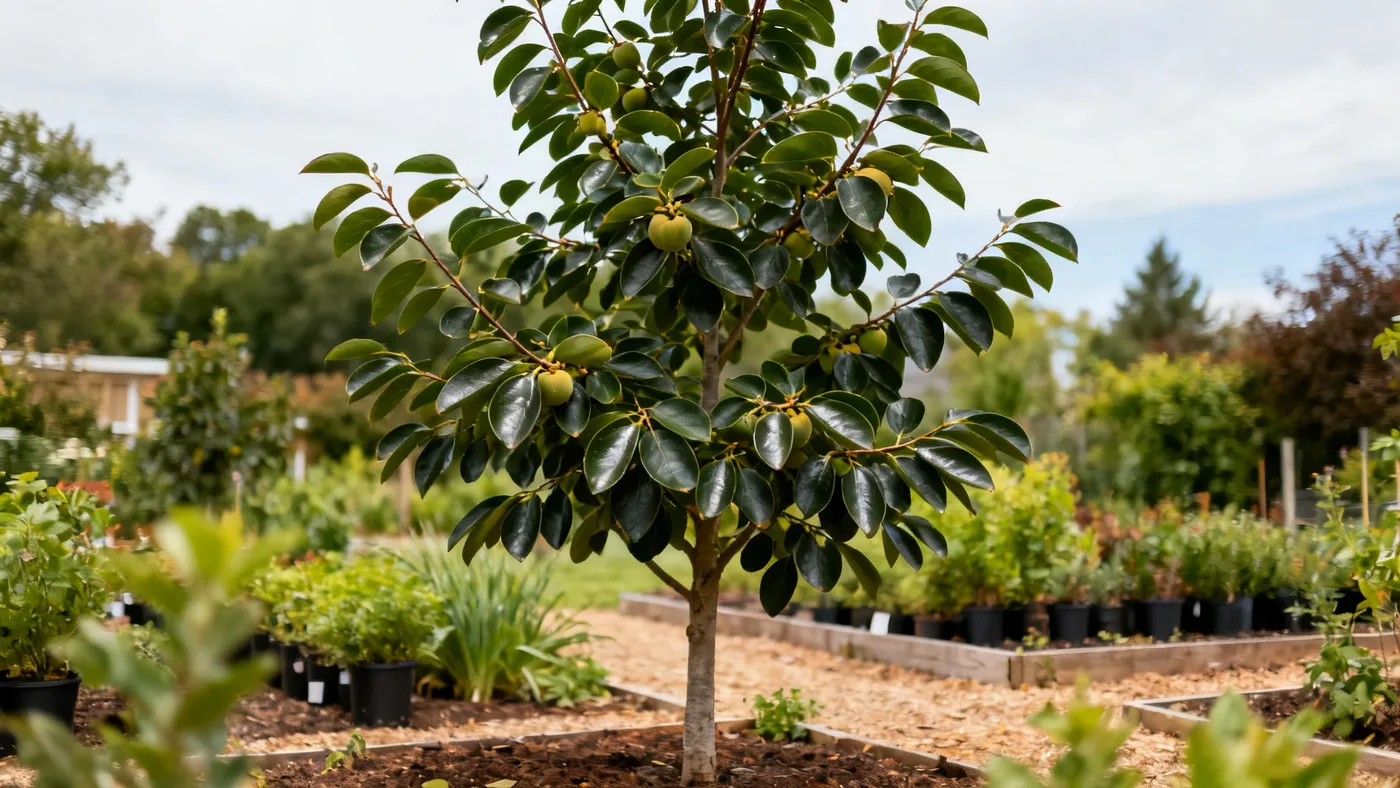
How Many Years Until an American Persimmon Tree Fruits?
When you plant an American persimmon tree, the wait to your first harvest depends almost entirely on how you acquire your tree. A seedling grown from seed typically takes 6 to 10 years to produce fruit, while a grafted cultivar can fruit in just 3 to 5 years. Understanding this timeline and the factors that shape it helps you choose the right tree for your situation and set expectations that match reality.
Timeline: Seedling vs. Grafted
How many years until an American persimmon tree produces fruit?
Seedling trees grown from seed typically take 6 to 10 years to produce their first crop, while grafted cultivars can produce fruit in 3 to 5 years. The method you choose has the biggest impact on when you can harvest.
What's the difference between a seedling and a grafted American persimmon?
Seedlings are grown from seed and take longer to fruit (6 to 10 years) because the tree must first establish a deep taproot and reach reproductive maturity on its own genetic timeline. Grafted trees combine a young scion from a proven fruiting cultivar with an established rootstock, which is why they skip years of juvenile growth and fruit much sooner.
Will my container-grown persimmon tree follow the same fruiting timeline?
Container-grown trees reach fruiting age on the same schedule as field-grown trees, meaning a grafted cultivar in a pot will still fruit in 3 to 5 years. However, because American persimmons have a long taproot unsuited to permanent container culture, plan to transplant your tree into the ground within a few years to ensure it thrives long-term.
How fast do American persimmon trees grow?
American persimmons grow at a slow to moderate rate, roughly 12 to 18 inches per year once established. This steady growth eventually produces a mature tree 35 to 60 feet tall and 20 to 35 feet wide, with decades of productive fruiting wood ahead.
Propagation & Tree Type
Are seedling American persimmons worth growing if they take so long?
Seedlings are worth growing if you enjoy the slow process and don't mind waiting, but they're genetically variable and unpredictable in fruit flavor and quality. If you want dependable fruit sooner, a grafted cultivar is the smarter choice for a home grower.
What do I need to know about grafted cultivars?
Grafted cultivars like 'Meader,' 'Prok,' 'Early Golden,' 'Szukis,' and 'Yates' can produce fruit in 3 to 5 years, all sharing the same accelerated timeline. Grafting joins the genetic material of a proven fruiting cultivar to the rootstock, which is why they fruit years ahead of seedlings.
Can I graft my own American persimmon to speed up fruiting?
If you have grafting or budding expertise and access to scion wood from a fruiting cultivar, you can graft onto a young rootstock to accelerate fruiting. This approach requires technical skill and is typically done by nurseries, but it's possible for experienced growers with the right tools.
Cultivar Selection & Performance
Which American persimmon cultivar fruits earliest?
'Meader' is notable for being self-fertile and parthenocarpic (able to set fruit without a male pollinator), making it both early and reliable. Other fast-fruiting cultivars include 'Prok,' 'Early Golden,' 'Szukis,' and 'Yates,' all reaching fruit in 3 to 5 years when grafted.
What makes 'Meader' persimmon special for home growers?
'Meader' combines two key advantages: it fruits in the 3 to 5 year window like other grafted cultivars, and it doesn't require a male pollinator tree to produce a crop. This independence makes it ideal for small spaces where you want reliable harvests without managing separate male and female trees.
Do I need both male and female American persimmon trees to get fruit?
Most American persimmon cultivars are dioecious, meaning separate male and female trees are needed for reliable fruiting. However, some female cultivars produce fruit parthenocarpically, and 'Meader' is specifically bred for this trait, so you can grow a single tree if you choose the right cultivar.
Environmental Factors Affecting Fruiting Timeline
Does sunlight affect how quickly my persimmon tree will fruit?
Full sun greatly improves fruiting; American persimmons tolerate part shade but fruit best with plenty of direct light. If your tree is shaded, it may delay or reduce flowering and fruiting, so site selection and later pruning to improve light penetration both matter.
How does soil quality influence when my tree produces fruit?
American persimmons are highly adaptable to a wide range of soils, including clay, loam, sandy, poor, and even compacted soils. While poor soil won't prevent fruiting, well-draining soil with consistent moisture supports vigorous growth that transitions to flowering sooner.
Can watering practices accelerate fruiting?
Consistent moisture during the first 2 to 3 years helps the tree grow vigorously and reach flowering maturity faster. Once established, American persimmons are drought-tolerant due to their deep taproot, so they need minimal watering thereafter.
Does fertilizer speed up or delay fruiting?
No fertilizer will shorten the natural timeline to fruiting maturity. Excess nitrogen actually reduces fruiting by encouraging leaf growth over flower production; a balanced fertilizer applied in early spring is all an established American persimmon needs.
Flowers & Fruit Set
When will my American persimmon tree flower?
American persimmons flower in late spring, typically May through June, with creamy white to pale yellow-green blooms that carry a mild, sweet fragrance. Flowering happens once the tree has reached reproductive maturity, which is the same milestone as fruiting readiness.
Do flowers guarantee fruit will follow?
Flowers are necessary but not sufficient for fruit production; a healthy tree also needs the right sex (female or parthenocarpic), adequate pollination (if required), and favorable weather during bloom and early fruit set. Poor weather, particularly frost or excessive rain during bloom, can cause all flowers to drop without setting fruit.
Why do some young trees flower but fail to produce fruit?
Young trees sometimes flower due to stress or hormonal shifts, but lack the energy reserves to support fruit development, especially under marginal growing conditions or without a pollinator. This is normal and usually resolves as the tree matures and settles into its location.
Pollination & Tree Sex
Do I need a male American persimmon tree?
Not if you choose a parthenocarpic cultivar like 'Meader,' which produces fruit without pollination. Most other female cultivars benefit from a male tree for better fruit set, though some female trees produce a modest crop on their own.
How do I tell if my persimmon tree is male or female?
Nurseries label their trees by sex at the time of sale; if you're unsure, wait for flowering season and observe closely. Male flowers will not develop into fruit, while female flowers (even on parthenocarpic trees) will swell into small green fruits after the bloom period ends.
Troubleshooting Delayed Fruiting
My American persimmon is 8 years old and still hasn't fruited. What's wrong?
If it's a seedling, it may simply need more time, some take closer to 10 years. If grafted and older than 5 years with no flowers, check sunlight (move it if shaded), reduce excess nitrogen fertilizer, and confirm it's female or parthenocarpic. Stress, poor drainage, or harsh winters can all delay fruiting temporarily.
Can cold winters delay American persimmon fruiting?
Severe frost during bloom or early fruit development can destroy flowers and prevent fruiting for that season. While American persimmons are hardy in zones 4-9, late spring frosts in zone 4 or 5 can occasionally damage blooms, but this rarely prevents fruiting in subsequent years.
Is my persimmon dropping fruit before it ripens?
Young trees often drop some fruit as a normal stress response; this improves as the tree matures. Once established, premature fruit drop usually points to inconsistent water, late frost damage, or pest or disease pressure. Check remaining fruit for insects or disease lesions.
Can I transplant my persimmon tree to improve fruiting?
Moving an established American persimmon is possible but risky, since it has a long taproot vulnerable to damage during transplanting. If you must relocate your tree for better sunlight or soil, do so in early spring or fall while dormant, and prioritize gentle digging to preserve the root system.
Long-Term Fruiting & Lifespan
How long will my American persimmon tree produce fruit after it starts?
An American persimmon is long-lived, commonly 75 years or more, with some specimens documented over 100 years old. Your tree will produce fruit reliably year after year for decades once established, potentially feeding your family and local wildlife for a lifetime.
Should I plant multiple persimmons for faster or larger harvests?
Planting multiple trees gives you a larger total harvest and ensures cross-pollination for cultivars that benefit from it. Space them 20 to 35 feet apart; if one tree has a slow start, the others will likely compensate and provide fruit sooner.
Quick Reference: Timeline at a Glance
| Tree Type | Years to First Fruit | Key Points |
|---|---|---|
| Seedling (from seed) | 6–10 years | Unpredictable fruit quality; highly variable genetics |
| Grafted cultivar ('Meader,' 'Prok,' 'Szukis') | 3–5 years | Reliable flavor and character; fastest to fruit |
| Container-grown grafted tree | 3–5 years | Same timeline as field tree; transplant within 2–3 years |
| Parthenocarpic ('Meader') | 3–5 years | No male pollinator required; self-fertile |
| Dioecious pair (male + female) | 3–5 years (female) | Both trees needed on most cultivars for best fruit set |
Care After Planting: Setting Up for Success
Once you've chosen your tree and planted it, the foundation for successful fruiting is solid care during establishment. Learn the essential practices in our American Persimmon care guide, which covers sun and shade requirements, soil preparation, watering schedules, and pruning techniques that support strong growth and reliable fruiting year after year.