How to Grow American Persimmon Trees from Seed
Every fall, customers show up with a pocketful of flat brown persimmon seeds from a roadside tree. Every spring, a good share of them tell us nothing came up. Nearly always the seed skipped its winter, or the seedling went into a pot too shallow for its root.
Seed is the cheapest way to get an American persimmon, and it gives you a tree with a long taproot that handles poor soil and dry spells. Done badly, you get a bag of moldy seed or a twisted root. Done right, you get a sturdy young tree for almost nothing.
Read on for how to collect and clean seed in fall, chill it through winter, sow it in spring, and carry the seedlings through their first summer, their first winter and the move to a permanent spot.
Fall: Collect and Clean American Persimmon Seed
Seed starting begins with the fruit. Get the timing and the source tree right, and every later step gets easier.
Pick the Right Fruit in the Right Year
The collecting window is short and it falls in autumn, so plan your trips to the tree.
The Forest Service reports that persimmon fruit ripens from September to November, and that good seed crops are borne every 2 years, with light crops in between. If a tree near you is heavy with fruit, collect this fall. In an off year, you may find little to gather.
Choose fruit that is fully ripe, soft and wrinkled, because unripe fruit is astringent and its seed is not ready. Our guide to ripening and astringency shows what ripe looks like.
Only female trees bear fruit, so the seed has a known mother and an unknown father. Note which tree you took the fruit from, because you will want to label the seed later.
Clean the Seed
Pulp left on the seed grows mold in storage. Clean it the same day you collect it.
- Mash the fruit in a bucket of water and rub the seed free of the pulp.
- Pour the mix through a sieve and rinse the seed under running water until it feels smooth.
- Pick out seed that is shriveled, cracked or chewed. Keep the plump, flat seed.
- Move the clean seed straight to damp medium. We do not dry it out first.
Wear gloves if the fruit is very ripe, because the pulp is sticky and stains. Collect more seed than you need, since some will fail no matter how carefully you handle it.
Winter: Stratify the American Persimmon Seed in Your Refrigerator
American persimmon seed will not germinate well straight from the fruit. It needs a long cold rest, and the refrigerator can supply it.
Set Up the Bag
The setup takes ten minutes. What matters is that the medium stays damp but never soggy.
Iowa State Extension says to prechill for 2 to 3 months at 34°F to 40°F. A home refrigerator sits in that range. Use the refrigerator, not the freezer, which runs colder than the range above.
Mix the seed into damp peat moss, sand or vermiculite in a zip bag. The medium should feel like a wrung-out sponge. Label the bag with the date and the tree it came from, and keep it away from ripening fruit in the same drawer.
Count the Months and Check the Bag
Timing decides when your seedlings come up, so work backward from spring.
Count back 2 to 3 months from your last spring frost to find your start date. Fall-collected seed fits this schedule well. Your local extension service can tell you the average last frost date for your county.
Look in the bag every couple of weeks. If the medium has dried, mist it. If you see mold, rinse the seed and repack it in fresh medium. If a seed splits and shows a white root, pot it right away in a deep container.
An Outdoor Option
You can let winter do the work instead of your refrigerator, with a few precautions.
Sow the cleaned seed in deep pots in fall and sink the pots to the rim in a sheltered bed. Cover each pot with hardware cloth so squirrels and mice cannot dig out the seed.
Check your hardiness zone first. The UF/IFAS publication lists zones 4B through 9B for the species, and a pot freezes harder than open ground in the cold end of that range.
Spring: Sow American Persimmon Seed in Deep Containers
Once the cold period is done and frost danger is passing, the seed goes into pots. The pot you pick matters more than any other choice in this guide.
Choose a Pot That Is Deep, Not Wide
A persimmon seedling sends its root down before it does much else, so give that root room.
The Forest Service notes that common persimmon sends down a deep taproot, which makes it difficult to transplant. A shallow seed flat bends that root sideways in a few weeks.
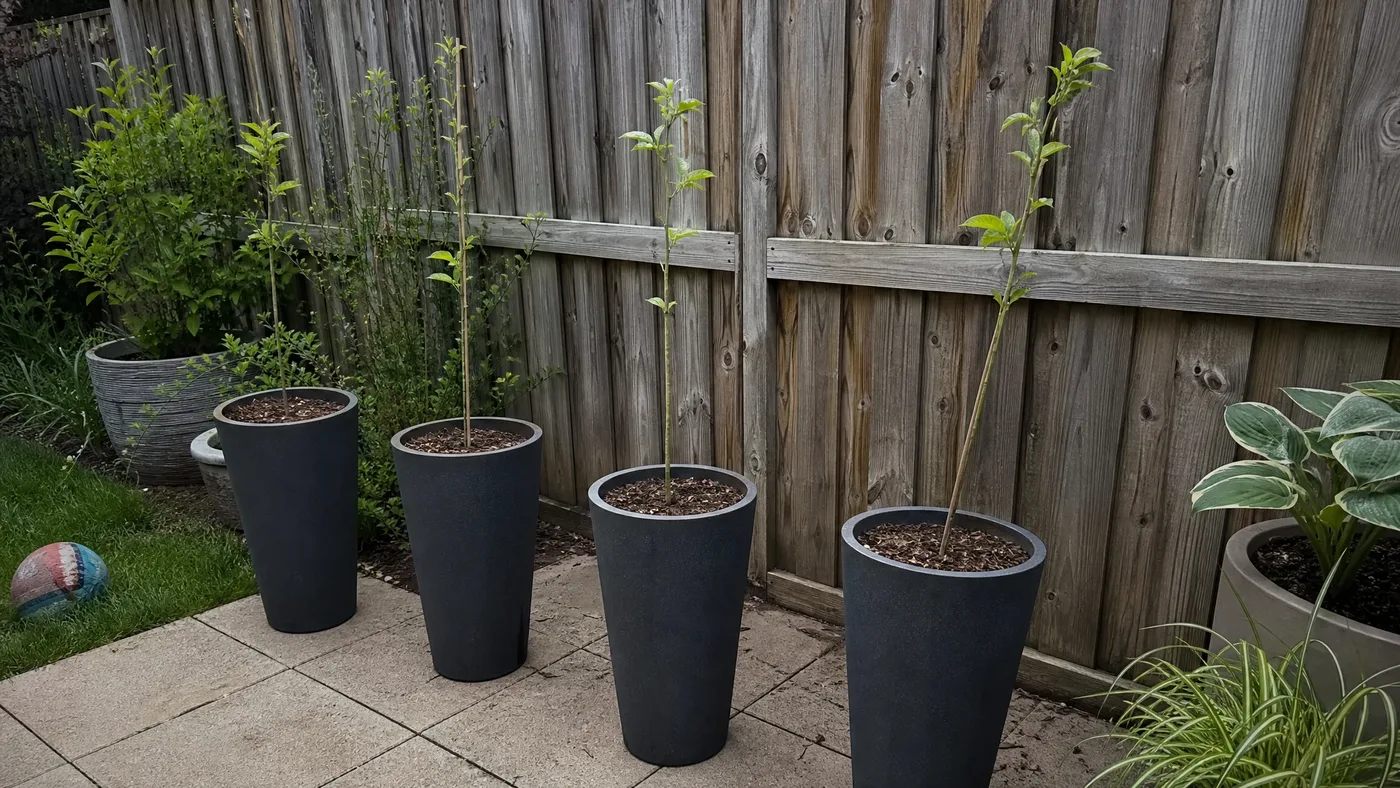
Many guides tell you to start tree seed in flats and move it on. We don't do that with American persimmon. Sow one seed per tall tree pot instead, with drainage holes and a loose, well-drained mix.
Sow and Wait
Sowing is quick, but the wait afterward tests most people.
Press each seed flat into the mix and cover it with a thin layer, a little more than the seed's own thickness. Water until it drains from the bottom, then set the pot where it gets bright light. Keep the mix evenly damp.
Seedlings emerge slowly and unevenly, so don't throw out a pot because its neighbor sprouted first. Mark each pot with the sowing date and leave it alone for several weeks past the point where you expected a shoot.
Seed from a fruit you love grows a new tree, not a copy of its mother. If you want an exact named selection, see the cuttings and named trees notes below.
Summer: Care for American Persimmon Seedlings in Year One
A persimmon seedling puts most of its first season underground. Your job is to keep that root growing without pushing the top.
Give Sun and Steady Water
Light and moisture both matter more in a deep pot than they do in the ground.
NC State lists full sun, meaning 6 or more hours of direct sunlight a day, and tolerates partial shade. Seedlings do best in a bright spot with afternoon light.
Water until it runs out of the drainage holes, then wait until the top of the mix starts to dry. A tall pot dries from the top down, so the surface can look dry while the lower mix is still wet. Push a finger into the mix before you water again.
Go Easy on Food and Expectations
In our rows, a seedling often looks tiny in July because the root is doing the work.
Resist heavy fertilizer to force top growth. A light feeding is plenty, and a soft, fast shoot on a short root is a poor trade.
Lift a pot once in midsummer and look at the drainage holes. A root tip showing there means the taproot has reached the bottom, and that is a good sign. Set the pot on a bench or bricks so the root can air-prune at the hole rather than circle.
Fall and Winter: Carry Seedlings Through Their First Cold Season
Come autumn, a seedling in a pot needs a different kind of care than a tree in the ground.
Let Them Go Dormant
Dormancy is part of the cycle, and seedlings should go through it outdoors.
Stop feeding in late summer so growth can slow. The leaves may turn yellow, red or purple before they drop, which UF/IFAS lists as the species' fall color range. Leave the pots outside through the first frosts.
Bringing seedlings into a warm room keeps them from resting, and they come out weak the next spring.
Protect the Roots
Roots in a pot have less insulation than roots in soil, so give them some help.
Sink the pots into a garden bed, or group them against a north wall and mulch around them. Water once in a while during dry spells, because a dormant seedling in a pot can still dry out.
In the colder zones, which the species reaches into zone 4, extra mulch is cheap insurance. Make sure the pots drain, since soggy winter mix kills more seedlings than cold does.
Year Two: Plant Out and Plan for a Mix of Trees
By the second spring, the taproot is long enough that the pot is becoming a limit. Move the seedlings out while they are still small.
Plant in the Permanent Spot Early
The longer the seedling waits in its pot, the harder it is to move.
Because the taproot makes the tree hard to transplant, pick its final site now. Read our guide on why the taproot matters when transplanting, then follow the steps in how to plant an American persimmon tree the right way.
Give the tree room, since extension sources put mature height at 40 to 60 feet (UF/IFAS) and width at 20 to 35 feet.
Expect Males and Females
Seed gives you a mix, and you can't tell which is which until the trees flower.
The University of Kentucky notes that male and female flowers are borne on separate trees. Flowers open in May to June, long after the seedlings are planted.
Only the females set fruit, so grow several seedlings and keep the ones that fruit. Our page on how many years until an American persimmon fruits sets realistic expectations.
Cuttings and Named Trees
Cuttings come up often when people search for ways to propagate this tree, so here is our practice.
We start American persimmon from seed. For a named selection that fruits the way you want, we suggest a nursery tree, not a seedling. See our list of varieties and cultivars worth growing for the options.
Seed-to-Seedling Calendar
This table gathers the year into one view so you can plan your own dates.
| Season | Task |
|---|---|
| Fall | Collect ripe fruit from a heavy-crop tree, clean the seed and bag it in damp medium |
| Winter | Chill the bag in the refrigerator for 2 to 3 months, checking it every couple of weeks |
| Spring | Sow one seed per tall pot after frost danger passes, and keep the mix damp |
| Summer | Give full sun and deep watering, with light feeding at most |
| Next fall and winter | Let seedlings go dormant outdoors and mulch the pots |
| Second spring | Plant out in the permanent site while the seedling is still small |
Patience Pays Off With American Persimmon Seedlings
The method comes down to a few points. Collect from a good fruit year, clean the seed, chill it for 2 to 3 months, and sow it in a deep pot so the taproot grows straight. Then wait, because seedlings are slow and then steady, and the first year belongs to the root.
American Persimmon
Nursery-grown American Persimmon in sizes from 1 Gallon, shipped to your door.
From $54.95
Shop Now →Plant out early, expect a mix of males and females, and give the trees time to bloom. Every American Persimmon we ship leaves our farms in a tall pot, wrapped and boxed so the root ball stays whole in transit, and it can go into the ground the day it arrives. We are growers with our own farms, and we grow and sell top-quality plants.