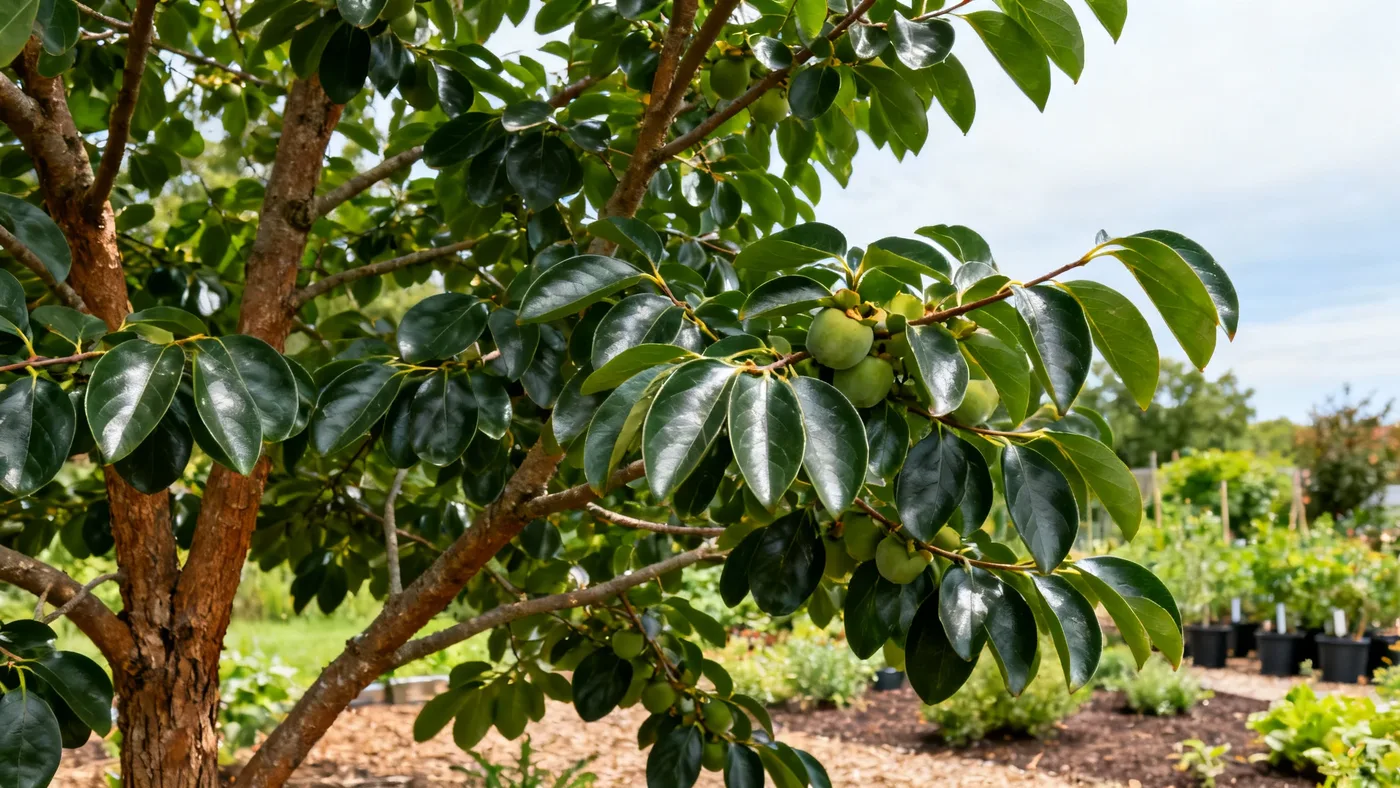
American Persimmon Fruit: Ripening, Astringency and Harvest Tips
American persimmons offer one of the most rewarding harvests a home gardener can experience, but timing matters. The difference between a perfectly soft, sweet fruit and an astringent one that puckers your mouth is often just a few weeks. This guide walks you through recognizing ripeness, harvesting safely, and managing astringency so your persimmons taste their best.
Understanding Astringency in American Persimmons
Astringency is the mouth-drying sensation you get when you bite into an unripe persimmon. It comes from tannins, natural compounds in the fruit that are present in high amounts until ripeness is fully reached. An unripe persimmon will literally make your mouth feel chalky and uncomfortable, a sensation that can linger for several minutes.
This is not a safety concern for people eating ripe fruit. However, unripe persimmons and their seeds can pose a bezoar risk for dogs and other animals if ingested in large amounts, so keep fallen fruit cleaned up from areas where pets spend time. Horses and other livestock are particularly susceptible to this problem, though it is rare in home settings.
The key takeaway: always wait for full ripeness before eating, and understand that this is a feature of the fruit, not a flaw. A truly ripe American persimmon is soft, sweet, and tannin-free.
Signs Your Persimmons Are Ripe
Ripeness in American persimmons is easy to spot once you know what to look for. Unlike some fruits, persimmons broadcast their readiness clearly.
- Color. The fruit shifts from greenish-yellow to a deep golden orange or brownish-orange. Ripe American persimmons are unmissably orange.
- Softness. This is the most reliable test. A ripe persimmon yields easily to gentle finger pressure, almost like a ripe avocado. If it feels hard or firm, it is not ready.
- Skin texture. The skin may develop slight wrinkles or appear slightly translucent. This is normal for fully ripe fruit.
- Leaf drop timing. American persimmons typically ripen in fall after the leaves drop or turn yellow to orange. Once leaves are mostly gone and the fruit is orange, you are in the harvest window.
Harvest typically begins in September through October in zones 4-6, and extends into November and even December in warmer zones 7-9. Check your local frost dates; the first hard freeze can signal the peak harvest window.
Materials You Will Need
Harvesting persimmons requires very little. Here is what to have on hand:
- A soft cloth or gloves (to avoid bruising the delicate ripe fruit)
- A collection bucket or basket lined with soft material (old cloth, straw, or newspaper)
- A stepladder if you need to reach higher branches
- Paper bags or shallow boxes for storage (fruit should not be stacked more than a few layers deep)
- A cool, dark place for ripening if you harvest slightly early fruit
Do not use sharp tools. Ripe persimmons detach easily by hand and bruise if handled roughly.
How to Harvest American Persimmons: Step by Step
Step 1: Confirm ripeness by color and feel. Walk around your tree and identify which fruits are deep orange and soft to the touch. Leave anything that is still firm or pale. Ripe fruit will come off easily with a gentle twist; if you have to pull hard, it is not ready.
Step 2: Harvest gently by hand. Hold the fruit in your palm and gently twist it while supporting the branch with your other hand. A ripe American persimmon will separate from the stem with minimal effort. If it resists, leave it on the tree for a few more days.
Step 3: Place fruit in a lined container. Set each persimmon into your bucket or basket without dropping or stacking them heavily. The fruit bruises easily, and bruised spots will darken quickly. Handle as you would ripe peaches.
Step 4: Collect fallen fruit promptly. Many ripe persimmons will drop naturally once fully mature. Gather these from the ground (they are edible if undamaged) and remove any you do not plan to eat so they do not create a mess on paved surfaces or be eaten by wildlife.
Step 5: Store in a cool place. Bring your harvest indoors to a cool, dark location such as a basement, garage, or pantry. Keep the fruit in a single layer or loosely stacked in paper bags. A temperature around 50-60 degrees Fahrenheit will slow ripening and help the fruit keep for several weeks.
Post-Harvest Ripening and Storage
If you harvest persimmons that are soft and truly ripe, eat them within a few days. Ripe fruit keeps poorly once picked because it is so delicate.
If you harvest persimmons that are nearly ripe but still slightly firm (a strategy to avoid losing fruit to wildlife or weather), place them in a paper bag with a ripe banana or apple. These fruits release ethylene gas, which accelerates ripening. Check daily. Once the fruit yields to gentle pressure all over, it is ready to eat.
You can also slow-ripen fruit by leaving it in an open container in a cool room, where it will soften over 7 to 14 days depending on starting maturity and temperature. Warmer rooms speed the process; cooler ones slow it.
Ripe persimmons freeze well. If you have more than you can eat fresh, peel, seed, and freeze the pulp in a labeled freezer bag for later use in baking or smoothies.
Tips and Common Mistakes to Avoid
Mistake: Harvesting too early to beat wildlife. This is tempting when you see raccoons or deer nearby, but an unripe or barely-ripe persimmon will taste terrible. If wildlife pressure is high, consider harvesting earlier than ideal and ripening indoors, or accept that some fruit will be lost and focus on eating what you can catch at full ripeness.
Mistake: Tasting unripe fruit to test for sweetness. New growers sometimes take a bite of a slightly-soft persimmon and conclude the tree produces poor fruit. A single bite of astringent fruit is unforgettable and often discourages people from trying again. Always wait until the fruit is fully orange and soft all over.
Mistake: Bruising fruit during harvest. Ripe persimmons are fragile. Treat them like ripe peaches or figs. Even small bruises will turn brown within hours and affect the fruit quality.
Tip: Know your tree type. If you planted a grafted cultivar such as 'Meader' (which can set fruit parthenocarpically, meaning without pollination), you can expect reliable crops. Seedling trees, by contrast, take 6 to 10 years to begin fruiting, so if your young tree is not producing yet, patience is needed.
Tip: Harvest a few days after first frost if timing is uncertain. A light frost can help trigger the final ripening stage. If your first frost arrives and the fruit is already orange and soft, harvest immediately. If fruit is still firm, allow a few more days.
Tip: Clean up fallen fruit promptly. Ripe persimmons attract wildlife and create stains on concrete and wood decking. A quick daily sweep or collection keeps the area tidy and reduces pest attraction.
Expected Results
A fully ripe American persimmon is soft enough to eat with a spoon straight from the skin. The flavor is sweet, slightly honey-like, with notes of apricot or date depending on the tree. There is no astringency. The texture is custard-like and rich.
If you have harvested and ripened your fruit correctly, you should experience none of the puckering sensation that gives astringent fruit its bad reputation. If your fruit still tastes astringent after full softening, it may be from a seedling tree rather than a named cultivar, or the fruit may have ripened during unusually cool weather, which can slow the tannin conversion process. This is not unsafe; it is simply less pleasant to eat.
Connecting to Your Growing Plan
Successful harvesting starts with proper tree care. If you are new to growing American persimmons, review the care guide for sun, soil, water, and pruning basics, which covers the foundation for healthy trees that produce good crops. You can also confirm that your tree is suited to your climate by checking the zones American persimmons grow in.
Quick Reference: Ripening and Harvest Checklist
| Ripeness Stage | Color | Feel | Action |
|---|---|---|---|
| Unripe | Greenish-yellow or pale yellow | Firm, hard | Leave on tree |
| Nearly ripe | Golden yellow or light orange | Slightly soft, still holds shape | Can harvest for indoor ripening |
| Fully ripe | Deep orange or brownish-orange | Yields to gentle finger pressure all over | Harvest immediately; eat within days |
| Overripe on tree | Deep orange, may show brown spots | Very soft, may feel fragile | Harvest carefully or let drop and collect |
| Harvest Season by Zone | Approximate Timing | Notes |
|---|---|---|
| Zones 4-6 | September to early October | Earlier leaf drop; frost arrives sooner |
| Zones 7-8 | October to November | Longer fall season; fruit stays on tree longer |
| Zone 9 | October to December | Extended ripening window; some fruit may persist into winter |