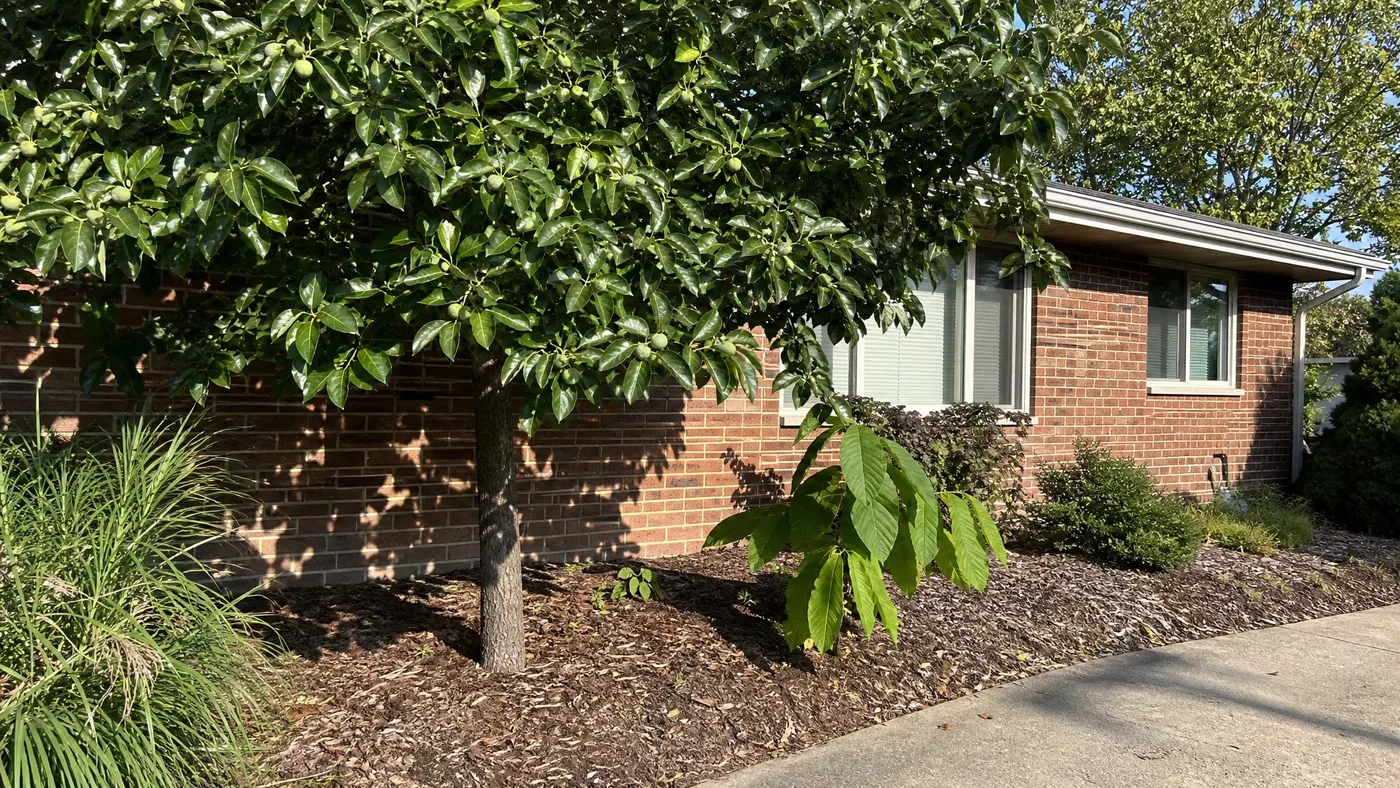
American Persimmon vs Pawpaw: Taste and Pollination Needs
Do you have to pick the "right" native fruit tree? Most people who call us assume so. They picture American persimmon and pawpaw competing for the same patch of ground, and they worry that choosing wrong means years of waiting for the wrong fruit. What we see instead is that the two trees ask for different light, taste nothing alike and sit happily on the same property.
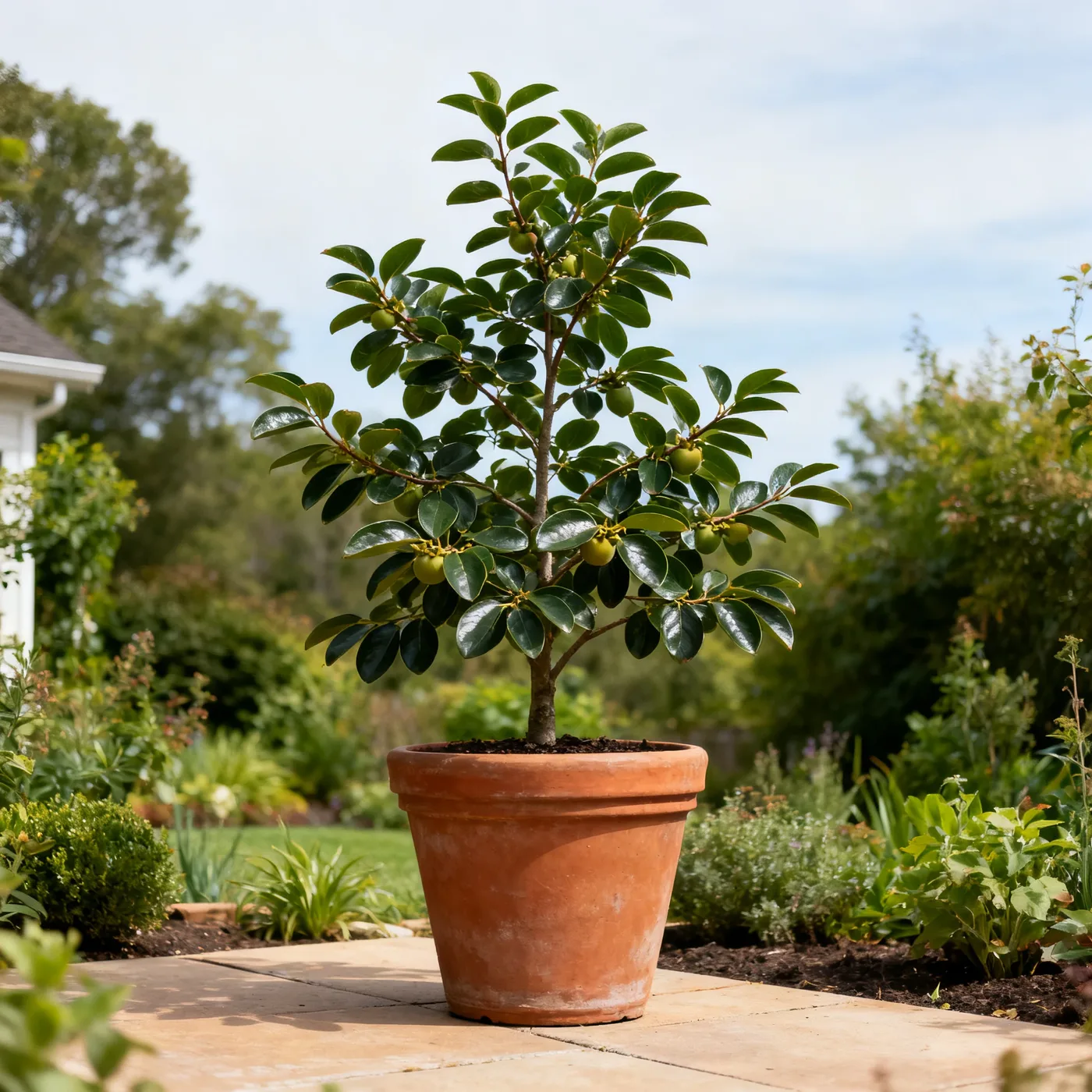
The details still matter, because the mistakes are quiet ones. A lone pawpaw can bloom for years without setting fruit, and a persimmon picked too early can put you off the tree for good. Read on for how each fruit tastes, why one puckers and the other does not, how each tree is pollinated, where each wants to grow, and how long you will wait for the first crop.
Pawpaw Tastes Tropical, American Persimmon Tastes Like Dates
Start with the fruit, because that is what you will be living with every fall. The two could hardly be more different in the mouth, and the difference should shape your choice more than any growing detail.
Pawpaw is the one people call tropical, and the texture is the real story. The University of Tennessee says the flesh can be similar to custard when ripe, with a smooth and soft texture. You split the fruit, take a spoon to it and eat it like a pudding, working around the seeds as you go.
American persimmon is a different pleasure. The fruit is technically an edible berry, and the ripe pulp is dense, sticky and sweet, with a flavor most people compare to dates. It is jammy rather than creamy. The fruit is also small, nothing like the big supermarket persimmons from Asian trees, and the pulp is full of seeds.
Our honest read is that pawpaw is the better fruit to eat out of hand on the porch, and persimmon is the better fruit for the kitchen. Dense persimmon pulp suits breads, puddings and preserves, which is why we have a whole guide of persimmon recipes. Pawpaw is at its best fresh and cold. If your family wants a dessert fruit, lean pawpaw. If you want a baking fruit, lean persimmon.
Why Unripe American Persimmon Puckers but Pawpaw Does Not
The biggest worry first-time buyers bring to us is whether they will bite into something awful. The answer depends entirely on which tree you are standing under.
The Persimmon Waiting Game
An unripe American persimmon is astringent. One bite dries out your whole mouth, and the feeling lingers for a surprisingly long time. The fruit only loses that quality as it softens fully. It usually ripens after frost, although some cultivars do not require the frost treatment to ripen.
Color alone will fool you, because a fruit can look ready weeks before it is. Wait for it to turn soft and wrinkled, and let it drop if you can. Our guide to persimmon ripening and astringency walks through how to judge a fruit by feel.
Pawpaw Is Ready When It Is Soft
Pawpaw has no such trap. There is no pucker to wait out, so the fruit is good to eat the moment it is ripe, and a soft fruit is the signal you are looking for. The catch is handling. A ripe pawpaw bruises easily, so you pick it gently, eat it soon and do not plan on carrying a basket far.
That makes the two trees a study in opposites. Persimmon asks for patience before you eat and forgives you afterward. Pawpaw asks for no patience at the table, but it wants a gentle hand and a short trip from tree to spoon.
Separate Sexes Here, Cross-Pollination There
Both trees can leave you with flowers and no fruit if you misread how each one is pollinated. The advice sounds similar, plant more than one, but the reasons are different.
Male and Female Persimmon Trees
American persimmon usually puts its sexes on separate trees. The University of Kentucky describes the male and female flowers as slightly fragrant, thick petalled and not readily obvious, and they are borne on separate trees. UF/IFAS adds that most American cultivars require both male and female trees for proper fruiting.
The flowers open in May and June, according to NC State, so you will know soon enough which tree is which. Seedlings are the tricky part, because you may not learn a tree's sex until it blooms. Some cultivars are described as self-fertile, so check the cultivar before you buy. Our rundown of persimmon cultivars covers which is which.
Genetically Different Pawpaw Partners
Pawpaw works another way. There are no separate male and female trees to track. Instead, the flowers need pollen from a different individual. The University of Tennessee puts it plainly: pawpaw flowers require pollination from a genetically different tree. That means two named cultivars, or two seedlings of different parentage.
Two grafted trees of the same cultivar are genetically the same plant, so they do not count as a pair. This catches people out, because the tags match and the trees look identical. With persimmon you count sexes, and with pawpaw you count genetic identities.
Hand-Pollinating Pawpaw and Leaving American Persimmon Alone
When fruit fails to show up, people tend to reach for the same fix on both trees. It can help one tree and wastes your time on the other.
Giving Pawpaw a Hand
Pawpaw is the tree where a little help makes sense. Its flowers are pollinated by insects, usually flies or beetles, attracted to a scent the University of Tennessee describes as faintly like rotting meat. Those are not the pollinators most gardeners think to protect, and they can be scarce in a tidy yard.
Some growers move pollen between the flowers of two different trees with a small brush when fruit set looks thin. It takes patience, and it only works if the trees really are genetically different. Brushing pollen from a tree onto itself or onto a clone of itself accomplishes nothing at all.
Why Persimmon Needs No Help
Do not bother with a brush on American persimmon. It is bee-pollinated, so supplemental pollination is unnecessary once male and female trees are present. Bees do the work on their own.
If a persimmon is not fruiting, look at the pairing before anything else. A female with no male in reach is the usual cause. For both trees, the simplest help you can offer is to hold off on insecticide sprays while the trees are in bloom, so the bees and flies can do their jobs.
Shade-Tolerant Pawpaw Beside Sun-Loving American Persimmon
The two trees want different sites, and that is good news if your property has both a bright corner and a shaded one. Matching each tree to its natural setting saves a lot of frustration.
Pawpaw in the Understory
In native forests in the eastern US, pawpaws are often understory trees up to 25 feet tall. That small, shade-adapted habit makes them a natural fit for a woodland edge or the lee of bigger trees. The University of Tennessee lists them for zones 5 through 8.
Ask your local extension service how much shade a newly planted pawpaw needs in your area, since young trees often want more cover than established ones. We tell customers to think of pawpaw as a tree that likes company overhead.
Persimmon in the Open
American persimmon belongs in the open. NC State rates it for full sun, meaning six or more hours of direct light, and it also tolerates partial shade of two to six hours. It is hardy in zones 4 through 9, a wider range than pawpaw, and it shrugs off hot, dry conditions, poor soils and wind.
It also grows far larger. UF/IFAS gives 40 to 60 feet in height and a spread of 20 to 35 feet, against about 25 feet for a woodland pawpaw. Give it room and your sunniest spot. Our guide to persimmon sun needs explains what part shade does to fruiting.
Planting a Lone Tree Instead of a Pair
This is the question behind most of our phone calls: can I just plant one? The answer differs for each tree, and neither answer is quite yes.
A Lone Pawpaw
A single pawpaw is a handsome tree that will probably never fruit. With no genetically different partner nearby, the flowers go unpollinated, and the tree can bloom faithfully for years with nothing to show for it. One of the most common questions we get is whether a neighbor's pawpaw could be the partner. It can, if it is close enough and a different tree, but you cannot count on it.
A Lone American Persimmon
A lone female persimmon fails for the same reason, and a lone male never makes fruit at all. The one difference is that persimmon grows wild across much of the East, so a wild male in the woodlot next door may pollinate your tree. That is a bonus, not a plan.
If you want fruit, plant a pair or choose a cultivar described as self-fertile. When you are ready, our planting guide covers spacing and setup.
Years to First Fruit in Each Orchard
How long you wait changes which tree you plant first, so it is worth knowing before you choose.
The University of Tennessee says grafted pawpaws bear fruit within three to four years after planting, while seedlings often take five to eight years. Buying grafted named cultivars is the clearest way to shorten the wait, and it also hands you the two genetically different trees you need.
American persimmon usually asks for more patience. Seedlings take longer to come into bearing, and the tree grows to a much larger size before it settles into steady crops. Grafted cultivars fruit sooner than seedlings, and our timeline for persimmon fruiting gives the realistic range.
Plan the planting around that gap. If you want fruit soon, put pawpaw in first and let it carry the early years. If you are planting for the long run and have room, persimmon repays the wait with a big, long-lived tree. Set both out the same season and the pawpaw will be feeding you while the persimmon is still putting on size.
Settling on American Persimmon, Pawpaw or Both
Our advice is the reassuring kind: you do not have to give up one to have the other. They want different light, ripen on different clocks and need different pairings, so they sit comfortably in the same food forest. Give pawpaw the shady edge, give persimmon the open sun and plant two of each.
American Persimmon
Nursery-grown American Persimmon in sizes from 1 Gallon, shipped to your door.
From $54.95
Shop Now →If you have room for only one, start with whichever fruit you most want to eat. Custard on a spoon means pawpaw, and date-sweet pulp for baking means persimmon. We are growers with our own farms who grow and sell top-quality trees. Every American Persimmon we ship is potted with its taproot in mind and packed to arrive ready to plant, so the tree you pair with your pawpaw can settle in the week it lands.