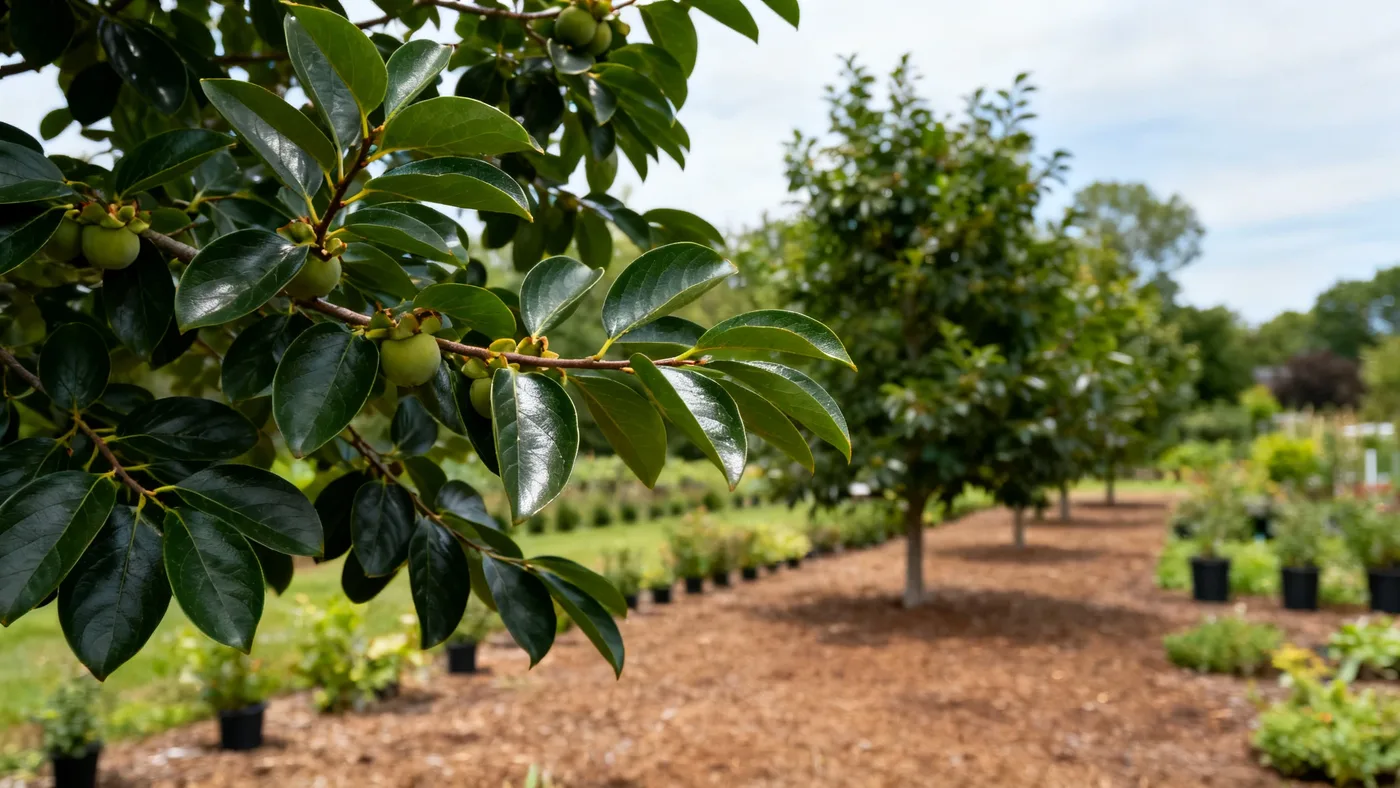
American Persimmon Sun Requirements: Full Sun vs Part Shade
Light is one of the most critical factors affecting how well your American persimmon trees grow and fruit. Understanding your plant's sun requirements upfront saves you from planting in the wrong spot and then spending years with weak growth and little production. This guide walks you through assessing your site's light conditions and positioning your trees for success.
Full Sun vs Part Shade: What Your Persimmon Needs
American persimmon (Diospyros virginiana) grows in a range of light conditions: full sun to part shade. The distinction is simple but important for fruiting.
Full sun means 6 or more hours of direct, unobstructed sunlight daily, spread across morning and afternoon. Trees in full sun produce the most abundant fruit, develop fuller canopies, and grow faster once established. If fruiting is your goal, full sun is the best choice.
Part shade means 3 to 6 hours of direct sun per day, or dappled light for longer periods. Trees in part shade will survive and grow in zones 4-9, but fruiting drops considerably. Growth slows, and the tree may become leggy as it reaches toward better light.
Shade tolerance does not mean the tree thrives in shade. It means the tree can survive without full sun, but you should choose full sun if you want robust production and strong growth.
What You'll Need to Assess Your Site
- A clear view of your planting location from sunrise to sunset, or access at different times of day
- A simple tally of direct-sun hours from morning, afternoon, and late-day angles
- Awareness of seasonal shadow changes (shorter shadows in summer, longer in winter)
- Knowledge of your USDA zone (American persimmon grows in zones 4-9)
- A sketch or mental map of nearby trees, buildings, and reflective surfaces like white walls
Steps to Evaluate Your Site's Light Conditions
- Observe the site at three times of day. Visit the planting location at early morning (around 8 a.m.), midday (noon), and late afternoon (around 4 p.m.). Note which areas are in direct sun and which are shaded. Pay special attention to shadows cast by buildings, fences, and mature trees. Move around the space; shade patterns can vary significantly within a few feet.
- Count direct-sun hours over a full day. If possible, track when sunlight first touches your target spot and when shade covers it. Take this measurement in mid-to-late June (your local midsummer) because that represents peak daylight. Winter sun angles are much lower, so winter observation alone is unreliable. If the spot gets 6+ hours then, it will get 6+ hours year-round.
- Account for seasonal shade changes. Large trees cast much longer shadows in winter than summer. If a mature tree is to the south or southwest of your planting site, it may block sun in winter but not in summer. For American persimmon, this is acceptable because the tree is dormant in winter. The critical months are April through September, when the tree actively grows and flowers.
- Check for reflected light and microclimates. Light-colored walls, fences, or gravel reflect sunlight and effectively boost light levels by 10 to 20 percent in nearby areas. Conversely, a north-facing slope naturally receives less sun than a south-facing slope. Use these features to your advantage. A site with 5 hours of direct sun adjacent to a light-colored south-facing wall may reach the 6+ hour range suitable for strong fruiting.
- Document your findings. Write down or photograph the times and durations of sun coverage. If you have any doubt, choose full sun. A tree in full sun may produce more fruit than you need. A tree in insufficient light may frustrate you for years.
Positioning Your Tree for Optimal Sun and Growth
- Choose the sunniest available location. Plant your American persimmon where it receives 6 or more hours of direct, unobstructed sunlight daily from late spring through early fall. If your entire property is shaded, part shade (3 to 6 hours) is acceptable, but accept that production will be modest.
- Avoid afternoon scorch in very hot climates. In zones 8 and 9 (southern regions), afternoon shade from a deciduous tree that blocks 1 to 2 p.m. sun in July and August can prevent heat stress on young trees during their first few years. Once the tree matures, this afternoon shade matters less. In zones 4-7, afternoon sun is beneficial and rarely causes problems.
- Keep space clear around the planting hole. When digging, ensure there are no large tree roots, buried structures, or heavy shade cast by nearby trees directly over the hole. The tree's root system expands outward as it matures, developing a long taproot and lateral roots. Give the root zone room to spread into sunlit ground.
- Plan for mature size and future shade. American persimmon grows 35 to 60 feet tall and 20 to 35 feet wide when mature. As the tree grows, it will cast its own shade. The tree shades itself, which is fine. Ensure no part of your tree's future crown is shaded by a building or immovable tree that won't change in 10 to 15 years. Project the tree's mature size on your site map and overlay it on your current sun data.
- Monitor and adjust in the first few years. After planting, track how the tree responds over the first two growing seasons. If you notice weak growth, sparse branching, or pale leaves, insufficient light may be the cause. Consider whether pruning competing plants or removing obstacles might improve conditions. If light truly cannot improve, the tree will still survive, but accept lower expectations for growth and fruiting.
Regional Considerations by Zone
American persimmon is hardy in zones 4-9. Sun requirements stay the same, but summer sun intensity varies by region.
Zones 4-6 (cooler regions). Full sun is essential because these zones have shorter growing seasons and less intense heat. Every hour of sunlight matters. Part shade may slow growth significantly and reduce fruiting noticeably. Prioritize south-facing or east-facing sites in these zones.
Zones 7-8 (transitional). Full sun remains the best choice for fruiting, but part shade is more tolerable. The longer, warmer growing season means a tree in part shade will still produce fruit, though less abundantly than one in full sun. Afternoon shade is an advantage during extreme summer heat.
Zone 9 (hottest). Full sun is still ideal, but afternoon shade (1 to 2 p.m. onward) becomes genuinely helpful for young trees during their first few years. Once the tree matures and develops its own dense canopy, this afternoon shade matters less. Part shade in zone 9 is acceptable if it provides relief from extreme heat.
Common Mistakes and How to Avoid Them
Mistake: Planting under or near a large tree because it gets "some sun." Dappled sun from a large oak or maple rarely totals 6 hours of direct sun, and as the overhead tree grows, shade increases. If you love a tree-shaded spot, accept slower growth and sparse fruit. Better to plant where light is abundant and use understory perennials in shadier zones.
Mistake: Counting winter sun toward the 6-hour requirement. Winter sun is weak in most of North America, and American persimmon is dormant then. Count only spring, summer, and early-fall sun. A spot with 4 hours of direct summer sun but 8 hours of winter sun is not suitable for strong fruiting.
Mistake: Planting in part shade because the tag says it tolerates part shade. Yes, the tree survives part shade. But survival is not the same as thriving. If your goal is fruit production or a healthy shade tree, full sun will outperform part shade every time.
Next Steps: Complete Care Information
Sun exposure is one piece of the puzzle. For complete guidance on caring for American persimmon trees once they're established, including soil preparation, watering, and pruning, see the American persimmon care guide: sun, soil, water, and pruning basics.
Quick Reference: Sun Requirements at a Glance
| Light Condition | Direct Sun Hours | Best For | Growth Rate | Fruit Production |
|---|---|---|---|---|
| Full Sun | 6+ hours per day | Maximum fruiting and growth | Moderate to fast (12-18 in. per year once established) | Abundant, reliable |
| Part Shade | 3-6 hours per day | Cooler microclimates or if necessary | Slow to moderate | Light to moderate; may vary year to year |
| Heavy Shade | Less than 3 hours per day | Not recommended | Very slow, leggy branching | Minimal to none |
Site Assessment Checklist
- [ ] Site receives 6+ hours of direct sun in late spring through early fall
- [ ] Shadows from nearby structures and trees have been mapped for all seasons
- [ ] Afternoon shade (zones 8-9 only) is noted but not depended upon to meet light hours
- [ ] Planting spot is clear of competing vegetation for at least 3 feet around the hole
- [ ] The mature tree's eventual canopy (35-60 feet tall, 20-35 feet wide) won't be shaded by immovable objects
- [ ] You understand that part shade means reduced fruiting, not equal fruiting
- [ ] You have a plan to monitor the tree's growth in the first two years and adjust if light is clearly limiting