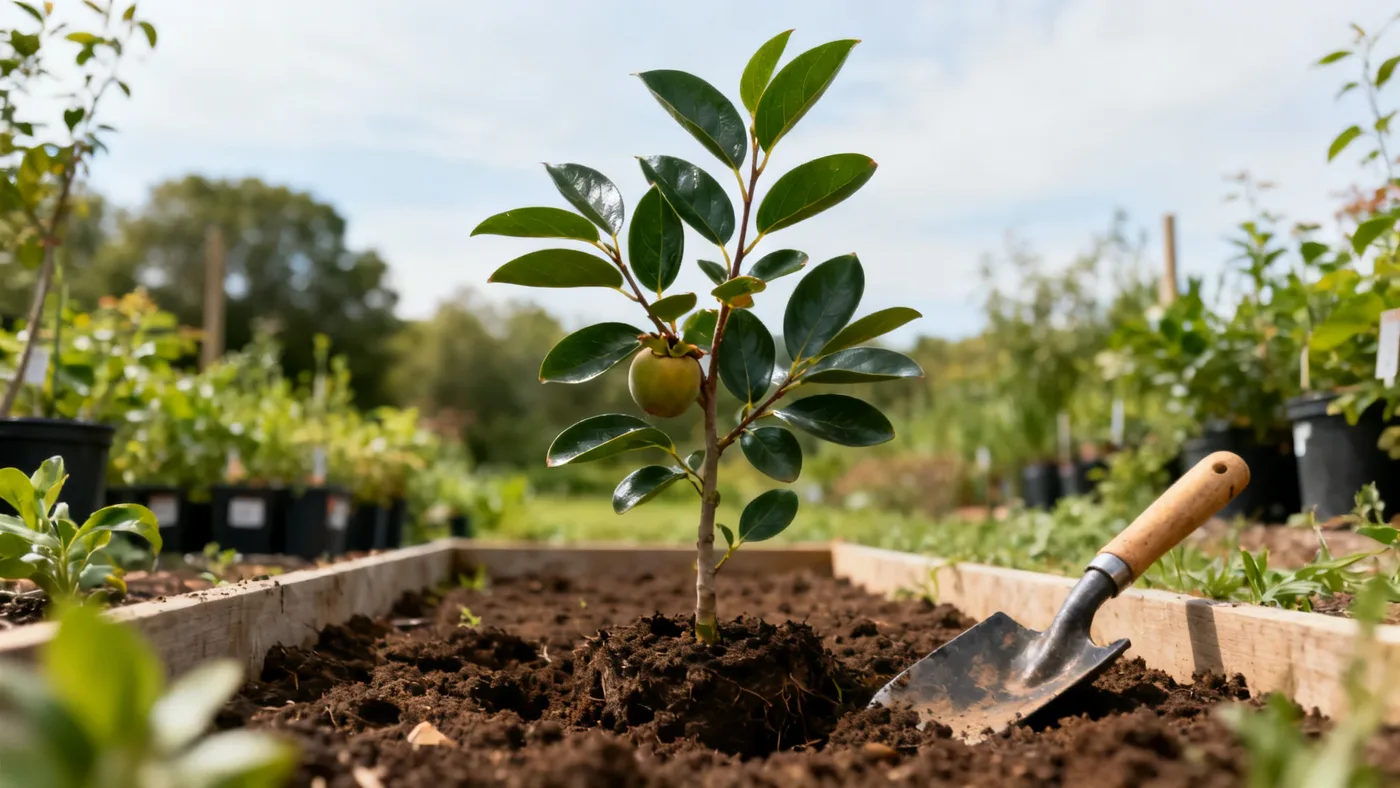
American Persimmon Landscape Uses and Companion Plants
American persimmon is far more than a fruit tree. This native deciduous tree works as a workhorse in designed landscapes, wildlife habitats, and food forests across zones 4 through 9. Its ornamental qualities, ecological value, and long lifespan make it a smart choice for homeowners and landscapers looking to balance beauty with purpose.
1. Shade Tree for Four-Season Interest
At maturity, American persimmon reaches 35 to 60 feet tall with a spread of 20 to 35 feet, making it a substantial shade provider for large yards and properties. The glossy dark green oval leaves offer dense canopy coverage during the growing season. What sets it apart from conventional shade trees is its off-season performance. In fall, the foliage turns yellow to orange, sometimes with purplish-red tones, creating a warm backdrop that extends the visual season well past summer.
Winter reveals perhaps the most distinctive feature: the tree's deeply blocky bark resembles alligator hide, providing textural interest even when bare. Orange fruit often persists on branches after leaves drop, feeding wildlife and adding color to the winter landscape. For sizing and spacing guidance specific to your site, check mature persimmon dimensions to plan placement.
Practical takeaway: Space persimmon trees 20 to 35 feet apart in orchard or landscape plantings. Plan for full sun locations to maximize fruiting and fall color intensity.
2. Food Forest and Edible Landscaping Feature
American persimmon transforms any property into a productive food garden without the fussiness of high-maintenance fruit crops. A mature tree produces abundant orange fruits that are edible when fully ripe and develop a sweet, custard-like flavor. This is edible landscaping at its most practical: the tree provides shade, seasonal interest, and harvestable nutrition simultaneously.
Grafted cultivars like 'Meader' (self-fertile), 'Early Golden', 'Prok', 'Szukis', and 'Yates' can fruit in 3 to 5 years, while seedling trees take 6 to 10 years. If you plant a female tree and want consistent fruiting without a male tree nearby, select a self-fertile cultivar. Unripe persimmons are highly astringent and inedible, so timing matters. Plan to harvest in fall when fruits soften and flavor develops fully.
Practical takeaway: Choose grafted cultivars for faster fruiting. Select self-fertile varieties like 'Meader' if space is tight or you want fruit production without planting two trees.
3. Wildlife and Pollinator Garden Anchor
Few trees native to the eastern and central United States support wildlife as comprehensively as American persimmon. The flowers, blooming in late spring (typically May through June), attract bees with their mild, sweet fragrance and creamy white to pale yellow-green blooms. More dramatically, the fruit is a major food source for deer, raccoons, opossums, foxes, and birds. In wildlife gardens and naturalized landscapes, persimmon becomes a keystone species that feeds the entire ecosystem.
This generosity does come with a caveat: messy fruit litter on paved surfaces and heavy deer browsing of both fallen fruit and young foliage are common considerations. In wildlife gardens, this is often a feature, not a bug. The fallen fruit feeds ground-feeding wildlife through fall and early winter. If you're gardening in an area with high deer pressure, this tree will contribute to that pressure by attracting them to your property.
Practical takeaway: Plant persimmon in wildlife gardens where fallen fruit and wildlife activity are welcomed. Site it away from paved areas like driveways to minimize cleanup.
4. Specimen or Focal Point Tree
A mature American persimmon can serve as the centerpiece of a landscape. The distinctive alligator-hide bark texture, seasonal color changes, and the striking contrast of orange fruit against fading foliage create visual interest that draws the eye. Unlike many specimen trees that shine for one season, persimmon performs across the full calendar: spring flowers, summer shade, fall color, and winter architectural bark and persistent fruit.
For maximum impact, site the tree where it is visible from the house or primary gathering areas. Full sun encourages the best flowering and fruiting, which intensifies visual impact. A single specimen persimmon on a lawn or as the anchor of a garden bed requires no competing plantings to look striking, though companion plantings enhance the scene.
Practical takeaway: Position specimen trees where their winter silhouette and persistent fruit are visible from indoors. Ensure full sun for best ornamental performance.
5. Naturalized Landscape Planting
As a native tree, American persimmon belongs in naturalized landscapes and native plant gardens. It tolerates a wide range of soils (clay, loam, and sandy soils are all acceptable) and poor or compacted ground, making it valuable for restoration projects and difficult sites. The deep taproot that makes it drought tolerant once established means it requires good drainage to get going, but once set, it can thrive with minimal water input.
In naturalized settings, persimmon benefits from an understory of native perennials and flowering shrubs that bloom in the spring and early summer when the persimmon provides overhead cover. The tree's moderate growth rate (roughly 12 to 18 inches per year once established) allows slower-growing companion plants to establish without being outpaced. Long-lived persimmons (commonly 75 years or longer) anchor naturalized landscapes for decades.
Practical takeaway: Use persimmon in habitat restoration and rain gardens where its adaptability to difficult soils and drought tolerance save maintenance. Pair it with native understory plantings that establish while the canopy develops.
6. Companion Planting Guide for Persimmons
Strategic companion plantings amplify the persimmon's landscape role and support the broader ecosystem. Native pollinator perennials (bee balm, coneflower, blazing star, and wild bergamot among many regional options) planted in drifts beneath or near the tree extend the bloom season and provide color when persimmons are not in flower. These plantings also support the bees that pollinate persimmon flowers.
In food forest layouts, pawpaw and serviceberry are excellent companions. Pawpaw (a native understory tree with its own edible fruit) reaches 15 to 30 feet tall, taller than its natural companions but shorter than mature persimmon, creating layered canopy. Serviceberry blooms early and fruits earlier than persimmon, staggering harvest times. Both tolerate the partial shade cast by persimmon canopies. Other native fruiting trees suited to food forest plantings alongside persimmon include black cherry and American holly (depending on your zone). These create productive polycultures that mimic natural forest structure.
Practical takeaway: Layer native perennials, shrubs, and smaller fruiting trees beneath and around mature persimmons. Stagger fruiting times to spread your harvest from late summer through fall.
Quick Reference: Persimmon Landscape Uses at a Glance
| Landscape Use | Best Zones | Space Requirements | Key Benefit | Best Companion Plants |
|---|---|---|---|---|
| Shade Tree | 4-9 | 20-35 ft on center | Four-season interest, fall color, winter bark | Native perennials below canopy |
| Edible Landscaping | 4-9 | One tree minimum (self-fertile cultivars) | Fruit in 3-5 years (grafted), low maintenance | Serviceberry, pollinator perennials |
| Wildlife Garden | 4-9 | 20-35 ft on center | Feeds deer, raccoons, opossums, birds, foxes | Native understory trees and shrubs |
| Specimen Tree | 4-9 | Full sun, visible location | Year-round visual impact | Underplanting optional (solo impact strong) |
| Naturalized Planting | 4-9 | 20-35 ft on center | Drought tolerant, adaptable soils, 75+ year lifespan | Pawpaw, serviceberry, native fruiting trees |
| Food Forest Layer | 4-9 | Staggered heights | Canopy structure, extended harvest season | Pawpaw, serviceberry, native shrubs |
Care Essentials for Landscape-Planted Persimmons
Landscape success depends on early establishment and proper siting. At planting, persimmons need consistent moisture until their taproots reach deep soil, typically within the first year. Review detailed watering guidance for young versus established trees to avoid both drought stress and waterlogging. Once established, their drought tolerance via deep taproots reduces irrigation needs considerably.
For ongoing care, consult the full care guide for pruning, fertilizing, and seasonal management. In landscape settings, minimal pruning maintains a strong central leader and removes crossing branches. Avoid excessive nitrogen fertilization, which reduces fruiting in favor of leaf growth. The tree's preference for full sun is non-negotiable for best fruiting and ornamental performance.
With these landscape principles in place, American persimmon becomes a dependable workhorse that earns its place in diverse garden designs for decades.