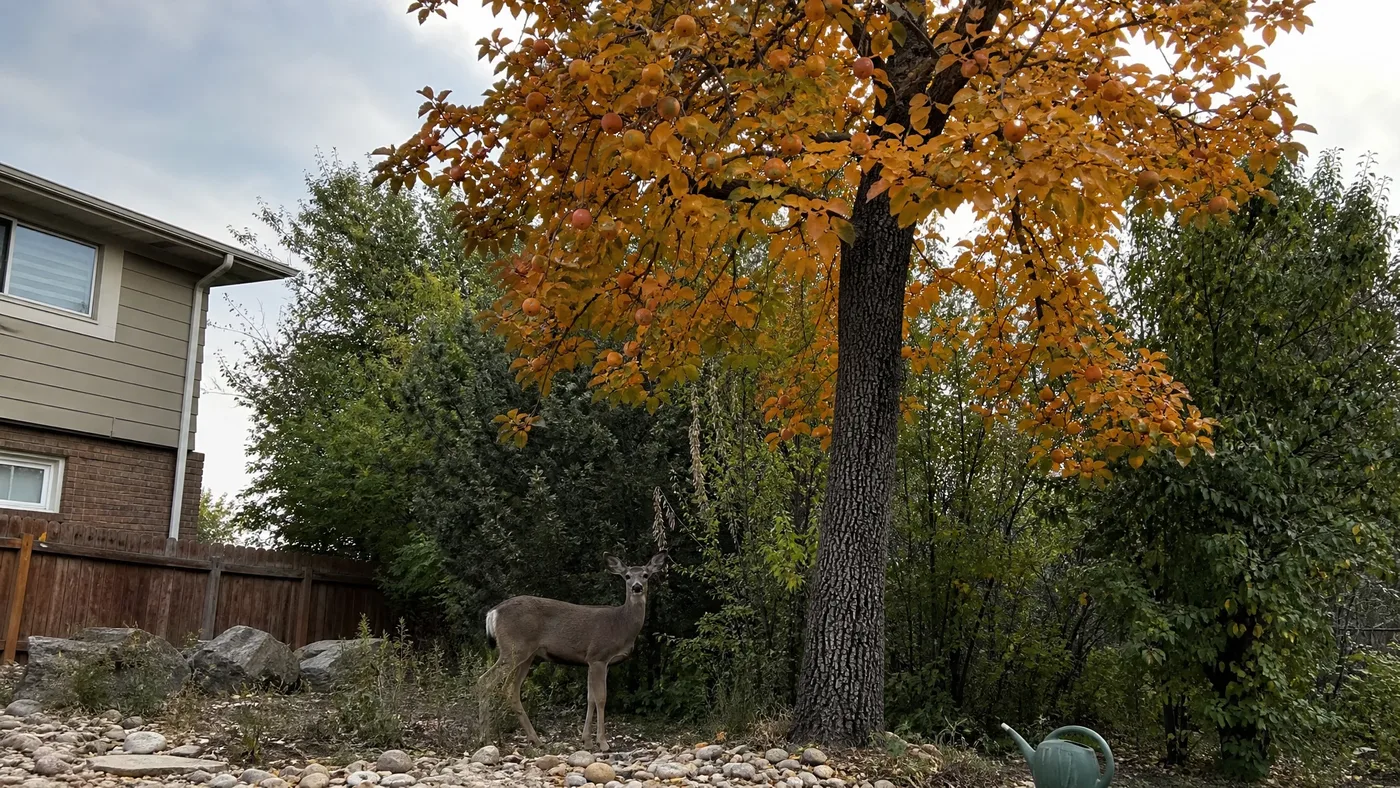
American Persimmon for Deer Food Plots and Hunting Land
Picture the ridgeline at first light. The sun slides down the slope, catches the edge of the canopy before anything else, and the deer are already standing in that warm strip, because that is where the fruit is. That image is what we plan toward with every hunting-land planting.
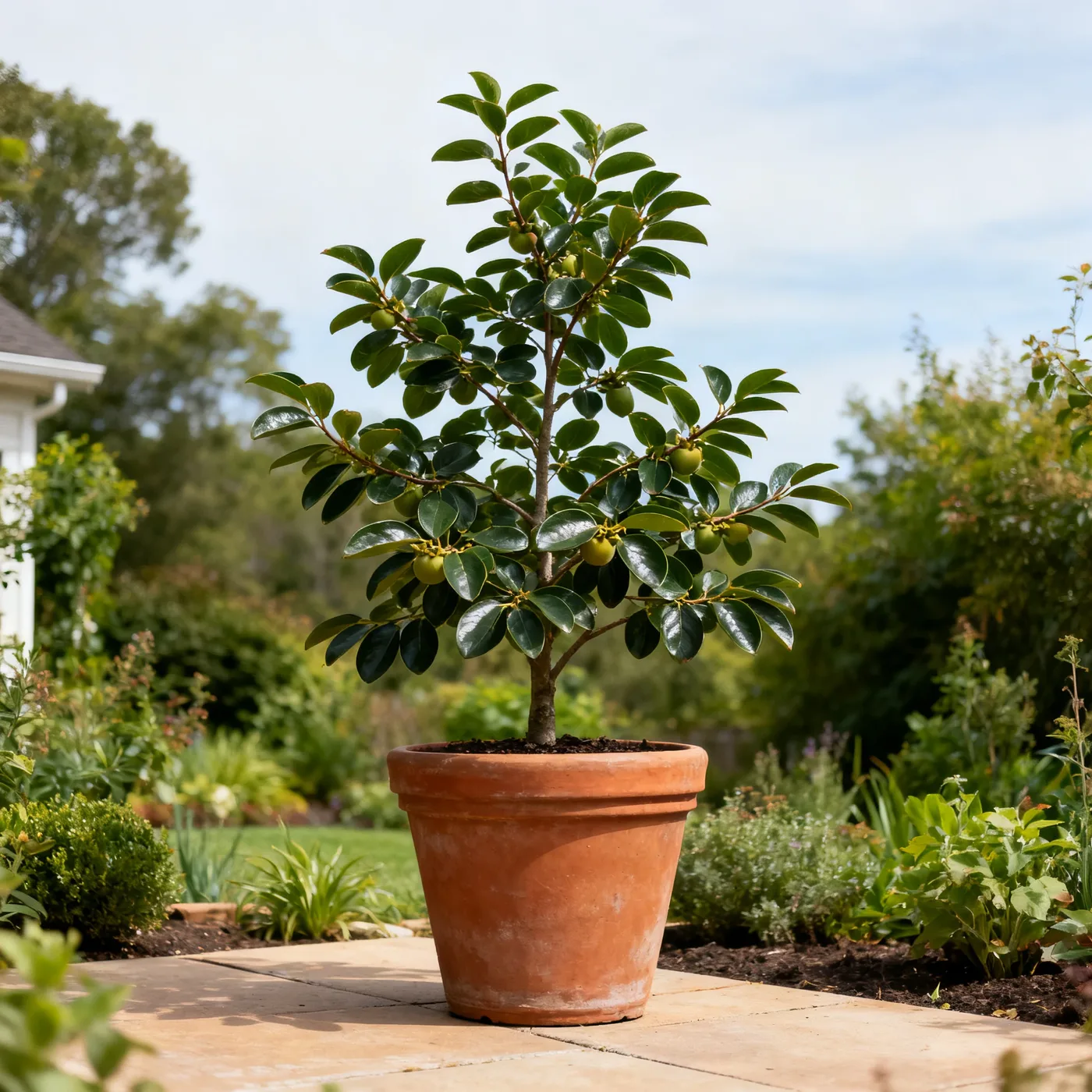
American Persimmon can give you that scene for months rather than weeks, since its fruit does not all drop at once. Done badly, you get a handsome tree that never fruits, or fruit that lands in the wrong week, or seedlings browsed to stubs.
This article talks about siting, cultivar timing, pollination, placement, protection and tree count for deer, and answers the questions customers ask us most. Read on to learn how to read your light, stack early and late droppers, set the male-to-female mix, mark every position and settle a final number.
Which Corner of Your Land Gets the Light
Everything else in this guide depends on this first call, so walk the property before you buy a single tree. Look at where the sun actually lands, not where the map says open ground is.
Read the Light Across the Day
Visit your candidate edges once in the morning and once in late afternoon, and note how long each spot stays lit. American Persimmon grows best in full sun, which means 6 or more hours of direct light, and it tolerates partial shade of 2 to 6 hours.
Tolerating shade and fruiting well in it are different things. We tell customers to give the trees full sun, because fruit is the whole point here. Our sun requirements guide goes deeper on the trade-offs.
Check Soil, Wind and Wet Feet
Hunting land rarely has garden soil, and persimmon does not ask for it. It tolerates hot, dry conditions, poor soils and wind, takes acid or alkaline ground, and the University of Florida lists extended flooding among the conditions it handles.
That makes the difficult corners of a property worth a second look: the thin soil on a ridge shoulder, the windy field corner, the low spot that stays damp after rain. Skip only the places where deep shade or heavy competing timber will blot out the sun.
Your choice: pick the open, sunniest edge you have, ideally the side of a clearing or woodline that catches the first light, and rule out any spot shaded for most of the day.
Why American Persimmon Earns a Place on Hunting Land
Before you commit ground and years, it is fair to ask why this tree beats another round of brassicas or a row of something else. Three things settle it for us.
The Fruit Draws a Crowd
The fruit is a food source for white-tailed deer, along with birds, small mammals, foxes, raccoons and black bears. Deer also browse the leaves and twigs, but the tree is moderately deer resistant, so an established tree takes that nibbling in stride.
Expect company at the drop. Turkeys, squirrels and raccoons all come for the fruit too, and our wildlife guide covers who shows up.
A Tree Works Where a Plot Cannot
A food plot asks you to till, seed and fertilize every year. A persimmon is planted once, anchors itself with a deep taproot, and then grows into a broad, upright oval, commonly 40 to 60 feet tall and 20 to 35 feet wide.
It also thrives in the rough ground where plots struggle. Think of it as a food plot that grows upward, with a canopy deer can feel safe beneath.
The patience cost is real. Grafted trees fruit within 3 to 5 years, and seedlings take 4 to 9. If you need fruit this fall, no tree can give it to you, and we would rather say that plainly.
Your choice: commit to persimmon as the long-term backbone, and keep a plot or two as the short-term bridge while the trees come on.
Choosing Early-Dropping or Late-Dropping American Persimmon Cultivars
This is where persimmon beats almost every other mast tree. Ripening is uneven across cultivars, so you can choose trees that put fruit on the ground in different weeks instead of everything arriving at once.
Know the Window You Are Working With
The species fruit ripens from September to November, and the fruit can stay on display through December. Some trees hold fruit into winter.
One piece of common advice deserves pushback: you do not have to wait for a hard frost. As Purdue Extension puts it, the fruit does not have to experience a frost to ripen, so judge your trees by their own timing, not the weather.
Match Cultivars to Your Seasons
Named cultivars available include Meader, John Rick, Early Golden, Garrettson, Prok, Dollywood and Killen, and hunters also search for the deer-branded selections such as Deer Magnet, Deer Luscious and Deer Candy. We cannot hand you a drop date for each, because timing shifts with your region. Ask the seller for each cultivar's ripening order, then confirm it in your own rows. Our cultivar guide profiles the main options.
Use this table to turn the seasons you hunt into a shopping list.
| Season you hunt | Fruit you want on the ground | How to choose |
|---|---|---|
| Archery, early fall | The first fruit to ripen and drop | Ask for the earliest-ripening cultivars on the seller's list |
| Rifle, midseason | The main crop in the middle of the window | Choose midseason cultivars for the bulk of your females |
| Late season | Fruit that hangs on into winter | Choose the latest-ripening cultivars, the ones that keep fruit longest |
Your choice: pick at least one early, one midseason and one late female cultivar, weighted toward the season you hunt hardest.
Pairing Males and Females for Reliable Fruit Drop
A beautiful, healthy persimmon can still give you nothing, because flowers are borne on separate male and female trees. They open from May to June, slightly fragrant but not showy, and only females make fruit.
Set the Ratio
The math is kind to large plantings. Alabama Extension notes that in a mixed stand, one male tree per twenty females can be sufficient.
One of the most common questions we get is whether a single tree will do. It will not, unless a wild male happens to be nearby. For a small planting of a handful of trees, we tell customers to include two males rather than gamble on one.
Avoid the Seedling Trap
Seedlings can turn out male or female, and you will not know for years. Grafted cultivars flip that odds table. Alabama Extension says planting grafted cultivars means most trees in a stand will be female and high yielding.
Grafting also shortens the wait. Our fruiting-time guide explains what to expect each year, but plan on the 3 to 5 years mentioned above.
When you order, tell the seller you want named female cultivars for fruit and ask which male they supply. Keep the pollinator within the same planting, not scattered across the property.
Your pollination plan: mostly grafted females spread across early, mid and late cultivars, plus one male for every twenty females at most, and two males for a small block.
Placing American Persimmon Along Edges, Trails and Stands
With your sun, cultivars and ratio settled, the question becomes where each trunk goes. Treat this like composing a view from your stand, because that is exactly what it is.
Use the Edge for Light and Cover
Plant along the sunny side of a woodline or opening so the crowns can spread into daylight while deer keep thick cover at their backs. Deer tend to step out from cover to feed, and fruit that drops right at the edge gives them a reason.
Leave each tree room for a crown 20 to 35 feet wide. Crowding makes shade, and shade is what you moved away from in the first decision.
Work Around Trails and Stands
Put the trees where deer already move, close enough to a trail to catch traffic but not so close that every approach to your stand crosses open fruit. Set your stand so the wind carries your scent away from the drop zone, and keep your own entry and exit routes clear of the trees.
Match cultivars to stands as well. Place early droppers near the stand you hunt first, and late droppers near the one you save for the final weeks. Deer will follow the fruit through the season, so let the fruit schedule direct your stand rotation.
Think about the taproot too. A deep taproot makes persimmon difficult to transplant, so our transplanting guide is worth a look before you commit. Plan for each tree to stay put for its whole life.
Your marked positions: set a stake or flag at every planting spot, tag each with its cultivar, and walk the line from your stand to confirm the view before anything goes in the ground.
Planting Time and Protecting Young American Persimmon From Browse
Young trees are the weak link. Deer browse leaves and twigs, and a seedling-sized graft can lose its whole top in a night.
Pick the Planting Window
Plant in the cool season, when roots can settle before the heat and drought of summer. Exact dates depend on your area, so check with your local extension service for the best window. Our planting guide walks through the hole, depth and aftercare.
Water through the first growing season, since a young taproot is still reaching for moisture. Once established, the tree handles dry spells far better than most fruit trees.
Guard Against Deer and Rabbits
We often see growers lose a full planting because they protected against deer but forgot the rabbits that chew bark at ground level. Use a method that handles both.
- Build a freestanding wire cage around each tree, wide enough that the foliage never presses through the mesh.
- Make the cage taller than a deer can comfortably reach over, and stake it firmly so it cannot be pushed over.
- Pick a mesh fine enough, or add a trunk wrap at the base, to stop rabbits from gnawing the bark.
- Leave cages on until the crown has grown well above browse height, then remove them so they do not strangle the trunk.
Your protection method: a staked wire cage with a small-mesh base for every tree, installed the day you plant.
Deciding How Many American Persimmon Trees to Plant
Now scale. A fruit tree takes years to pay off and a lot of ground at maturity, so the number you choose should come from your acreage and budget, not your enthusiasm.
Count by Crown Space and Seasons
Start with space. With a spread of 20 to 35 feet each, even a modest row of mature trees claims a long stretch of edge. Measure the usable edge you chose in the first decision and divide by the crown width you are planning for.
Then count by seasons. Aim for a few female trees in each timing group so a single failure does not leave a gap in the calendar. Add your male or males last, using the ratio from the pollination plan.
Spread the Spending
You do not have to plant it all in one year. Put in the early, mid and late groups over two or three seasons, starting with the stand you hunt most. Staggered plantings also stagger the years in which each group begins fruiting.
We grow named cultivars for exactly this kind of mixed planting, and our growers can help you balance a mix to your seasons. Our buying guide helps with container size.
Your final count: write down females per timing group, add the males, check the total against your edge length, and order in the stages your budget allows.
A Season-Long Fruit Plan for Your Hunting Land
Put the decisions together and you have a calendar: a sunny edge with a mixed block of early, midseason and late female cultivars, a male or two in the mix, every trunk flagged by stand, and a cage around each young tree. The early trees feed the archery weeks, the main crop covers the rifle season, and the last holdouts keep deer coming back into winter.
American Persimmon
Nursery-grown American Persimmon in sizes from 1 Gallon, shipped to your door.
From $54.95
Shop Now →Now look ahead years from now. A tree line stands in the dusk, fruit scattered on the ground beneath it, and deer stepping in under the canopy. Customers return to us season after season to add another stretch of edge to the planting they started, and as growers with our own farms, selling only top-quality American Persimmon trees we would plant on our own ground, we are glad to keep building that tree line with them.