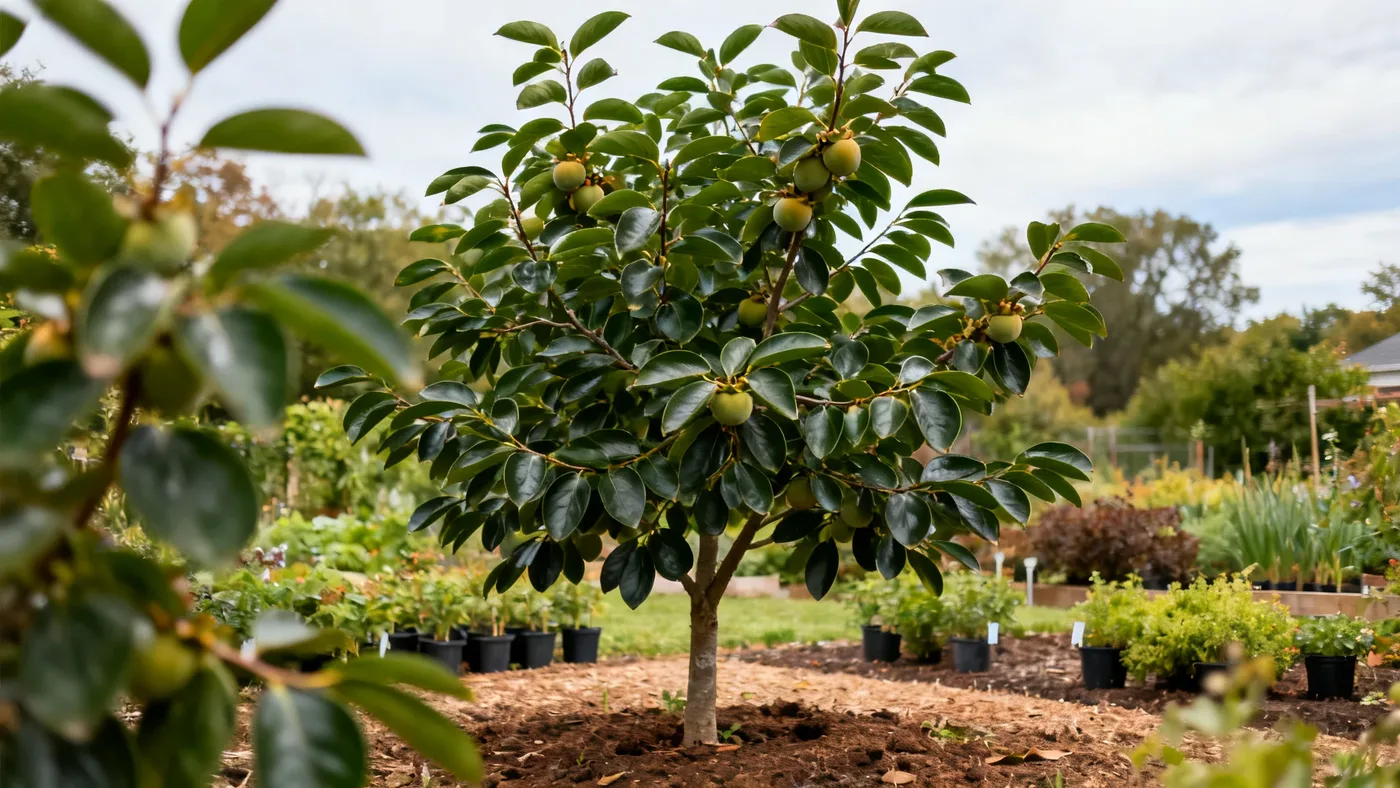
Fertilizing American Persimmon Trees: What, When and How Much
American Persimmons are light feeders compared to many ornamental trees, which means they don't demand heavy fertilization to thrive. In fact, overfeeding can work against you, especially if you want fruit. This guide walks you through exactly when to fertilize, what to use, and how much to apply based on your tree's age and season.
Do American Persimmons Actually Need Fertilizer?
American Persimmons adapt to poor, compacted soil and can survive on minimal nutrients once established. Many home growers are surprised to learn that a well-sited tree with decent soil needs little help. However, newly planted trees and trees in poor soils benefit from a light fertilizer boost in early spring to encourage establishment and growth. The key is balance: enough nutrition to support the 12 to 18 inches of annual growth a young tree should produce, but not so much that you push leafy growth at the expense of flowers and fruit.
Understanding American Persimmon Nutrient Needs
American Persimmons have a deep taproot that accesses water and nutrients other plants cannot reach. This natural advantage means they tolerate drought and poor soil far better than shallow-rooted trees. In native conditions, these trees grow across a range of soil types, from clay to sandy loam, and across a pH window of 5.5 to 7.5.
The main rule for fertilizing American Persimmons is this: avoid excess nitrogen. Nitrogen promotes vigorous branch growth and dark green foliage, which sounds good until you realize that heavily fertilized trees produce fewer flowers and, as a result, less fruit. You want steady, moderate growth, not a flush of leafy vegetation that shades out the fruit buds.
A balanced fertilizer applied once in early spring, just as the tree breaks dormancy, supplies what most trees need without triggering excessive vegetative growth. For young trees still being established (within the first 2 to 3 years after planting), a light spring application supports root development and canopy formation. For mature, established trees in average soil, a single application is often sufficient.
Best Fertilizers for American Persimmon Trees
A balanced fertilizer with an NPK ratio close to 10-10-10 or 5-5-5 works well for American Persimmons. You can apply a granular tree fertilizer, a slow-release pellet product, or a liquid concentrate, depending on your preference and the tree's size. Organic options such as composted bark, aged manure, or balanced organic fertilizer blends are equally suitable.
Avoid fertilizers with a high nitrogen number (the first number in the ratio). For example, a 20-10-10 ratio is too nitrogen-heavy for American Persimmons. High-nitrogen lawn fertilizers should not be used on your persimmon tree. If your tree is planted where lawn fertilizer runoff reaches it, consider a barrier or apply your persimmon fertilizer on a different schedule to prevent overlap.
Slow-release granular products are often easier to apply correctly than liquid concentrates because they dispense nutrients gradually over several weeks, reducing the risk of over-fertilization. Composted materials work well as a mulch-based approach: a 2 to 3-inch layer of compost around the base (keeping it a few inches away from the trunk) feeds the tree slowly as it breaks down.
Step-by-Step Fertilizing Guide
Spring Application (Early Spring, Before Leaf Break)
Step 1: Check your soil. If possible, have a soil test done, especially for a new planting. A test tells you whether your soil is deficient in key nutrients and helps you avoid over-fertilizing. Many university extension services offer affordable soil testing. If you skip a test, proceed to Step 2.
Step 2: Choose your product. Select a balanced granular fertilizer, compost, or slow-release product. Check the label to confirm the NPK ratio is 10-10-10, 5-5-5, or similar. If using a product labeled specifically for trees, follow the package rate for the tree's estimated mature size or age.
Step 3: Apply in early spring. Timing matters. Early spring means after the worst frost risk has passed but before the tree has fully leafed out. For most American Persimmon zones (4 through 9), this is typically March through April, depending on your location. An earlier application works with the tree's natural growth cycle.
Step 4: Apply at the tree's drip line. The drip line is the outer edge of the canopy where rain falls. Roots are most active here. Scatter granular fertilizer in a circular band beneath the canopy, staying a few inches away from the trunk. For a young tree in a 3-gallon container or small nursery size, distribute 1 to 2 pounds of balanced fertilizer. For a larger established tree, apply 2 to 5 pounds, depending on the product's concentration.
Step 5: Water lightly after application. Dampen the soil to help the fertilizer begin to release. You don't need to water heavily, just enough to activate the granules and carry nutrients into the root zone.
Summer and Fall Care
Once your spring application is complete, no further fertilizer is needed during summer or fall. Late-season nitrogen applications can trigger new soft growth that frost will kill, and they interfere with the tree's natural hardening-off process before winter dormancy. If your tree is stressed due to severe drought or poor growth despite the spring feeding, a half-strength balanced liquid fertilizer applied in mid-summer can provide a gentle boost, but this is the exception, not the routine.
In fall, avoid fertilizer entirely. Let the tree slow down naturally and prepare for dormancy.
Young Trees (First 2 to 3 Years After Planting)
Young trees benefit from consistent but light feeding to support establishment. Apply a balanced fertilizer in early spring of the first three years. After year three, taper to once per year if the tree shows good growth (12 to 18 inches per season) and healthy foliage. If growth is slower, a light spring application can continue, but reassess annually.
Tips for Success and Common Mistakes to Avoid
Mistake: Assuming more is better. Overfertilizing American Persimmons is common and counterproductive. Excess nitrogen reduces fruiting and makes the tree susceptible to pests and disease. A single spring application of a balanced product is the right move for most trees.
Tip: Mulch, don't over-fertilize. A 2 to 3-inch layer of composted bark, shredded leaves, or aged wood chips provides slow, steady nutrition as it breaks down. Mulch also regulates soil temperature and moisture, which benefits young roots. Refresh mulch annually, always keeping it a few inches away from the trunk to prevent rot.
Mistake: Applying fertilizer to the trunk. Always distribute fertilizer in a wide circle beneath the canopy, well away from the trunk. Fertilizer piled against the trunk can burn bark and encourage disease.
Tip: Coordinate with pruning. If you prune your American Persimmon in late winter to establish a strong central leader (as described in our American Persimmon care guide), apply your spring fertilizer after pruning is complete. This supports the tree's recovery and new growth from the pruning cuts.
Mistake: Fertilizing a dying or diseased tree hoping it will recover. If your tree shows signs of wilt, severe pest damage, or branch dieback, don't fertilize. Address the underlying problem first (improve drainage, treat the pest, or prune out dead wood). Fertilizer won't fix these issues and can make them worse.
Tip: Know your tree's size at maturity. American Persimmons grow 35 to 60 feet tall and 20 to 35 feet wide at maturity. A small young tree needs proportionally less fertilizer than a large established tree. Adjust your annual application as the tree grows. Learn more about American Persimmon mature size to help you plan spacing and feeding schedules.
Quick Reference Fertilizing Checklist
| Timing | Product Type | Application Rate | Where to Apply | Notes |
|---|---|---|---|---|
| Early spring (March-April for most zones) | Balanced fertilizer (10-10-10 or 5-5-5) | 1-2 lbs for young trees; 2-5 lbs for mature trees | At drip line, 6+ inches from trunk | Apply once per year; water lightly after |
| Summer (optional) | Half-strength liquid balanced fertilizer | Per product label | At drip line | Only if tree shows stress; avoid late summer |
| Fall and winter | None | No application | N/A | Let tree harden off naturally |
| Every year for years 1-3 after planting | Compost or composted bark as mulch | 2-3 inches around base | In a ring beneath canopy | Refresh annually; keeps off trunk |