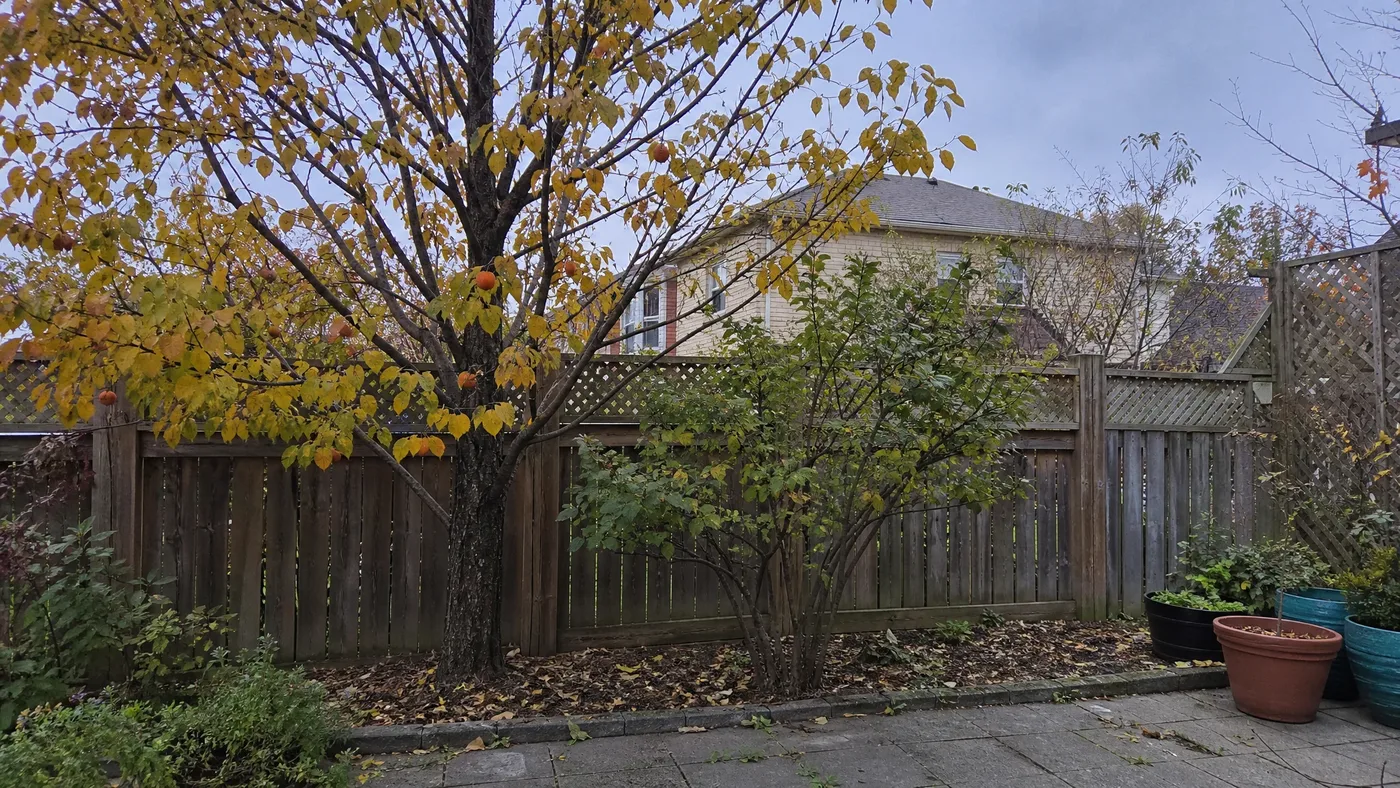
American Persimmon vs Texas Persimmon: Size and Fruit Color
Hold a tape against two mature persimmon trunks and measure to the top of each canopy. One tree reaches about 60 feet. The other stops near 10. Both are Diospyros, both carry persimmon fruit, and Southern and Southwestern gardeners regularly mistake one for the other.
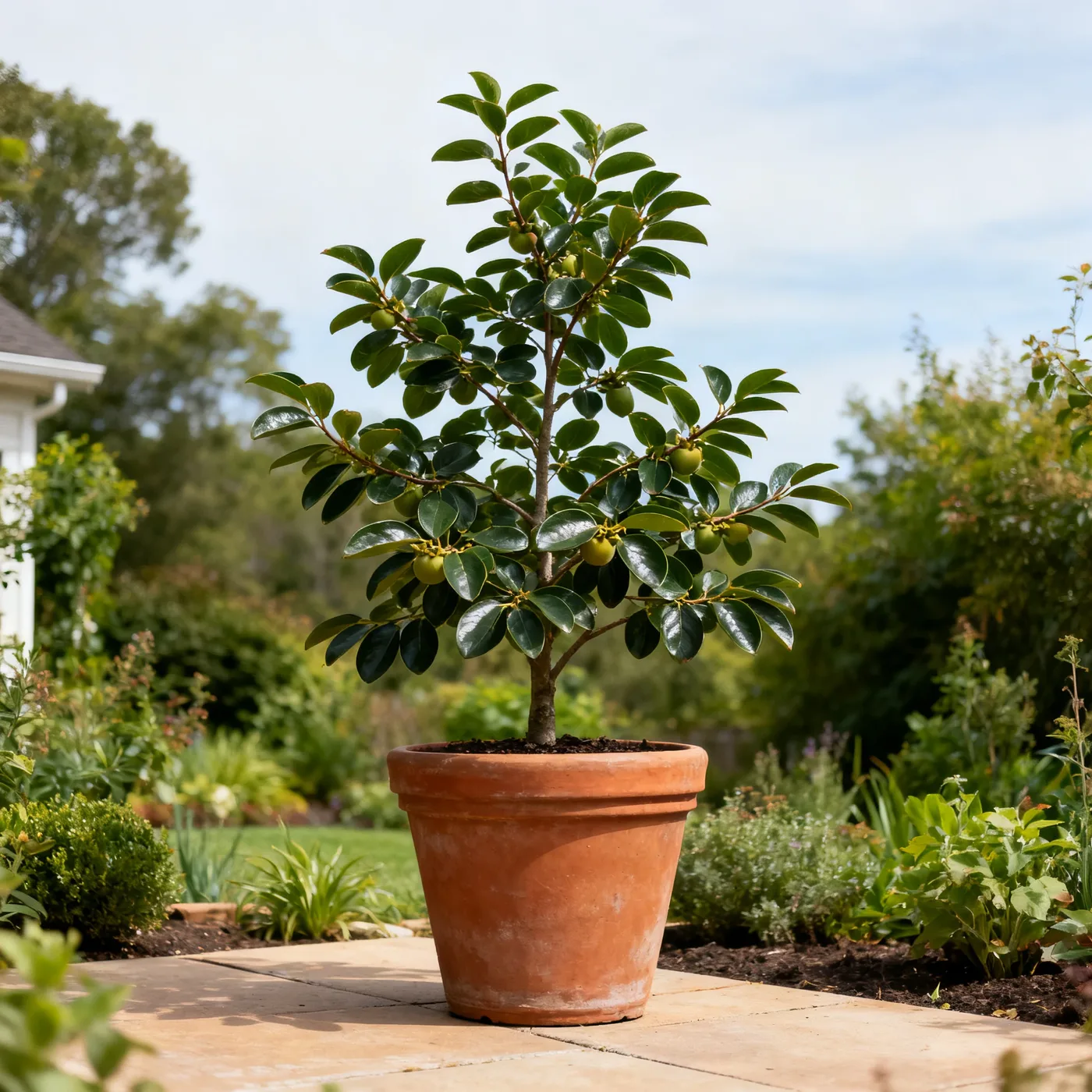
The mix-up is expensive. Plant the 60-foot tree under a power line and you will be cutting it back for decades. Plant the 10-foot tree in a cold northern yard and winter will take it. Get it right and you have a fruit tree matched to its site that asks very little of you.
In this article, we'll go through height, fruit color, bark, hardiness, soil and upkeep, and we give a verdict on each one.
How Tall American Persimmon Grows Against Texas Persimmon
Height is the first thing a tape measure settles, so we start here. The two species sit at opposite ends of the size range for a landscape tree.
The table below sets the sourced figures side by side.
| Trait | American persimmon | Texas persimmon |
|---|---|---|
| Typical height | 30–80 feet (NC State), 40–60 feet (UF/IFAS), 40–50 feet (Kentucky) | Generally about 10 feet, occasionally up to 40 feet |
| Spread | 20–35 feet | Similar to its height |
| Form | Upright oval single trunk | Large multistemmed shrub or small tree |
| Growth rate | Moderate | Not rated in our sources |
American Persimmon Height and Spread
The sources give a wide range for the American tree, and that range is worth knowing before you plant.
NC State lists 30 to 80 feet with a width of 20 to 35 feet. Other ranges run 40 to 60 feet, and the University of Kentucky says 40 to 50 feet in an upright oval. The low end of each range is a tree in a tight spot, and the high end is a tree in open bottomland. Read our full size breakdown for more detail.
Texas Persimmon Height and Spread
Texas persimmon is a different kind of plant, and the size difference shows in the first few seasons.
Oregon State describes a deciduous to semi-evergreen, multistemmed plant that is generally 10 feet tall with a similar width, though it may reach 40 feet. Treat 40 feet as the exception. Most Texas persimmons you meet are shrubby and about as wide as they are tall, so they fit where an American persimmon never could.
Planning the Space
Size should drive where you put the tree, so think about the full-grown footprint, not the nursery pot.
Growth on the American tree is moderate, so a young tree takes years to fill its space. That makes it easy to crowd it at planting. Plan for a canopy at least 20 feet across and keep it clear of roofs, wires and septic lines. A Texas persimmon can sit closer to a wall or a drive because its mass stays low and wide.
Verdict. For a small yard, a tight corner or a screen planting, choose Texas persimmon. For a field edge, a pasture corner or open lawn where a canopy 20 to 35 feet wide is welcome, choose American. We grow and sell American persimmon, and we will still tell you it is the wrong tree for a 10-foot space.
Fruit Size and Color on American Persimmon Branches
Fruit is what most people notice first, and color is the clearest difference between the two. Size and timing help, with one gap we will name.
Ripe Color
Color only works if the fruit is ripe, because the two species look alike before that.
Unripe Texas persimmon fruit is green and astringent, and so is unripe American fruit. At maturity they part ways. American persimmon fruit is green to orange when ripe. Texas persimmon fruit turns black, with sweet pulp around hard seeds. Orange means American. Black means Texas.
Size and Ripening Time
Size is a weaker clue than color, and the sources do not cover it evenly.
Texas persimmon fruit is globose and about 1 inch across (2.5 cm), with 3 to 8 hard seeds. We will not put a diameter on American fruit here, because it varies by tree and cultivar. For timing, American fruit usually ripens after frost, although some cultivars do not need the frost treatment. The Texas sources give no calendar, so ask your local extension office when yours colors up.
Eating the Fruit
Ripeness matters more than species if you plan to taste anything.
Both fruits are astringent until ripe, and both turn sweet once they are. American persimmon is an edible berry that should hang until it softens, and our ripening and harvest guide covers how to judge it. Texas fruit is eaten by many species of birds and mammals, so a tree in the wild is usually picked clean before you arrive.
Verdict. If the fruit in your hand is orange or orange-tinged and hanging on after the first frosts, you are holding American persimmon. If it is black and about an inch wide, it is Texas. Do not trust any green fruit.
Bark Separates the Two Faster Than Fruit
A common piece of advice is to wait for fruit and identify the tree from that. We think that is the slow way, and bark is quicker.
Both species are dioecious, with separate male and female plants, so many trees you check will carry no fruit at all. Bark is on every tree in every month.
Reading the Trunk
Look at the trunk before anything else, and run a hand over it if you can.
American persimmon has deeply furrowed bark that breaks into small, blocky plates. Texas persimmon has smooth, mottled bark that peels in thin flakes, and it often grows as several stems from one base. A trunk that is rough and plated is American. A smooth, patchy, peeling stem is Texas. You rarely need a second check.
Other Checks
If the bark leaves you unsure, two more clues narrow it down.
Texas persimmon is deciduous to semi-evergreen, so a persimmon still holding leaves in January leans Texas. Place also matters. Texas persimmon grows wild in the Rio Grande Plains, the Edwards Plateau and the southeastern corner of the Trans-Pecos. Outside those areas, a persimmon is far more likely to be American.
Verdict. Check bark first, leaves and location second, fruit last. A bark check takes ten seconds in any month, and a fruit check can take until frost.
Hardiness Zones Where American Persimmon Survives Winter
Winter cold decides this question more firmly than any other. The two species do not overlap as much as their names suggest.
The Cold Limits
The published ranges leave little room for argument.
NC State lists American persimmon as hardy in zones 4a through 9b, and UF/IFAS gives 4B through 9B. Oregon State lists Texas persimmon as hardy only to zone 8b. That is a gap of several zones at the cold end, and zones 8b to 9b are the only band where both can live. Our zone guide goes deeper on the American range.
Northern and Southwestern Gardeners
Where you live shapes the choice more than any preference for one tree.
In the North, American persimmon is the only option. A Texas persimmon planted in zone 6 is a gamble you will lose in the first hard winter. In the Southwest, Texas persimmon is native and well adapted, and it is the better choice on hot, dry ground. American persimmon still grows in the warmer zones, but it gets large and wants more moisture than a Texas plant.
The Overlap Band
Zones 8b through 9b are where you really have a choice, and that is where the other criteria take over.
In that band, cold is not the limit for either tree, so look at your soil, your space and your water. A gardener with a deep, moist lot and room to spare can grow American persimmon. A gardener with a hot, rocky lot can grow Texas. Neither tree will complain about the zone.
Verdict. Zone 8a or colder, plant American. Zone 8b or warmer in Texas or the Southwest, plant Texas unless you want the bigger tree and can give it moisture.
Dry Limestone Soil Suits Texas Persimmon Better
Soil is where Texas persimmon pulls ahead. American persimmon is more adaptable than its reputation, but it prefers a different kind of ground.
What Each Tree Prefers
Their native settings explain most of the difference.
American persimmon grows best in moist, well-drained, sandy soils in full sun to partial shade. It also tolerates clay, sand, loam, alkaline and acidic soils, and extended flooding. Texas persimmon does best on well-drained soil and is drought resistant, but it is not known for tolerating flooding.
Dry and Alkaline Sites
On thin, dry, alkaline ground, the question is which tree you can leave alone.
American persimmon will survive hot, dry conditions and poor soils, and its pH range of 6.0 to 8.0 for neutral soil covers many alkaline sites. But it prefers moisture, and a young tree on dry limestone will need watering until it is rooted. Texas persimmon is built for that ground. It needs sharp drainage and is the better fit if you do not want to haul water.
Wet and Heavy Ground
The reverse case matters just as much, because the wrong tree in a wet spot fails slowly.
If your low ground floods or holds water after rain, American persimmon is the one with the tolerance on paper. Texas persimmon wants drainage and the sources promise nothing about standing water. Put a Texas plant on a slope or a raised bed and keep it out of the low corner of the yard.
Verdict. Dry, alkaline or rocky ground with little irrigation: Texas persimmon. Deep, moist, heavy or occasionally flooded ground: American. If your soil is average, soil does not decide it, so let size and zone do that.
Upkeep Once American Persimmon Is Established
Both species are low-fuss once they are rooted in. The differences come from size and from how each one bears fruit.
Pruning and Suckers
Pruning is where the sizes matter most.
American persimmon is a single-trunk tree, so you shape it young and then mostly leave it. The cost comes later, because limbs at 40 feet need a ladder or a crew. It can also send up shoots from its roots, so give it room. Texas persimmon is multistemmed by nature and mostly needs tidying. Our pruning guide covers the American tree.
Pollination and Fruit Mess
Fruit is the other chore, and it only matters if you want a harvest.
Both species bear male and female flowers on separate plants. The University of Kentucky notes that American persimmon's flowers are slightly fragrant and borne on separate trees. Only females fruit, and they need a male nearby. A large American canopy drops a lot of fruit across a lawn or patio, while Texas fruit is small and eaten by many birds and mammals.
Deer and Wildlife
Browsing and foraging are part of upkeep if your site borders open land.
American persimmon is moderately deer resistant, which means do not count on it to survive a hungry herd. Protect young trees with a cage in the first years. In our rows, the wildlife that arrives for fallen fruit is a bigger story than the browsing.
Verdict. Texas persimmon asks less of you in pruning and cleanup. American persimmon asks little too, but across a much larger footprint, so choose it for open ground.
Choosing Between American Persimmon and Texas Persimmon
Pick Texas persimmon for dry limestone, small spaces and the Southwest in zone 8b or warmer. Pick American persimmon for cold winters, moist deep soil and a large fruiting tree. One of the most common questions we get is whether a black-fruited tree from a ranch road is the same plant we sell, and the answer is no. If you are unsure which one you have, check bark first with our field identification guide.
American Persimmon
Nursery-grown American Persimmon in sizes from 1 Gallon, shipped to your door.
From $54.95
Shop Now →The numbers give you a rule of thumb. If your site has room for over 20 feet and sees a cold winter, plant American. If you have under 12 feet and dry limestone, plant Texas. On our farms, we grow American persimmon in full sun and moist, well-drained, sandy soil, because that is where it does best, and we raise every tree as growers who stand behind the plants we sell.