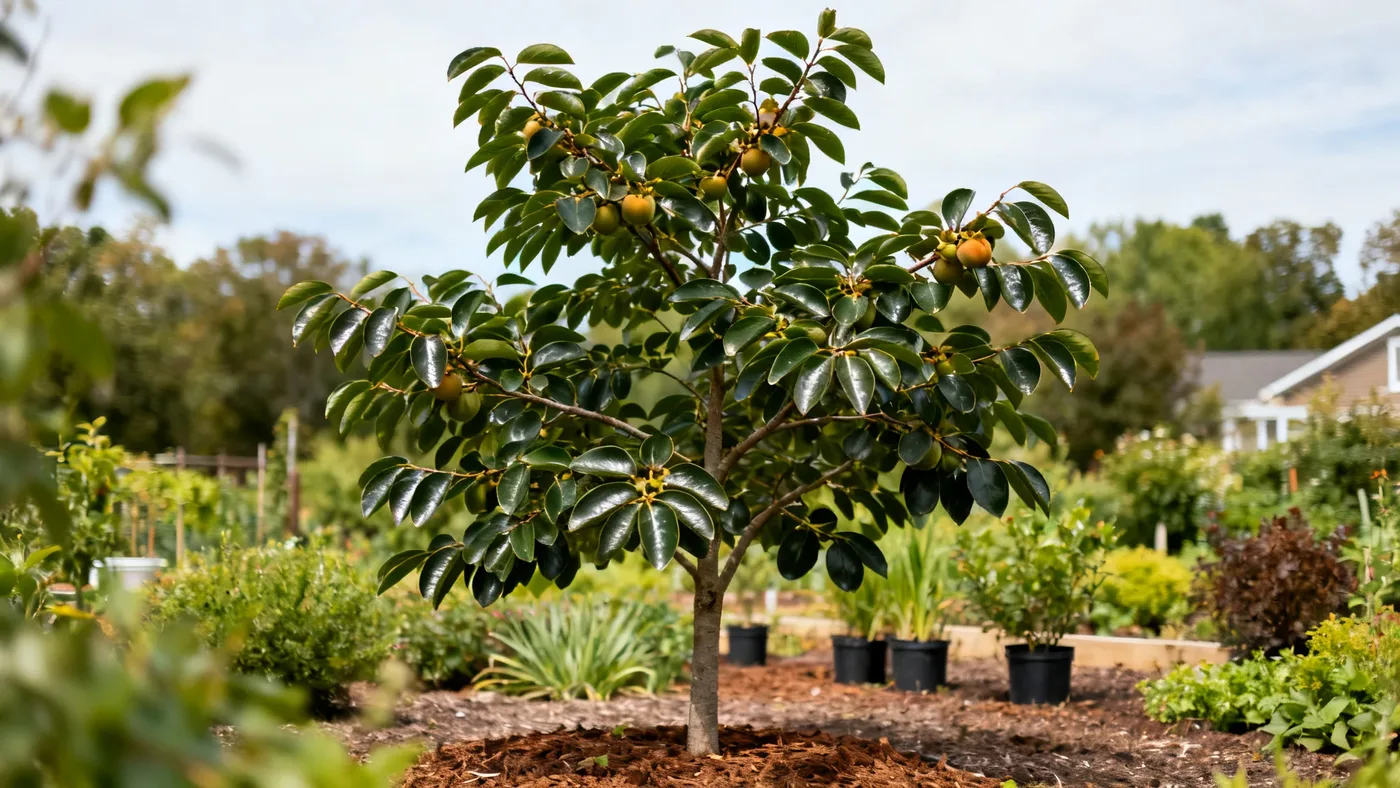
American Persimmon vs Asian Persimmon: Key Differences Explained
If you're considering a persimmon tree for your garden, you've probably encountered two main options: American persimmon (Diospyros virginiana) and Asian persimmon (Diospyros kaki). While both produce edible fruit and make attractive landscape trees, they are fundamentally different species with distinct growing requirements, fruit characteristics, and regional suitability. Understanding these differences is essential to choosing the right tree for your climate and goals.
This guide compares the two species side-by-side across the factors that matter most to home gardeners: climate adaptability, fruit flavor and texture, tree size, care requirements, and time to first fruit. Whether you're drawn to persimmons for their edible harvest, fall color, or year-round landscape appeal, this comparison will help you make an informed decision.
At-a-Glance Comparison Table
| Characteristic | American Persimmon | Asian Persimmon |
|---|---|---|
| Hardiness Zones | 4–9 | 8–11 (varies by cultivar) |
| Mature Height | 35–60 ft (wild trees to 80 ft) | 15–30 ft (generally smaller) |
| Mature Width | 20–35 ft | 15–25 ft (generally narrower) |
| Growth Rate | Slow to moderate, 12–18 in. per year | Moderate to fast (varies) |
| Fruit Flavor | Sweet, musky when fully ripe; astringent when unripe | Sweeter; many cultivars are non-astringent |
| Fruit Size | Small to medium, 1–2 in. diameter | Larger, 2–3 in. diameter or more |
| Years to First Fruit | 6–10 years (seedling); 3–5 years (grafted) | 2–4 years (typically faster) |
| Cold Hardiness | Yes (Zone 4 tolerates winter lows to –30°F) | Limited; requires warmer zones |
| Pollination | Dioecious; female + male for reliable fruit. Some self-fertile cultivars. | Often self-fertile; male/female not required |
American Persimmon: The Cold-Hardy Native Option
American persimmon is native to the eastern and central United States, from Connecticut south to Florida and west to Kansas and Texas. This native heritage makes it exceptionally cold-hardy, thriving in USDA zones 4 through 9, which covers most of the continental U.S. If you live in a region with cold winters, American persimmon may be your only choice for a hardy, long-lived persimmon tree.
The fruit is where American persimmon's character truly emerges. When fully ripe in fall, the flesh becomes soft and custard-like, with a sweet, musky flavor that enthusiasts compare to brown sugar and spice. The downside: unripe fruit is intensely astringent, tightening the mouth with a chalky sensation. First-time growers often bite into a fruit picked before its time and are surprised by this mouth-puckering effect. Wait until the fruit softens completely, turns deep orange, or even falls to the ground naturally.
Mature American persimmon trees reach 35 to 60 feet tall and 20 to 35 feet wide. Growth is slow to moderate, adding roughly 12 to 18 inches per year once established. The tree's winter bark is distinctive: deeply blocky and dark, often called "alligator hide." Orange fruit frequently persists through winter after leaves drop, creating a striking visual display.
American persimmon grows well in full sun to part shade, though fruit production is best in full sun. The species is remarkably adaptable to soil: it tolerates clay, loam, sandy, poor, and compacted soils. Soil pH can range from 5.5 to 7.5. Once established, the tree's deep taproot makes it drought-tolerant, requiring less supplemental watering than many ornamentals.
One caveat: American persimmon is dioecious, meaning separate male and female trees. To get fruit reliably, you typically need both sexes. However, some cultivars, such as 'Meader', are self-fertile and will produce fruit on a single tree. See the care guide for cultivar options and planting details.
Asian Persimmon: The Warm-Climate Favorite
Asian persimmon (Diospyros kaki) originates from East Asia and is the persimmon most commonly seen in farmers markets and grocery stores. It is not cold-hardy in most of North America. Depending on the cultivar, Asian persimmon typically thrives in USDA zones 8 to 11. If you live in zone 7 or colder, Asian persimmon will not survive winter outdoors.
Asian persimmon produces larger fruit than American persimmon, often 2 to 3 inches in diameter or more. The flavor is sweeter and more uniform across cultivars. Crucially, many Asian persimmon cultivars are non-astringent, meaning you can eat the fruit while it's still firm. This is a significant convenience for home gardeners and families. You do not have to wait for the fruit to soften completely or worry about accidentally biting into an astringent fruit.
Trees are generally more compact than American persimmon, typically reaching 15 to 30 feet tall. Growth rate varies by cultivar but is often moderate to fast, meaning you may see results sooner. Asian persimmon also tends to fruit earlier: many cultivars produce within 2 to 4 years from a nursery-grown tree, compared to 3 to 5 years for grafted American persimmon. Asian persimmon is often self-fertile, so you may not need a second tree for pollination, though some cultivars benefit from a pollinator.
For gardeners in warm climates where American persimmon cannot survive, Asian persimmon is the clear choice. Nursery availability is typically better in zones 8 and warmer, and cultivar selection is wider.
Key Differences: A Closer Look
Hardiness and Regional Fit
This is the most decisive factor. American persimmon thrives in zones 4–9, while Asian persimmon is limited to zones 8–11 (depending on cultivar). If you live in zone 7 or colder, American persimmon is your only option for reliable winter survival. If you live in zone 8 or warmer, both are potentially viable, but check your specific microclimate and consider late spring freezes, which can damage both species during bloom.
Fruit Characteristics
American persimmon fruit is smaller (1–2 inches), highly astringent when unripe, and develops a complex, musky sweetness at full ripeness. Asian persimmon fruit is larger (2–3+ inches), and non-astringent cultivars allow you to harvest and eat sooner. If you prize convenience and consistent flavor, Asian persimmon is less risky. If you value the unique taste profile and don't mind waiting for ripeness, American persimmon rewards patience.
Tree Size and Space
American persimmon can eventually occupy 35 to 60 feet of height and 20 to 35 feet of width. Asian persimmon is often smaller and more manageable. For urban or suburban yards with limited space, Asian persimmon may be a better fit, but always verify cultivar-specific sizes at purchase.
Speed to Production
Asian persimmon usually begins fruiting within 2 to 4 years. Grafted American persimmon typically takes 3 to 5 years; seedlings may wait 6 to 10 years. If early fruit production is a priority, Asian persimmon has the edge.
Lifespan
American persimmon is exceptionally long-lived, commonly surviving 75+ years and with some specimens reported over 100 years. This makes it an investment in your property's future. Asian persimmon lifespan varies by cultivar and climate; consult your local extension service for specifics in your region.
Pros and Cons
American Persimmon Pros
- Extreme cold hardiness (zones 4–9); native to eastern North America
- Exceptionally long lifespan (75+ years)
- Highly adaptable to poor, compacted, and varied soils
- Unique, musky-sweet flavor prized by enthusiasts
- Distinctive winter bark and fruit display
- Drought-tolerant once established
American Persimmon Cons
- Dioecious; typically requires both male and female trees for reliable fruit
- Small fruit (1–2 inches) requires patience to harvest in quantity
- Unripe fruit is intensely astringent; first-time growers often pick too early
- Slow to moderate growth; takes years to establish
- Grafted cultivars take 3–5 years to fruit; seedlings take 6–10 years
- Lower salt tolerance; not suitable for coastal salt spray
- Fruit drop before ripening can occur in poor years
Asian Persimmon Pros
- Larger fruit (2–3+ inches); more satisfying harvest
- Non-astringent cultivars available; can eat fruit while firm
- Faster time to production (2–4 years)
- Generally self-fertile; one tree may produce fruit
- Faster growth rate in warm climates
- Better cultivar selection and nursery availability in zones 8 and warmer
Asian Persimmon Cons
- Not cold-hardy in zones 7 and colder; limited to zones 8–11
- Shorter lifespan than American persimmon (varies by cultivar)
- Some cultivars still astringent; cultivar selection is critical
- May require specific pollinators for reliable fruit on some cultivars
- Poor availability in cold-climate regions
Which Persimmon Tree Should You Grow? Use-Case Recommendations
Choose American Persimmon if:
- You live in zone 7 or colder (it's your only hardy choice)
- You want a long-lived tree for multi-generational landscapes
- You have poor or compacted soil and need a resilient species
- You enjoy unique, complex fruit flavors and don't mind managing astringency
- You are creating a native plant habitat for wildlife
Choose Asian Persimmon if:
- You live in zone 8 or warmer with suitable microclimates
- You want to harvest large, sweet fruit quickly (within 2–4 years)
- You prefer non-astringent fruit you can eat ripe and firm
- You have limited space and need a more compact tree
- You want minimal pollination complexity (self-fertile cultivars available)
The Verdict
American persimmon and Asian persimmon serve different gardens and different climates. American persimmon is the clear winner for cold regions where winter hardiness is non-negotiable. It is a native species with remarkable longevity and soil adaptability, ideal for gardeners who value long-term investment and unique flavor profiles. Asian persimmon is the choice for warm climates where hardiness is not a constraint, offering faster production, larger fruit, and the convenience of non-astringent cultivars.
Your choice ultimately hinges on geography: your USDA hardiness zone determines which species can survive your winters. Within that constraint, consider your priorities: speed to fruit, fruit size, flavor complexity, tree lifespan, and available space. Both species will reward you with edible harvests, landscape beauty, and years of enjoyment if you pick the right one for your conditions.
Quick Reference
| Factor | American Persimmon | Asian Persimmon |
|---|---|---|
| Can survive zone 7 winters? | Yes | No |
| Fruit ready to eat within 4 years? | Grafted cultivars, yes; seedlings, no | Usually yes |
| Larger fruit (2–3+ inches)? | No (1–2 inches) | Yes |
| Non-astringent options common? | No (astringent when unripe) | Yes (many cultivars) |
| Self-fertile options available? | Some ('Meader', etc.) | Many |
| Expected lifespan 75+ years? | Yes (very common) | Varies by cultivar |
| Tolerates poor/compacted soil? | Yes (highly adaptable) | Less adaptable |